MODERN TRENDS IN COSMETIC FORMULATION 195 unsaturated fatty acids, such as linoleic acid, in a number of skin conditions as an emollient, and as an aid in the cleansing of wounds. The evidence has not been pursued systematically as might have been the case if the free acid had been less susceptible to oxidation and rancidity. The recent appearance of a high grade esterified form, isopropyl linoleate, should offer . the possibility of a more satisfactory investigation. The ester is a pale yellow bland liquid which does not so readily undergo oxidation at normal tempera- tures. It can readily be incorporated in cosmetic creams and may be expected to possess good penetrating characteristics. It is some years since the adducts formed from fatty acids and urea were described. It has since been found that the oxidation susceptibility of the unsaturated fatty acids is practically eliminated by forming the urea complex. The possibility of utilising at the same time the cosmetic properties of urea and of the unsaturated fatty acids has not yet been followed up but will no doubt receive attention in the near future. Modification of aluminium chlorohydroxide. Although this antiperspirant and deodorant has been in use for a relatively short time many modifications have been proposed to simplify formulation and application and to improve its performance. The demand arose for a preparation which could be dispensed from a squeeze bottle, collapsible tube or a roll-on applicator to save contact with the fingers during application. It has been found possible to convert the thin aqueous solution into a viscous solution for the rol!-on dispenser, or into a gel for the squeeze bottle or tube. Gelling has been effected by adding 4-8 per cent boric acid to an approximately 20 per cent solution of the aluminium chlorohydroxide. Borax has also been used. It is claimed that the further addition of alcohol, glycerin and propy!ene glycol serves to lubricate the gel as it is extruded from its container. 4 Gels and solutions of intermediate viscosity can also be obtained by adding certain organic gelling salts, such as lactates of alkali metals or earths, or substituted amines or various acetates. 5 One molecule of the gelling agent to three of the a!uminium complex is claimed to give the best balance between antiperspirant properties and setting time. The rate of setting can be increased by the addition of alcohol and a humectant, such as glycerin, or by warming. It is probable that the alcohol and humectants serve a similar purpose in the boric acid gels. Another modification of aluminium ch!orohydroxide aims at combining the properties of the antiperspirant with the softening, keratolytic and anti- irritant properties of al!antoin. 6 The bacteriostatic effect of the new complex appears to be of the same order as that of aluminium chlorohydroxide alone.

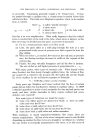
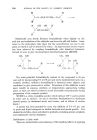
196 JOURNAL OF THE SOCIETY OF COSMETIC CHEMISTS The pH of a 1.7 per cent solution of the allantoin complex is 4.75, a little higher than in the original aluminium complex. A limited number of cases have been reported in which an ointment containing 0.2-0-25 per cent of the allantoin complex has been used successfully for the suppression of axillary odour in human subjects with no evidence of irritant or sensitising action. The first application is reported to inhibit the odour completely for 24 hours. The chlorohydroxide and al!antoin form a complex in equimolecular proportions and although allantoin may exist in tautomeric forms with a distinctly acidic enolic form it would not be prudent to describe the new complex as a salt of allantoin. Modification of the starches. As cosmetic powders, the starches have some unsatisfactory charac- teristics they have little covering power and do not readily tolerate grease when they become moist they swell and form tacky pastes which soon become subject to bacterial and fungoid growths. It is true that preservatives may be added but this is a poor way of solving a problem which is amenable to solution in a more elegant way. In a patented process 7, molecular starch chains are linked together by forming short bridges like the rungs of a ladder. A number of molecular filaments of starch may thus be linked together to form a network more rigid and less random in arrangement than was the case in the untreated starch. In spite of the increase in molecular weight thus brought about, the particle size is stated to be somewhat smaller than that of the starch. The product does not swell in water and after boiling with water it settles quickly. The starch is acted upon by the tetramethylol derivative of acetylene diurea and condensation occurs between hydroxyl groups along the starch molecules and the hydroxyl groups of the methylol derivative to unite them through ether linkages. NH• NH• NH• NH• CO +H.C=C.H +OC C--C=C--C NH• NH• NH• NH• H OH NH•. + O.C -----9 NH.C--H , H H The commercial product known as amylure non mucilaginosum or
Purchased for the exclusive use of nofirst nolast (unknown)
From: SCC Media Library & Resource Center (library.scconline.org)