PLANNING AND EQUIPPING OF A COSMETIC LABORATORY 221 PLANNING AND EQUIPPING OF A COSMETIC LABORATORY R. H. MARRIOTT, D.Sc., F.R.I.C.* A lecture delivered before the Society on 7th April 1960 TnRouG• ThE years it lms been my lot to be involved in tlxe designing of six laboratories. In general, lxo•vever, all tlxe early ones lmve appertained to existing prenfises of various shapes, sizes and forms, and wlxiclx, in building, were never arclxitecturally designed for tlxe purposes of a laboratory. Tlxe planning of suclx places is very intricate and, in general, tlxe feeling lms always been engendered tlmt if one could only start witlx a rectangular, one-floor building, everything would be so muclx more simple. But tlxis is not quite true, especially if one aims at producing a laboratory wlxiclx lms maximum workability and, at the same time, maximum utilization of tlxe area. It is believed that tlxe new researclx laboratory described lxereinafter is one wlxich is straiglxtforward in design and can give adequate facilities to tlxe researclx workers at tlxe expenditure of less than 150 sq. ft. per person working. It is, of course, possible to allow less square feet per worker but titis can only be done at the expense of lack of efficiency in the working. Perlmps one of the most instructive laboratories designed was wlxen tlxe Beeclmm Group set up a researclx station at Brocklmm in Surrey, utilizing an existing mansion. Here, one lind a series of rooms wlxich miglxt lmve been very nice as a large lxouse to live in, but nevertlxeless involved a tremendous amount of work in trying to simplify tlxe arrangement of walls, but witlxin tlxe limitations of building control at tlmt time, it was only possible to make one extension wlxiclx ultimately did produce an exceedingly good laboratory for organic researclx. Nevertlxeless, tlxere were certain principles involved in doing this, wlficlx I tlxink merit sonhe close attention. In the earlier days of tlxis century, tlxere was a general desire to lmve wide benclxes witlx a large superficial area and a central superstructure. It is interesting to remark tlmt one of my aniversity colleagues wlxo obtained an 1851 Exhibition to Columbia University in America once sent me a picture of himself working in lxis laboratory. To my great astordslxraent, the photo- graplx showed him at a benclx whiclx was really notlxing more tlxan a ratlxer wide slxelf. Tlxis picture has always lived witlx me because I realized from that time tlmt in designing a laboratory it was not tlxe area but tlxe foot-run * County Laboratories, Ltd., Brentford, Middx.

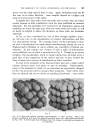
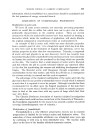
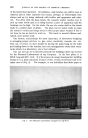
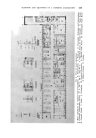
222 JOURNAL OF THE SOCIETY OF COSMETIC CHEMISTS of the bench that mattered. Nevertheless, wide benches can still be seen in America and in other countries but except, perhaps, in Switzerland, they always end up by being cluttered with bottles and apparatus and what- not. Too often with the deep bench, the research worker reaches over to pick up some bottle and in so doing knocks a piece of apparatus and the breakage can be high. On the whole, the use of a centre shelf or.. the bench leads to a similar state of affairs. The plain narrow bench tends to make the research worker put things away in their proper place because if this is not done he has no bench to work on. This leads to mental tidiness and, indeed, more precise work. One feature, and perhaps the most important, of laboratory designing is arranging proper services, i.e. gas, water, electricity, vacuum, etc., etc. This can, of course, be done simply by having the pipes hung on the walls and leading down to the benches, but such arrangements create dust recep- tacles which, in a laboratory, one is best without. One can now go on to describe precisely the building which was erected for the Research Laboratories of my Company. In the first place, it is 230 ft. long and 40 ft. wide. It is the annexe of a maior headquarters building facing on to a main road and, because of this, certain restrictions had to be taken care of (Fig. 1). For example, it was forbidden that drain pipes or i• .... ..-i- -' '• r .: ½• . ...• •r ....•:. • ß .' • ß ½•-.• ß • •,': .... • . • •.'.•.' ::.' ... .t • . : ::•- ,• ----• %:.: ....'.•'? •..% •.•:-:. (-•:-'-'."'•..'•":-:--:• ..•.•&•'•.• •,' ...... •'.•••• .................. 4.m ........... :•.=,•½ 4 ß . • •- . .• •g•.•., •.•,• •,,• ....... •. ........... .•.•_ • ... .. .i:-• ......... ,. .............. •..•%...• ... Fig. I. The Research Laboratory occupies the top floor.
Purchased for the exclusive use of nofirst nolast (unknown)
From: SCC Media Library & Resource Center (library.scconline.org)