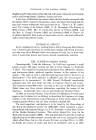
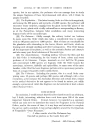
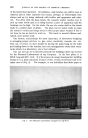
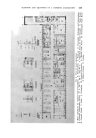
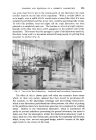
PLANNING AND EQUIPPING OF A COSMETIC LABORATORY 227 As to the services, gas, electricity, hot and cold water, vacuum and compressed air are available on all benches. The electrical plugs are mounted in a small housing to prevent damage by flooding of water. The vacuum is nominally 28 inches of mercury but mobile high vacuum pumps are avail- able. Compressed air at 26-28 lb. is supplied, self-closing taps being fitted. The light is by ordinary half-watt bulbs and is calculated to give 22 lumens at bench level. Fluorescent tubes were not installed as this form of lighting leaves much to be desired. The ceiling was fitted with sound-absorbent tiles and the evidence is that they are fulfilling their purpose--so far, at any rate, in preventing any distraction due to sound. Another point which must be mentioned here is that the heating is a ring hot water convector system, and this necessitated that around the whole of the laboratory there should be a shelving of about 12 inches wide, leaving a gap for the heat to rise in between the side shelf and the convector. Considering the rooms on the north side, it was felt that it was most important that the library and physical-chemistry laboratory should have the benefit of a northernly aspect. Considering the library, it appeared unnecessary to fit a door. Further, the hbrary is really the centre of informa- tion and it should be adequate to cater for the storage requirements of the textbooks and journals which are necessary for the work and was designed to be relatively large in size. Because of the small number of desks and what might appear to be apparent lack of facilities for the research workers in the laboratory properly to write their notes, a long writing bench was erected which, if necessary, can be extended (Fig. $). The workers have easy access to books and have sufficient room to keep reference books at their side when they are doing their clerical duties. It was well appreciated that the time would soon be arriving (if it had not already arrived) for consideration to be given to micro-films as a space-saver. Such a change could be insti- tuted at any time because adequate room for siting micro-film readers is available. The physical-chemistry department, which is concerned chiefly with surface chemistry and physics, vapour phase chromatography and deteriora- tion is, again, open to the main corridor. If it has a fault, it could be that because of the need for having an optical dark room it gives too much of an "L" shape form to the laboratory. Other than this, one can easily see all the workers as one walks down the laboratory. Mention might be made here of the balance rooms, which are more or less standard in design and can be protected against draughts by the sliding doors. Although the building overlooks one of the main roads in England where the traffic is very heavy, yet it is surprising how little vibration goes through thebuilding on to the balances. Purely for protection of the balances, the best ones are mounted on vibration-proof units and these enable semi-

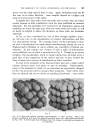
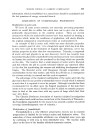
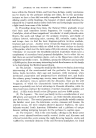
JOURNAL OF THE SOCIETY OF COSMETIC CHEMISTS • : ...... .:• .• ' ' ........ :.•z_:'s•i •"" t ::•:" ' ............. '" '" .......... ...•" " '-- k ' .... .•.•... ----::Lq½/ .. - •:• • ' ., • :--. ß .. ß ..•. ..• ':::• .::'. ½, .:.• .•-. '" ..'• •.'. : ...... •:...•,• • •:•' Fig. 5. Library. micro-bMances to be employed. It •ght be different, however, if a micro- balance was envisaged. Pro,sion has been made for a photograpMc dark room which is small but adequate for the work that is being done, which includes photo-micro- gmphy. The next department is the packaging department, and here again it is freely ope•. In here is a very compact aerosol bench. It is of a design produced in the U.S.A. and it permits M1 fo•s of pressurized packs to be produced. Fottowi• this is the sMon, which has been fitted up in modern fashion similar to that employed in commercial hairdressing salons of good class (•i•. 6). The next, Stores. The problem of storing compactly the multitudinous items which are required in a cosmetic taboratory was solved by making use of the sli•ng rack system which is common usage in encneering factories, where an a•ost in•ite variety of sprin•s, nuts •d bolts etc. are kept (Fig. •). The system cuts down passages so that six rows of bins require only one p•sage at the expense of two rectan•ar spaces, which are the width of one bin •d two • depth. They are quite easy to use and appear to be fulfilling their job. The point here, of course, is that the bins must be numbered •d catMo•ed so that items can readily be found.
Purchased for the exclusive use of nofirst nolast (unknown)
From: SCC Media Library & Resource Center (library.scconline.org)