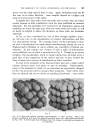
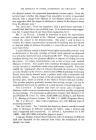
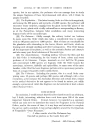
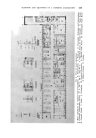
PLANNING AND EQUIPPING OF A COSMETIC LABORATORY .. . ,,...(2. :..(]:•:• •$•..•.. "}..: .. • . ........... . . .•..... • -•:• --• Fig. 6. View of Hairdressing Saloon. The next room is a store room for various items--a sort of lumber room --which can be used if further expansion of any department becomes neces- sary. At the end of the building there are four constant temperature rooms, 1 ø C., 20 ø C., •0 ø C. and 40 ø C. These rooms have adequate shelving to cater for all foreseeable requirements of sample storage. It is, perhaps, worthy of mention that in rooms of this description care must be taken to ensure that there is adequate free air round the samples, and for this purpose all the shelves are made of wire mesh. Further, the samples must •ot be too closely packed, otherwise air movement is inhibited. The first section of the main open laboratory is essentially for general analytical work and analytical research work in order to devise test proce- dures to enable the quality control laboratory in the factory to fulfil its function. Thus, the Products Research department is responsible for setting the specifications of raw materials, tests to be carried out during manufacture and analytical limits to which the finished product must conform. A problem which has been seriously considered in designing this labora- tory, bearing in mind its general communal atmosphere, is how far the special apparatus and special techniques should be sectionized. In particular, the analytical department had to be carefully considered since a modern analyti-

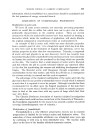
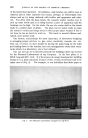
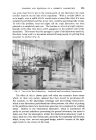
230 JOURNAL OF THE SOCIETY OF COSMETIC CHEMISTS cal laboratory will utilize a great deal of expensive equipment. On the other hand, much of titis sort of equipment is necessary in order to consider special features of chemical behaviour, such as, for example, are involved in deterioration on storage. In this connection, vapour phase chromatography is most important as well as optical equipment, such as the Spekker photo- meter, ultra-violet and infra-red spectrometry, which really come within the compass of a physical-chemical laboratory. Thus, these instruments are not in the analytical department. ": ',i". •" .:,,, ' ':- --' :-• ' . •. i"-..'¾ •: • . - : '5 .2 ....... - ...... ß .... ,, . : : •- ... .. .... . .. .. --.... . ..: , -:-" i•.•.½..-:.'. • .... ' .... •: .• •-' - .. : -..%. ....•-- •:, ... •., ,..:, ., ½ . .•, '•, . ,. , ":'--'7:•*h ' 7-I,•.,•- :• "*-"-...•:•'•:.. •- ' • .... • •.... ,•,•. ..• ?½ .'-• -,• ,•. •.. . .,. • ,'•.:•:• ,• .':• • ,• • •.•:r .... .• ½4• -..•-.*".•.. • .... •.:" • •: ........ ..... ... '.' ::...½. :•. ...... - Z?'.'*-'"'-'zr•'*• .,• ., •.•. . .., •- ,: -: . .: •½. '.• Fig. 7. General Stores. It will be noted that the analytical work is more of the classical type but making use of micro-determinations so far as is possible and convenient. For general purposes, the analytical department takes care of the analyses which would normally be carried out by the actual formulation chemists. This centralization tends to give a more efficient utilization of space and labour although, sometimes, it may mean a little dehy in getting the answer. On the other hand, work involving isotopes, which could again be
Purchased for the exclusive use of nofirst nolast (unknown)
From: SCC Media Library & Resource Center (library.scconline.org)