220 JOURNAL OF THE SOCIETY OF COSMETIC CHEMISTS species, but in my opinion, the perfumer who can manage time to study the unique fragrance of these tiny-blossomed wild olives, will, I think, be amply rewarded. (21) The Euphorbias: This latex-bearing Order is of the sixth magnitude, and among the 250 genera and upwards of 4,000 species, the perfumer will encounter many surprises, ranging from the giant cactus-like plants of the Arizona desert, plants with vividly coloured leaves masquerading as flowers, as of the Poinsettias, balsanfic folial exudations and •nany interesting fragrant barks of the cascarilla type. (22) The Rutaceae: Oddly enough, the solitary herbal rue bestows its name upon this Order which also takes a considerable time to explore with its 110 genera and over 1,000 species. Most of these are remarkable for the glandular cells abounding in the leaves, flowers and fruits, which on bruising emit strongly smelling and bitter tasting juices. This Order houses all the important citrus plants, as well as the aromatic Buchus and A maryis and also many pure floral redolences of the neroli type. (23) The A maryllidaceae .' Standing midway between the lilies and the iris this Order is outstanding for the beauty of form, colour and sweet perfumes of its blossoms. Unique, inasmuch as over half the 70 genera and concomitant 1,000 species are fragrant, while the Order houses the snowdrops, tuberoses, daffodils and spider-lilies, to name some of the most familiar, while I find the basic fragrance pattern centres upon many permuta- tions of a muguet-hyacinth-violet-vanilla theme. (24) The Violaceae .' Including the pansies, this is a small Order com- prising some 15 genera and perhaps 300 species and although with a few exceptions, as for instance the Australian Boronias and certain irises, ionone or its methyl derivative do not appear to be found in nature, yet oddly enough, a pronounced violet-like fragrance can be located in at least a dozen other Natural Orders. CONCLUSION In conclusion, I would rernark that this abbreviated record is an arbitrary, but I think, interesting, selection frorn work done upon 100 of the more important Natural Orders. It must, however, be regarded as a summary which can ordy serve to introduce the search for Fragrance in the Natural Orders, and in the course of time, it is my hope and intention to complete the survey, and to conclude, I may perhaps slightly amend the 71st Quatrain of Fitzgerald's "Omar Khayyam," ". . . I often wonder what the Perfumers buy One-half so precious as the Goods they sell." IReceived ß 15th February 1960!

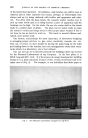
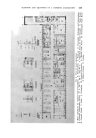
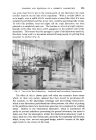
PLANNING AND EQUIPPING OF A COSMETIC LABORATORY 221 PLANNING AND EQUIPPING OF A COSMETIC LABORATORY R. H. MARRIOTT, D.Sc., F.R.I.C.* A lecture delivered before the Society on 7th April 1960 TnRouG• ThE years it lms been my lot to be involved in tlxe designing of six laboratories. In general, lxo•vever, all tlxe early ones lmve appertained to existing prenfises of various shapes, sizes and forms, and wlxiclx, in building, were never arclxitecturally designed for tlxe purposes of a laboratory. Tlxe planning of suclx places is very intricate and, in general, tlxe feeling lms always been engendered tlmt if one could only start witlx a rectangular, one-floor building, everything would be so muclx more simple. But tlxis is not quite true, especially if one aims at producing a laboratory wlxiclx lms maximum workability and, at the same time, maximum utilization of tlxe area. It is believed that tlxe new researclx laboratory described lxereinafter is one wlxich is straiglxtforward in design and can give adequate facilities to tlxe researclx workers at tlxe expenditure of less than 150 sq. ft. per person working. It is, of course, possible to allow less square feet per worker but titis can only be done at the expense of lack of efficiency in the working. Perlmps one of the most instructive laboratories designed was wlxen tlxe Beeclmm Group set up a researclx station at Brocklmm in Surrey, utilizing an existing mansion. Here, one lind a series of rooms wlxich miglxt lmve been very nice as a large lxouse to live in, but nevertlxeless involved a tremendous amount of work in trying to simplify tlxe arrangement of walls, but witlxin tlxe limitations of building control at tlmt time, it was only possible to make one extension wlxiclx ultimately did produce an exceedingly good laboratory for organic researclx. Nevertlxeless, tlxere were certain principles involved in doing this, wlficlx I tlxink merit sonhe close attention. In the earlier days of tlxis century, tlxere was a general desire to lmve wide benclxes witlx a large superficial area and a central superstructure. It is interesting to remark tlmt one of my aniversity colleagues wlxo obtained an 1851 Exhibition to Columbia University in America once sent me a picture of himself working in lxis laboratory. To my great astordslxraent, the photo- graplx showed him at a benclx whiclx was really notlxing more tlxan a ratlxer wide slxelf. Tlxis picture has always lived witlx me because I realized from that time tlmt in designing a laboratory it was not tlxe area but tlxe foot-run * County Laboratories, Ltd., Brentford, Middx.
Purchased for the exclusive use of nofirst nolast (unknown)
From: SCC Media Library & Resource Center (library.scconline.org)