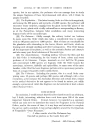
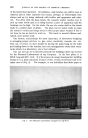
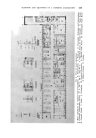
224 JOURNAL OF THE SOCIETY OF COSMETIC CHEMISTS fume cupboard extraction exits should mar the facade of the building, although such were permitted at the rear of the building, which overlooks an internal area. Further, the building was designed with modem standard window spacings which have 4 ft. 4 in. centres. In addition, it was desirable that although the benches would be fixed, they must be easy to move if the need should arise. This involved, therefore, that the services should run round the internal walls of the laboratory and to avoid them showing above the benches these were at a low level. These problems have been solved by siting the majority of the benches on the south side of the building, including the three fume cupboards. The waste services of the laboratory on the rear outside wall, because of the symmetry of layout, form a regular pattern. In the front of the building, the drainage system is also at low level on the inside and feeds into a small number of internal down-pipes arranged at intervals to ensure a su•cient fall to get adequate flow. It was felt undesir- able that pipes be sunk within the floor of the laboratory as this, apart from the relative thinness of the floor, would not be at all convenient if the benches had to be moved. In its present form the services can be easily sealed off if need be. Only in the case of the electricity for lighting purposes were the ducts let into the walls or the ceiling, while telephone services were, where necessary, sunk into the floors. Because of the structure and the uniform window widths of 4 ft. 4 in., the width of the benches then had to be controlled to fit in with what was really a 13 ft. span. By making the body of the benches 46 inches with a 1 inch overhand, the benches were 4 ft. wide and with a gangway of 58 inches, this enabled each bench to be placed exactly at intervals of 8 ft. 8 in. To enable desks for seniors to be positioned, one bench was omitted, thus giving two "double" width gangways of 8 ft. 8 in. Fig. • shows how this was arranged. In a cosmetic research laboratory a large variety of products have to be worked on and although each may be for a particular purpose and, indeed, may differ in texture and form from others, yet there is a sort of unity among all cosmetics. Because of this, it was felt undesirable to have a large number of separate rooms, each complete within itself. Some of the large research stations in America, for example, insist on small laboratories in profusion, giving a segregation of the workers which is only got over during the lunch break when the communal canteen enables them freely to mix together. Often, of course, as one knows, the problem of keeping the atmosphere clean can only be attained by this form of segregation but it has many faults, one of which is duplication of apparatus and duplication of effort. In this particular building, in so far as the ceiling had to be held up and the stanchions holding the ceiling were along the centre of the building, it

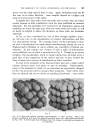
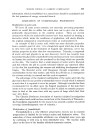
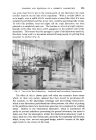
PLANNING AND EQUIPPING OF A COSMETIC LABORATORY •99,5 was quite clear that to get to the various parts of the laboratory the main corridor must be on one side of the stanchions. With a corridor 200 ft. or so in length, even a width of 6 ft. would create a tunnel-like effect if it were completely partitioned and this, in my view, would be psychologically xvrong. To solve this problem, what one might call the main laboratory has been planned as a completely open one. The benches are of such a length (approx- imately 14 ft.) that they leave a 6 ft. gangway on the southern side of the stanchions. This means that the passage is a part of the laboratory and it is, therefore, being used to a maximum instead of being merely for getting from one place to another (Fig. 3). '•.•:,,::: •',:...•'::•-,.• •:, ..: :•.•::.•.•: ...,.. •:•, . • . .: •.- .• • ß .. • .• _ . •: • • .. ,? -i• •:•:•: ...... • •. , • ..• %:: ....:.. ..... . '.g• . : • . !... -j • . .. ' ..... •:•'.3•.:- :•m •...::,." •..' •' -•: .•--• .:'7..& • •,•.. ::.:.i • •.•'" •': ' • ::.• • -• 2::.•: -. -"½ ' . .• . . ........... • ½: .•... : -- .. ......: . ..• •--.:g• .... • .::.. ,½•'•. ß '"W •: •4• - '•' :':5"- -. ß .. ,.. •.-•"--,• ...... • ? ':• ....... : ......... .. .•:.:•.,•....:.•... ....... ¾-,:':: [• Fig. 8. View of the Main Laboratory. Analytical and Formulation Departments. The effect of this is shown quite well when one examines those rooms which, by their very nature, demand that they should be partitioned off. For example, in the physiology, histology and bacteriology laboratories, xvhich is one laboratory partitioned into three portions, the effect of putting in the partitions shows how much more space has to be employed for walking about. Indeed, in the biochemical laboratory, which is partitioned off partly to prevent malodours permeating the general laboratory but more to make sure that the atmosphere within the biochemical laboratory itself is clean, leads to a very short bench and a necessity for employing wall benches which, in my view, are not very good design, notal•l•, because of the right angle bends in the corners of the room.
Purchased for the exclusive use of nofirst nolast (unknown)
From: SCC Media Library & Resource Center (library.scconline.org)