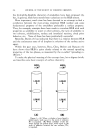
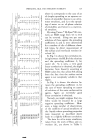
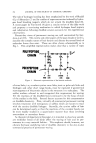
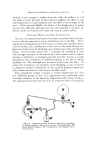
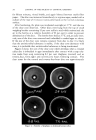
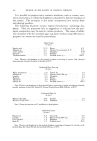
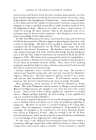
334 JOURNAL OF THE SOCIETY OF COSMETIC CHEMISTS The role of hydrogen bonding has been emphasized by the work of Rudall (6), of Alexander (7) and by studies of supercontraction induced by hydro- gen bond breaking reagents which do not attack the disulfide bond (8). A recent paper by Farnworth (9) gives a concise review of the older work and proposes a convincing mechanism in which hydrogen bond rupture and reformation following disulfide scission accounts for the experimental observations. Present-day views of permanent waving are well summarized by Ger- shon et al. (10). This review and other papers of the past decade or so (11), describe the complex nature of hair keratin and discuss the several kinds of molecular forces that exist. These are often shown schematically as in Fig. 1. This simplified representation makes clear that a variety of types POLYPEl)TIDE CHAIN • ,c,- (•- NH-CO-iFH-N-,,C-C ?_,m. o POLYF'EPTIDE .,,,,,,,#_c•CO_Nl.l_CH_Co / CHAIN " H SALT C¾STINE I.-I BOND LINK LINK BOND of cross links, i.e., covalent cystine cross links, ionic or polar salt links and hydrogen and other short range bonds, must be ruptured if geometrical rearrangement of the protein chains in the structure is to take place. The earlier workers referred to and recognized this requirement for waving. Yet the reactions of the disulfide bond continued to be the focus of most of the studies in the field. Several factors account for this concentration on disulfide chemistry. First, virtually all commercial permanent waving involves treatment with mercaptans or sulfites which are known to react with the cystine disulfide linkages. Secondly, the cystine sulfur of hair can be determined easily so that the reactions of the covalent bonds can be more readily studied in a quantitative manner than those involving noncovalent or secondary forces. As the point of departure in this paper, it is intended to show how second- ary molecular bonds of all kinds affect the waving of hair and its per- manence in a very material fashion. This emphasis should, however, not obscure the basic underlying role of disulfide chemistry in the day-to-day commercial practice of permanent wavi•g.

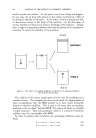
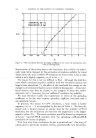
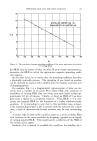
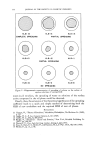
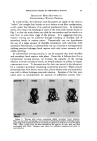
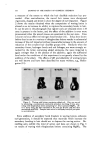
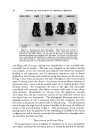
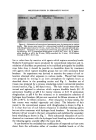
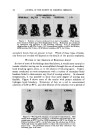
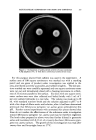
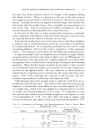
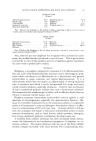
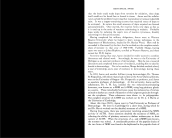
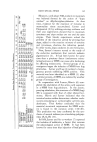
MOI ECULAR FORCES IN PERMANENT WAVING 335 SECONDARY BOND RUPTURE IN CONVENTIONAL WAVING PROCESS As noted earlier, the literature and the patent art speak of the need to "soften" the straight hair keratin so as to induce a new fiber configuration, a curl, under the influence of an external mechanical force. In molecular terms, this means the breaking of some of the inter-chain bonds shown in Fig. 1 so that the main chains can slide by one another and be rebuilt in a new form at some later stage of the process. It is suggested that per- manent waving can be achieved through breaking of disulfide and of secondary bonds in various ratios. Theoretically one can hypothesize the use of a large amount of disulfide breakdown with relatively little secondary bond attack, or alternatively one can visualize a waving process utilizing massive hydrogen bond rupture with only minor amounts of di- sulfide splitting. In conventional waving practice, it can be assumed that both disulfide and secondary bond rupture take place. From this it follows that if in a conventional waving process, we increase the capacity of the waving solution to break secondary bonds, we should enhance its ability to impart a permanent wave. To demonstrate this, hair was waved in the laboratory by a standard procedure simulating commercial practice--fifteen-minute processing time with lotion, water rinse, thirty-minute wait and neutraliza- tion with a dilute hydrogen peroxide solution. Samples of the hair were taken prior to neutralization for analysis of sulfhydryl content (12)-- NI•3 .J Figure 2. Waving with lotions containing added secondary bond br•ake•ss. Hair was waved by simulating a conventional commercial procedure involving 15-min. processing with thioglycolate lotion containing no additive or 2 M urea or 0.15 M added NHa. After a water rinse, the hair remained on the rods for 30 min. and was then neutralized with Ho_Oo•. Samples were taken for sulfhydryl analyses just prior to neutralization.
Purchased for the exclusive use of nofirst nolast (unknown)
From: SCC Media Library & Resource Center (library.scconline.org)