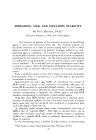
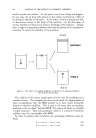
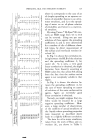
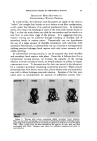
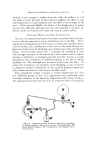
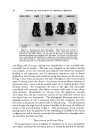
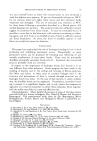
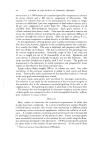
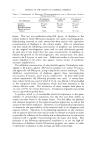
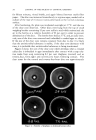
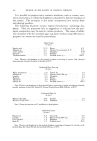
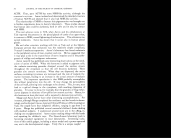
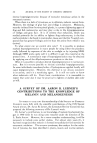
338 JOURNAl. OF THE SOCIETY OF COSMETIC CHEMISTS Figure 5. Waving in an inert atmosphere. Hair tresses were waved by treating with thioglycolate lotion for 15 min., water rinsed and allowed to process for the times shown. In the case of the tress on the right only, peroxide neutralizer was applied after the rinse. In all cases, all operations were conducted in substantially an oxygen free atmosphere using the appa- ratus shown in Fig. 4. The tresses were shampooed immediately on removal from the apparatus after sampling the hair for sulfhydryl analysis. and filling with inert gas helium was selected since it was available sub- stantially free of oxygen. The hair was wrapped on the hollow waving rod initially all air was removed and replaced with helium by successive flushing of the apparatus, and all subsequent operations such as lotion application and rinsing were conducted using the pressure of the inert gas. In Fig. 5 some waves produced in the inert atmosphere with a conventional type of waving lotion are shown the process involved fifteen minutes of processing time, a rinse with de-aerated water and a waiting period of the duration shown. For comparison the tress on the right was chemically neutralized with peroxide after fifteen minutes while none of the others were oxidized. Immediately on removal from the apparatus, samples were taken from the hair tresses for analysis of the sulfhydryl content and the waved hair was shampooed. The photograph illustrates that an ap- preciable amount of curl is produced under the test conditions and that the waves so produced are indeed stable to shampooing. This permanence exists despite the high level of reduced disulfide in the form of sulfhydryl shown in the analytical data in Fig. 5. The permanence of curl to sham- pooing cannot then be explained by the rebuilding of disulfide in the waved configuration, and it must be concluded that stabilization is brought about by secondary bonded cross links. RELAXATION OF WAVED HAIR If the permanent waves produced by treatment in an inert atmosphere are indeed stabilized by secondary forces, it should be possible to destabi-

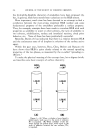
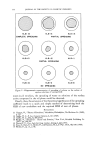
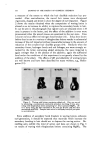
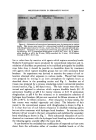
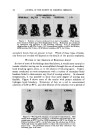
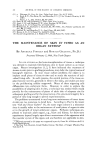
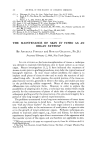
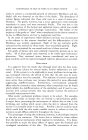
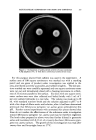
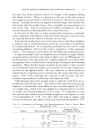
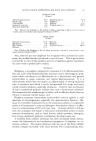
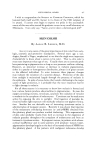
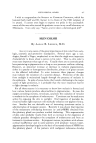
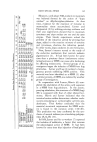
MOLECULAR FORCES IN PERMANENT WAVING 339 IMMERSION IN-- ':i 13E•:.I•I NI•TGAAF'TE i NH,•H50, .. ii:.:RoeSO:Li . , . .... ß •. .-.? .... .-':• .:. ..... : ::-.:. •- :• .'- - .! :• " i•- . ,• • ,. ß : Figure 6.--Relaxation of conventional permanent wave by immersion in various media. Hair tresses were waved by a conventional method involving processing with thioglycolate lotion for 15 min., water rinse, 30-min. wait and peroxide neu- tralization. Relaxation was produced by immersion and agitation in the follow- ing solutions: 0.15 Nammonium thioglycolate at pH 9 for 5 min. 0.5 N ammo- nium bisulfite at pH 6 for 20 min. 40% resorcinol for 15 min. 10 M lithium bromide at 80øC. for 15 min. lize or relax them by reaction with agents which rupture secondary bonds. Similarly if permanent waves produced by conventional reduction and re- oxidation of disulfides are presumed to be stabilized principally by disulfide cross links then it should be possible to destabilize them by treatment with agents which rupture disulfide groups but not with secondary bond breakers. An experiment was devised to examine the extent of curl re- laxation obtained after exposure to various media. Waved hair tresses were prepared by waving in an inert atmosphere for eighteen hours as described above in the preceding section and Fig. 5. Another set of tresses was prepared by a process simulating current commercial practice (second section, Fig. 2, left-hand tress). The hair tresses were then im- mersed and agitated in solutions which rupture disulfide bonds (0.5 M ammonium bisulfite at pH 6 for twenty minutes or 0.15 N ammonium thioglycolate at pH 9 for five minutes) or in nonreductive solutions of hydrogen bond breakers (40 per cent resorcinol for fifteen minutes or 10 M LiBr at 80øC. for fifteen minutes). After relaxation in these media, the hair tresses were washed vigorously and dried. The behavior of hair waved in the conventional manner with thioglycolate is shown in Fig. 6. It is clear that loss of curl follows relaxation in disulfide reducing agents but not after treatment with hydrogen bond breakers. In contrast is the behavior of hair waved in the inert atmosphere and stabilized by secondary bond rebuilding as shown in Fig. 7. Here substantial relaxation of curl is observed on treatment with the hydrogen bond breaking solutions whereas the reducing agents scarcely affect the wave level. It can therefore be concluded that stabilization of imparted curl can come about from the utilization either of covalent disulfide bonds or of the
Purchased for the exclusive use of nofirst nolast (unknown)
From: SCC Media Library & Resource Center (library.scconline.org)