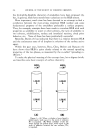
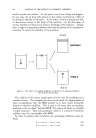
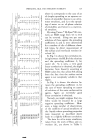
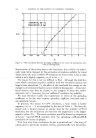
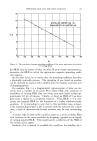
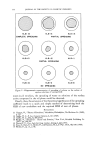
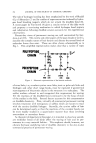
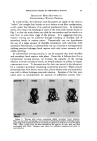
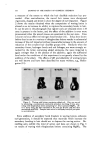
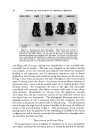
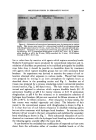
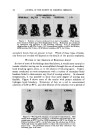
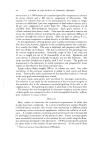
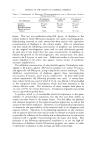
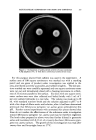
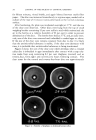
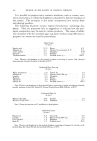
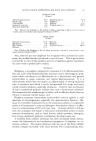
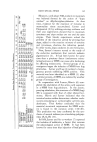
340 JOURNAL OF THE SOCIETY OF COSMETIC CHEMISTS mAX AFTER IMMERSION IN- / : I:::: RESORCIN::Br:ILi .. .¾ . Figure 7. Relation of waves produced in an inert atmosphere. Hair tresses were waved in helium gas with thioglycolate lotion. Relaxation was produced by immersion and agitation in the following solutions: 0.15 N ammonium thioglycolate at pH 9 for 5 min. 0.5 N ammonium bisulfite at pH 6 for 20 min. 40% resorcinol for 15 min. 10 M lithium bromide at 80 ø C. for 15 min. secondary bonds that are present in hair. Which of these types of molec- ular forces are invoked will depend on the details of the process employed. WAVING IN THE ABSENCE OF REDUCING AGENT In view of some of the findings described above, it would seem natural to wonder whether waving can be accomplished through the use of secondary bond breaking agents alone, i.e. in the absence of reducing agent. Experi- ments conducted at room temperature with a variety of secondary bond breakers failed to demonstrate any kind of waving activity. At elevated temperatures, it was possible to show that some degree of waving was feasible. Figure 8 shows some of the results with potent solutions of hydrogen bond br,eakers. Immersion of hair on a rod in concentrated solutions of LiBr at 80øC. and slow d'ilution of the solution over a period of ':: .Li 8r HC, O NH• !t:': H2 NCON Figure 8.--Waving with solutions of secondary bond breakers. Hair tresses were wrapped on a rod 0.2 in. in diameter and immersed in sat- urated urea at 80øC. for 3 hr., 85% formamide at 100øC. for 10 min. or lithium bromide at 80øC. in the latter case the solution was 10 34 in- itially and water was added slowly to reduce the concentration to zero over 11/•. hr. The sulfhydryl content of the hair after treatment was 0.04 meq./gm. in all cases.

MOLECULAR FORCES IN PERMANENT WAVING 341 one and one-half hours to lower the concentration to zero produced a weak but definite wave pattern 85 per cent formamide solutions at 100øC. for ten minutes yield very tight, frizzy waves and hair obviously badly weakened and damaged. The use of saturated urea solutions at 80øC. for three hours following a procedure described in a Dutch patent (18) yielded pleasing curl patterns. The analytical data for sulfhydryl content suggest no alteration from initial values. It must be concluded that it is possible to wave hair in the laboratory with solutions containing no reduc- ing agent, and with little or no disulfide attack, if there is sufficient second- ary bond breakdown. At most, the level of disulfide rupture is well below our analytical means for detection. CONCLUSION This paper has emphasized the role of hydrogen bonding in hair ill both producing and stabilizing permanent waves. Theoretically, at least, permanent waves can be produced by breaking and reforming of any suitable combination of inter-chain bonds. These may be principally disulfides, principally secondary bonds or both. In present-day commercial practice probably both are involved. In respect to the importance of hydrogen bonds, hair keratin is in no way different from other polymers. Great progress has been made in the molding of plastics and in the setting and forming of fibrous polymers like Orlon and nylon in these cases no covalent linkages exist in the structure and permanence of form is created through practical use of hydrogen bond cross links. In the case of hair keratin, it seems unlikely that the disulfide bonds can be neglected. Nonetheless, secondary bond- ing is present to a significant degree, and it only awaits the imaginative ingenuity of a creative researcher to utilize these molecular forces together with the sulfur cross links in a new and effective way. ?lcknow/edgments: Many helpful discussions of some of the ideas herein were held with my former colleagues, Drs. Alfred E. Brown and Lawrence Beauregard. The experimental work done by Dr. Beauregard, Betty Hollingsworth, Evelyn Bruno and Marguerite Hester is gratefully ac- knowledged. REFERENCES (1) Speakman, J. B., 5 t. Soc. Dyers Colourists, 52, 335 (1936). (2) Speakman, J. B., and Whewell, C. S., Ibid., 52, 380 (1936). (3) Asquith, R. S., and Speakman, J. B., Proc. Intern. 14Zool Textile Conf. Atustralia, C, 309_ (1955). (4) Phillips, H., Nature, 138, 121 (1936). (5) Blackburn, S., and Lindley, H., )e. Soc. Dyers Colourists, 64, 305 (1948). (6) Rudall, K. M., Sympos. Fibrous Proteins, y. Soc. Dyers Colourists (1946). (7) Alexander, P.,/Inn. N.Y./Icad. Sci., $3, 653 (1951). (8) Elod, E., and Zahn, H., Melliand Textilber., 30, 17 (1949). (9) Farnworth, A. J., Textile Research )e., 27, 632 (1957). (10) Gershon, S. D., Goldberg, M. A., and Rieger, M. M., Chapter 24, "Cosmetics: Science and Technology," Sagatin, E., editor, New York, Interscience Publishers, Inc. (1957).
Purchased for the exclusive use of nofirst nolast (unknown)
From: SCC Media Library & Resource Center (library.scconline.org)