JOURNAL OF THE SOCIETY OF COSMETIC CHEMISTS PRESERVATION OF EMULSIONS-- p-HYDROXYBENZOIC ESTER PARTITION COEFFICIENT H. W. HIBBOTT, M.Sc., Ph.D., A.R.I.C., and JANET MONKS* Delivered at the Summer Conference of the Society on 25th August 1960. The solubility of methyl p-hydroxybenzoate in a number of oils, waxes and nonionics has been determined, and correlated with partition of the preservative between oil and aqueous phases. The practical application of this effect on the preservation of emulsions is discussed. IN RECENT YEARS much work has been published on the spoliation of emulsions by fungi and bacteria. The subject received great impetus some ten years ago in one connection by the report of Bolle and Mirimanoff • that certain nonionic emulsifiers inactivated preservatives including p-hydroxy- benzoates. Evidence for complex formation between preservative and nonionic has been observed by deNavarre and Hall s, Wurster and Rath 3 and others. The complexing has been attributed to hydrogen bonding and van der Waals forces. Wedderburn 4 considers that some nonionics may screen the bacterial or fungal cell wall from contact between the organism and the preservative, and Beckett and Robinson 5 have given evidence of a similar nature. Barr and Tice 6 found that certain organisms are capable of hydrolysing some nonionic ester derivatives. Atkins 7 pointed out that preservatives may be much more soluble in the oil phase in a cream than in a water phase. It is commonly found that for most preservatives some minimum concentration in the water phase is essential for adequate preservation. The solubility of methyl p-hydroxybenzoate in a number of cosmetic raw materials has been deter- mined and partition between water and water-insoluble components have been investigated. Experimental The solubility of methyl p-hydroxybenzoate in a number of cosmetic raw materials was determined. In the case of materials which were solid at room temperature the determination was carried out at 60øC to obtain the material in a liquid state. The partition of methyl p-hydroxybenzoate was carried out by taking 200 g water, 0-3 g methyl p-hydroxybenzoate, 50 g oil, wax, or water *Goya Ltd., Amersham, Bucks.

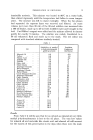
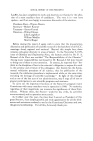
PRESERVATION OF EMULSIONS 3 immiscible nonionic. This mixture was heated to 80øC on a water bath, then stirred vigorously until the temperature had fallen to room temper- ature. The mixture was left to stand overnight. When the two phases had separated the aqueous layer was removed and filtered. An exact volume (not more than 9`0 ml) of the filtered solution was measured into a 100 ml beaker, made up to 9`0 ml with distilled water and brought to the boil. 9. ml Millon's reagent were added and the mixture allowed to simmer gently for exactly 5 minutes. The solution was cooled, transferred to a 50 ml volumetric flask and made up to the mark. The red colour was compared with standard solutions similarly treated. Table 1 Solubility of methyl Partition Oil p-hydroxybenzoate Coefficient g/100 g solvent Oil/Water Mineral Oil .... 0-2 0.3 Tallow .... 0-6 1-3 Stearic Acid' .. .. 0.9 2.4 Almond Oil .... 1.4 6 Lanolin ...... 1.8 7 Oleic Acid ...... 2.9 7 Oleyl Oleate .... 3.9 10 Isopropyl Stearate .. 6.3 18 Butyl Stearate .... 6.5 12 Isopropyl Oleate .... 6.7 16 Butyl Oleate .. 7-0 16 Cyclo Hexanol SteP'ate .. 8-0 13 Isopropyl Myristate .. 8-2 18 Cetyl Acetate .... 9.3 18 Ricinoleic Acid .... 11.9 24 Acetoglyceride .... 12-5 27 Cetyl Alcohol .... 13.6 23 Oleyl Alcohol .... 15.8 31 Nonex 59 ...... 18 30 Castor Oil ...... 18-8 47 Nonex 43 .... 23 45 Diethyl Phthalate i i .. 25.8 56 Di-ethyl Sebacate .... 31.2 86 Ethyl Hexane Diol .. 39 159 Diethyl Adipate .... 41 204 Nonex 32 ...... 13.1 Arlacel 83 ...... 14.9 Lanbritol ...... 20.4 Tween 80 ...... 44.7 Lubrol W ...... 54.3 Results From Table 1 it will be seen that for an oil such as mineral oil very little methyl p-hydroxybenzoate is lost to the oil phase. The very low values for mineral oil and materials like stearic acid and almond oil will account for the success of this preservative in the days when these were the main
Purchased for the exclusive use of nofirst nolast (unknown)
From: SCC Media Library & Resource Center (library.scconline.org)