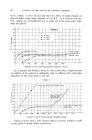
JOURNAL OF THE SOCIETY OF COSMETIC CHEMISTS been aware of this problem, we do not think that it is a serious one as the percentage of 1.3 propane diol is so low. We must admit, however, that this point has not been investigated. CARE OF THE SKIN, WITH PARTICULAR REFERENCE TO CLIMATE AND SEASON W. SCHNEIDER, Dr. Med.* Delivered at the Summer Conference of the Society on 25th Aug•tst 1960. Care o• the skin shoultl be relatetl, more than ever, to climate aml season. This al•lffies not only to l•rotection against ratliation during changes o• climate aml season, but also to &y ichthyotic skin during the winter. Cleansing o• the skin tlel•emls on the intlivitluah TttE MOST important concern of skin care and cosmetics is the retention or the regulation of the fat and water content of the skin. The so-called lipid covering, as many investigations have shown, contains not only water- repellent trig!ycerides, but also waxes and components which stimulate moistening. Alterations in this composition can, in analogy to a chemical buffer system, regulate water content. In the final analysis, both water and fat content depend on the same biological sub-stratum. The acid covering, or buffer protective covering, can be added as the third component. The selfprotective functions of the skin can be considerably affected both by loss of fat, or alternatively defatting, and by the destruction of the water retaining components whereby the acid covering is simultaneously affected, or to put it another way, the so-called lipid covering of the skin can be rolled up both from the fat or the water side. In both cases, drying out and defatting are the final consequences. That seasonal changes in the weather, with varia- tions in temperature and humidity, have considerable influence can be ascertained by deduction alone, and is known empirically as well as from the experiments of Gaul and Underwood'. Much simpler and more revealing is the dependence of the light protection on the season of the year. Man will always be confronted with more or less extreme variations in air pressure, humidity, air movement, temperature and in the radiant energy of the sun. The most important factors in our opinion are (1) the sun's radiant energy in the framework of its energy distribution on earth, (2) the temperature and (3) the humidity. Gaul and Underwood' include atmos- pheric pressure as a decisive factor. Apart from these weather and climatic *St•tdtische Hautklinik, Augsburg, Germany.

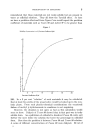
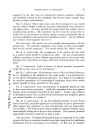
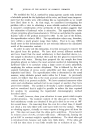
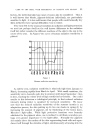
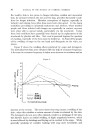
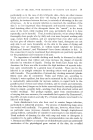
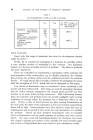
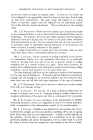
CARE OF THE SKIN, WITH REFERENCE TO CLIMATE AND SEASON factors, the individual skin type must of course also be considered. Thus it is well known that blonde, pigment-deficient individuals, are particularly sensitive to light it is less well known that people with constitutionally dry skins (ichtyotis) have special difficulties even in winter. If we turn first to the seasonal variations in radiation and light-protection we need not perhaps dwell on the well known differences in the radiation itself but rather consider the different reactions of the skin to the sun in the course of the year. In Figure 1 the curve of human radiation sensitivity is plotted. 0.0 8.0 ?.0 0.0 5.0 4.0 Figure 1 Human radiation sensitivity. As will be seen, radiation sensitivity is relatively high from January to March, decreasing rapidly from March to April. With small variations, the sensitivity curve descends quite low in summer until about September then it rises, reaching the winter level of high sensitivity by October. One could ascribe to this behaviour a teleological principle, in that reduced radiation intensity during winter is equalised by increased sensitivity. We know no v that the reduced radiation sensitivity of the summer months is an adaptation process, the skin putting up its two sun shades in spring (1) by increasing the amount of pigment, (2) by thickening of the horny layer, Miescher's light-callus. While light protective functions were formerly attributed to the pigment alone, one is inclined to attribute nowadays per- haps even greater importance to the light-callus. Normally the pigment sits mainly above the nucleus of the skin regenerating basal cells and repro- duces itself through the stimulus of light, simultaneously advancing into the
Purchased for the exclusive use of nofirst nolast (unknown)
From: SCC Media Library & Resource Center (library.scconline.org)