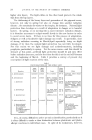
MONO-ESTER CONTENT OF PROPYLENE GLYCOL MONOSTEARATE 11 stearate these effects are not fully identifiable mainly because there has not been a satisfactory method of determination of mono-ester content. At the present time, the accepted methods of assessment are those specified by the Toilet Goods Association of America: Method 513, described for propylene glycol monostearate Method 58, for ethylene glycol mono- stearate and Method 213, for glyceryl monostearate all of which are periodate oxidation methods. We have been able to improve the T.G.A. method No. 513 but it remains unsatisfactory. Other means of estimation such as fractional distillation and infra-red spectrophotometry have been considered, but from general considerations we believe that the results so obtained after laborious experimentation would not be more accurate than those obtained from the straightforward hydroxyl value or chromatographic methods that we have devised. In the case of glyceryl monostearate, hydroxyl value and chromato- graphic techniques are less attractive than in the case of mono-esters of dihydric glycols for the following reasons :-- (i) The estimation of hydroxyl value does not permit the calculation of mono-ester content since the sample consists of a mixture of mono-ester, di-ester, triester in addition to free fatty acids. (ii) Theoretically, a chromatographic method is likely to require a more refined technique as the difference between the behaviour of a glyceryl monostearate and glyceryl distearate is likely to be much less easily defined than the difference between the mono- and di-esters of a dihydric glycol. However, recently Quinlin and Weiser • have described such a chromato- graphic method of estimation of mono-ester content of glyceryl mono- stearate. This method is based on the ability of the di- and mono-esters to remain adsorbed on to silica gel when eluted with solvents of increasing polarity. The authors claim that this method is accurate to plus or minus o.5%. In the T.G.A. method 26 for glyceryl monostearate, there is no need to saponify the sample before using the periodic acid oxidation of hydroxyl groups once having washed out the free glycerol. Hence the single titration is a direct measure of the percentage of a glyceryl monostearate. In addition, quantitative oxidation of the hydroxyl groups appears to occur more readily than in the case of the dihydric glycols. Calculation of the mono-ester content of propylene glycol monostearate from the saponification value unfortunately leads to highly variable results, since the difference in saponification value between that of the pure mono and that of the pure di-ester is only 22.4. Small variation of the estimated saponification value leads to a large variation in the calculated mono-ester content. However, on acetylation of the mono-ester, the saponification

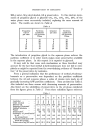
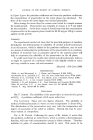
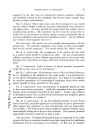
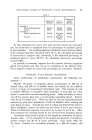
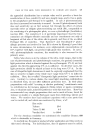
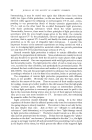
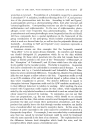
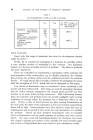
12 JOURNAL OF THE SOCIETY OF COSMETIC CHEMISTS value of the product is greatly increased, so that the mono-ester content can be calculated to a much greater degree of accuracy. A similar chromatographic method of analysis to that of Quinlin and Weiser x is now described for propylene glycol monostearate. The results are in good agreement with those obtained by the hydroxyl value method. MODIFIED T.G.A. METHOD NO. 56 Reproduction of mono-ester determinations by this method were found to be unsatisfactory due to uncertain end points and variation in blanks. The end point can be made satisfactory by the addition of 10 mls. of concentrated hydrochloric acid immediately before the titration of the liberated iodine. The unsatisfactory nature of the blank is responsible for such results as 59.6% against 52.8ø/0 obtained with duplicate analyses (blank titrations being 38.5 ml and 39.25 ml). The observation of the variation of the blank suggested that there might be some reaction between the periodic acid and the alcohol of alcoholic caustic potash. To test this, 50 ml samples of periodic acid solution were treated with (i) 20 ml of N/2 NaOH aqueous and (ii) 20 ml of N/2 KOH alcoholic and allowed to stand for 15 minutes. After the addition of excess potassium iodide and 10 ml of concentrated hydrochloric acid, the liberated iodine was titrated with sodium thiosulphate solution with the following results :-- 50 ml periodic acid solution q- 20 ml N/2 NaOH aqueous 50 ml periodic acid solution q- 20 ml N/2 KOH alcoholic Titrations (i) (ii) 39.7 ml 39.7 ml 38.8 ml 37.3 ml The method was modified by using 20 ml N/2 aqueous caustic soda for saponification and increasing the time under reflux from « hour to 2 hours. As before, 10 ml of concentrated hydrochloric acid were added to the flask immediately after the addition of potassium iodide to ensure the rapid liberation of iodine. That these modifications have considerably improved the method is illustrated in Table 1. At first, it is surprising that a negative value for mono-ester content can be obtained by using the T.G.A. method however, this can be readily explained. The calculation of mono-ester content depends on the fact that for 100% mono-ester 328.1 grams of sample contain 76.1 grams of propylene glycol, i.e. 23.17ø/0 propylene glycol, and that for 100ø/0 di-ester 580.1 grams of sample contain 76.1 grams propylene glycol, i.e. 13.1ø/0 .
Purchased for the exclusive use of nofirst nolast (unknown)
From: SCC Media Library & Resource Center (library.scconline.org)