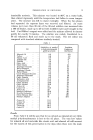
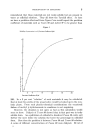
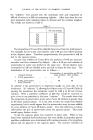
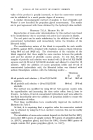
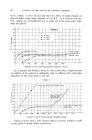
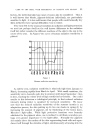
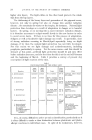
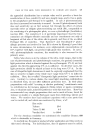
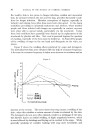
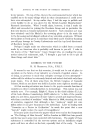
4 JOURNAL OF THE SOCIETY OF COSMETIC CHEMISTS oil phase ingredients of cosmetic emulsions. The range of esters show partition coefficients from 10 to 200. With increasing use of such materials typified since about 1945 by isopropyl myristate there will be more tendency for the preservative to be taken into the oil phase. With approximately 5% isopropyl myristate to 95% water half the preservative only will be in the aqueous phase. The two oil-soluble nonionic emulsifiers in the list also have high partition coefficients, again tending to denude the water phase of preservative. The long chain alcohols and ethylhexane diol also have high partition coeffcients. Table 2 Partition of methyl p-hydroxybenzoate between oil mixtures and water. Partition Coefficient Oil/Water 90 ml isopropyl myristate 90 ml water 20 3 g methyl p-hydroxybenzoate 65 ml isopropyl myristate 25 ml mineral oil 90 ml water 11 1-5 g preservative 65 ml isopropyl myristate 25 ml mineral oil 10 g stearic acid 10 100 ml water 1-5 g preservative 65 ml isopropyl myristate 25 ml mineral oil 3 g cetyl alcohol 15 93 ml water 3 g preservative A series of oil and fat mixtures were examined in the same way. The results in Table 2 show the trends expected in the partition coefficients of such mixtures. Figure I shows the solubilities/partition coefficients of Table 1. Despite the wide variety of chemical compounds listed, the relationship is com- paratively smooth. By finding the solubility of methyl p-hydroxybenzoate in an oil phase mixture, reference to the graph will give a close approxi- mation to the partition coefficient for guidance in formulation. The solubility of methyl p-hydroxybenzoate in a number of "water- soluble" nonionics are listed also in Table 1. It will be seen that the solubility of the preservative in, for example, Tween 80 and Lubrol W is very high--whatever the mechanism of solution may be. It must be

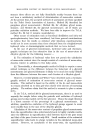
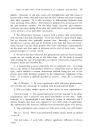
PRESERVATION OF EMULSIONS remembered that these materials are not water-soluble but are present in water as colloidal solutions. They all show the Tyndall effect. So here we have a partition effect and from Figure 1 one would expect the partition coefficient of materials such as Tween 80 and Lubrol W to be greater than Figure Solubillty of preservative in oil / Partition Coefficient O]W ' • f , i i i ! , i ..... i 20 40 80 120 160 200 Partition Coefficient O/W 250. In a 2 per cent "solution" of such materials it may be calculated that at least five-sixths of the preservative would be locked up in the non- ionic phase. From such physico-chemical considerations the occasional failure of methyl p-hydrobenzoate in emulsions is not surprising. However, the situation is not quite so bad as this calculation would seem to show. Dialysis of Tween 80 showed that in fact part was in truly soluble form. An equilibrium of colloidal to dissolved Tween 80 exists and further the more dilute the solution the lower the percentage in colloidal form. Here then the partition is between Tween 80 and Tween 80 solution. A series of different concentrations of Tween 80 were dialysed. 50 ml of
Purchased for the exclusive use of nofirst nolast (unknown)
From: SCC Media Library & Resource Center (library.scconline.org)