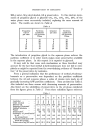
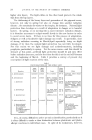
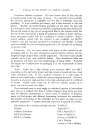
MONO-ESTER CONTENT OF PROPYLENE GLYCOL MONOSTEARATE 13 Table I Hydroxyl Improved T.G.A. Value Method Method Method Sample 1 First Determination 65-5% 59.6% 78-8% Second ,, 69% 52'8% 79'4% Sample 2 First Determination 64.8% Negative 66.8% Value Second ,, 63.7 % Negative 67.4 % Value In this estimation the water, free acid and free glycol are estimated and the mono-ester is calculated from the percentage of combined glycol in the remainder. The resulting algebraic calculation means that inevitably if the combined glycol is estimated below 13.1% the calculated percentage of mono-ester is negative and, conversely, if the estimated percentage of combined glycol is above 23.17% the calculated mono-ester percentage exceeds 100%. In practice it commonly happens that the reaction between propylene glycol and periodic acid does not go to completion in the allowed time, hence negative results for mono-ester percentage are sometimes obtained. HYDROXYL VALUE METHOD (Acetylation) After consideration of preliminary experiments, the following was adopted :- Dissolve 10 grams of propylene glycol monostearate in 100 ml of diethyl ether, add 100 ml of distilled water, and acidify by the addition of 2 or 3 drops of concentrated hydrochloric acid. This amount of acid is usually sufficient to neutralise small quantities of soap that are often found in commercial non-self-emulsifying goods. Shake and allow to stand, run off the aqueous layer into a second similar separating funnel. Extract with 70 ml of diethyl ether. Wash the ether in the two separating funnels successively with three instalments of 100 ml distilled water running the wash liquor to waste. Transfer the ether to a flask and distil off the solvent. After distillation, remove the flask and add about 3 ml of pure acetone. Warm the flask and evaporate the acetone by means of a jet of air. After this treatment the material should be dry and free from propylene glycol. Accurately weigh about 2 grams of the sample for estimation of saponi- fication value. To the remainder of the sample add 10 grams of anhydrous sodium acetate and 30 ml of acetic anhydride. Heat under reflux for 2« hours. Transfer the acetylated material to a 600 ml beaker, add 4

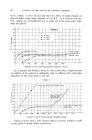
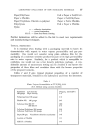
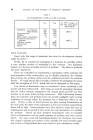
14 JOURNAL OF THE SOCIETY OF COSMETIC CHEMISTS 400 ml of distilled water and boil for 20 minutes. Syphon off the water and add 400 ml distilled water and again boil for 20 minutes and syphon off the aqueous layer. Repeat this operation until the water is neutral to litmus. Filter the acetylated material through a 540 Whatman filter paper into a small beaker in an oven at about 80øC. Estimate the saponification value of the acetylated material, taking about 1.5 grams of sample and hence calculate the hydroxyl value of the washed sample of propylene glycol monostearate. The percentage mono-ester content of the washed material is calculated from the expression :- The mono-ester percentage = Hydroxyl Value X 100 171-3 This expression is derived assuming the molecular weight of stearic acid to be 270. To determine the mono-ester content of the original unwashed material, it is necessary to determine the sum of the free glycol and water, which can be done by the Dean and Starke method using petroleum ether, B.P. 100-120 as added liquid and taking a 10 gram sample, distilling into a 2 ml receiver. Under these conditions, the propylene glycol and the water are collected in the receiver then, since the specific gravity of propylene glycol is 1.035, the volume of the mixture may be taken as the sum of glycol plus water without any serious error. To consider the reproducibility of a method it is necessary to collect a sufficient number of inter-laboratory results on specified test samples. These results are not yet available however, results obtained with a test sample issued to an experienced and to an inexperienced operator in the same laboratory are shown in Table 2. Table 2 Experienced Inexperienced Operator Operator Sample 3 45.1% 45.8% Sample 3 44.5% 44'5 •o CHROMATOGRAPHIC ANALYSIS Reagents Redistilled benzene. Redistilled ether. Chromatographic silica gel supplied by B.D.H.
Purchased for the exclusive use of nofirst nolast (unknown)
From: SCC Media Library & Resource Center (library.scconline.org)