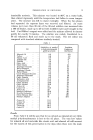
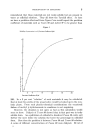
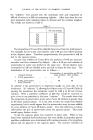
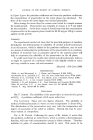
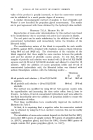
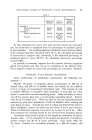
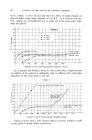
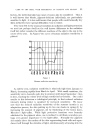
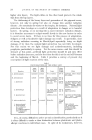
2(3 JOURNAL OF THE SOCIETY OF COSMETIC CHEMISTS Summarising, it may be stated once again that hitherto there have been really two types of skin protection on the one hand the cosmetic, which is directed solely against the inflaming or erythemogenic UV-B, and--corres- ponding to our present-day ideals of beauty--permits pigmentation by UV-A and on the other hand the so-called therapeutic light protectors, with shade producing substances which block the whole spectrum. Theoretically, however, there must be three principles of light protection in accordance with the wave length ranges given in the table the cosmetic, directed against UV-B, the prophylatic, directed against all photodynamic reactions, that is, against UV-A and B, and finally the shade producing light protection as in the case of idiopathic light dermatoses. I consider this important because at the moment experiments are being carried out with a view to developing light protective materials which can provide protection not only from UV-B but also from large sections of UV-A. General cosmetic light protection is subject to certain difficulties with regard to the preparation of ointments. Since emulsions are mainly involved, the aim should be to provide both the oil and the water phases with a light protective material. Our own experiments with such light protective cream had favourable results. The light protective effect of such a cream was, how- ever, exceeded by that of lotions, and particularly by pressurized packs. We obtained the best results from esters and amides of p-methoxycinnamic acid (OLI HOT). One and the same light protective substance has varying effects according to whether it is in the form of an emulsion, lotion or pressure pack. The comparison of various light protective preparations with different bases, is not possible. Obviously the choice, and also the base, must be suited to the season of the year. Thus on account of their smaller capacity for cooling, creams give better results in the cold seasons than the high grade "cooling" pressure packs, while lotions occupy an intermediate position. As far as light protection is concerned, special attention must be paid to the lips in the mountains during winter, since in view of their pigment deficiency they are in any case more sensitive to UV. In many cases, dye-containing lip pomades suffice for this purpose. Light protection should definitely begin in spring. It is the bitter experience of doctors that the affected persons only come for treatment when the spring relapse is already manifest. Prevention in time is not only better, but also simpler than cure. Just as there are "allergies to anti-allergy substances" (anti-histamines), so it is possible to have "light damage caused by light protection substances". The latter should remain as a film on the skin and not penetrate into the tissues. If that does not happen the "photo- absorber on the skin" can become a "photocatalyst in the skin", i.e., the light energy is no longer warded off and prevented from penetrating, but is stored in the depths of the tissue, by which process the effect of the supposed light

CARE OF THE SKIN• WITH REFERENCE TO CLIMATE AND SEASON 27 protection is reversed. Precondition of a dermatitis caused by a sunscreen is abundant UV-A radiation, insufficient filtering of the UV-A, and penetra- tion of the photosensitizer into the skin. According to Sidi 6 and Ippen 7, p-aminosalicylic acid has a photosensitizing effect, both after internal and external application. Corresponding reactions can also be triggered off by antihistamines and sulphonamides. In the case of sulphon.amides, photo- allergies occurr more frequently than photosensitization. The esters of p-aminobenzoic acid cause photoallergies more frequently than the acid itself. All these compounds have a special significance in the framework of the group sensitization of the para-group, which includes p-phenylendiamine which is used as a fur and hair dye, as well as dyes for polyamide fabrics and foodstuffs. According to Sidi 8 and Epstein 2 every sunscreen represents a potential photosensitizer. Sunscreen creams are thus exmnples that the frequently vaunted "deep effect" is by no means always desirable. In cosmetics and therapy one should distinguish (1) preparations which lie on the skin without penetrating, (2) those which penetrate into the skin but remain there for longer or shorter periods in the sense of the "Permeation" of Moncorps 9, or the "Absorption" of Vonkenne! •ø, and (3) those which leave the skin rela- tively quickly via the vascular system. The latter is resorption. In general, this can be considered to be undesirable in cosmetics and in therapy. A very instructive test by v. Czetsch-Lindenwald and Schmidt-La Baune xx illus- trates the above-mentioned differences. Trypaflavine, dissolved in petroleum jelly does not impart a yellow colour to the skin. Unguentum molle as well as an O/W emulsion of fat and cetyl alcohol impart a yellow colour to the skin where trypaflavine is present. The decisive difference in regard to absorption between Unguentum molle and the O/W emulsion mentioned, is in their different behaviour in relation to washing. After washing, the area treated with Unguentum molle regains its skin colour, while trypaflavine aided by the cetyl alcohol emulsion is re-absorbed to such an extent that the colour cannot be removed by washing. To summarise, one can say that there are preparations, e.g. the sun screens, which should on no account penetrate into the skin that certain cosmetics and therapeutic agents should penetrate the skin and remain there (permeation absorption), and that a product that quickly leaves the skin through vascular resorption can hardly have a beneficial effect but can lead to resorptive harm. In this sense, the evidence of active materials in the urine cannot be considered as proof of a therapeutic deep effect. For example, I was once asked why a corticosteroid acne that was caused by internal treatment could be cured by treatment with the same material in the form of an ointment. The explanation lies in the difference between local absorption which heals the acne, and the resorptive effect, which causes a testosterone acne.
Purchased for the exclusive use of nofirst nolast (unknown)
From: SCC Media Library & Resource Center (library.scconline.org)