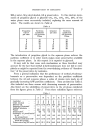
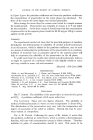
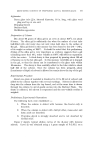
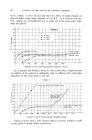
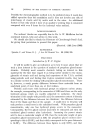
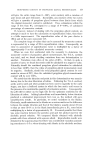
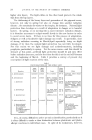
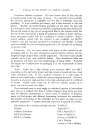
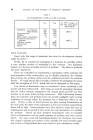
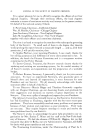
24 JOURNAL OF THE SOCIETY OF COSMETIC CHEMISTS higher skin layers. The light-callus on the other hand protects the whole skin from the top layers. The thickening of the horny layer and generation of the pigment occur, however, not only in spring but also on change into another radiation climate the mountains in winter or the tropics, for instance. Natural light protection thus develops as a result of adaptation to danger or to harmful factors. In spring, or on moving into a more intensive radiation climate, it is therefore necessary to adapt oneself slowly to the new factors in order to avoid severe harm. If there is no time for this process of adaptation, obligate as well as facultative light damage can result. In particular, days of strong radiation occuring in March/April repeatedly bring on slight damage, if by then the natural light protection has not fully developed. For this reason we see light damage and actinodermatoses, including porphyria, particularly in spring. For the same reason--and this should be stressed at this point--artificial light protection should be put into effect before radiation increases, and the best time for this is at the end of February and the beginning of March. Table I provides a survey of present day conceptions of light reaction of the skin. Table 1 PHOTOREACTIONS OF THE HUMAN KIN Ultra Skin Ultra Violet Sensi- Violet Reaction Dose tivity Cause Range Clinic A. phototraumatic increased normal U.V. overdose UV-B erythema solare derma- titis solaris B. photodynamic normal normal photo - sensitiz- UV-A ing (externally and B and internally 1. phototoxic e.g. tar, luro- mostly e.g. photodermatitis pig- cumarine UV-A meritaria Freund (Ber- Iock-dermatitis) photo- derm. vaseline-genica, meadow grass dern•. 2. photoallergic e.g. PAB, PAS UV-A (excema) sulphanilamide, and B light-exanthema salvarsan. 3. photobiotropic additional noxa UV-B e.g. lupus erythematodes, sub - acute (usually) seborrhoeic eczema. C. photoanaphylactic normal increased idiopathic UVand visible light 1. photourticarial light-urticaria 2. polymorphous e.g. summer-prurigo (a) exzematous hydroa vacziniI. (b) puritic Xeroderma pigm. (c) bullous-multiform (parphyria) (d) degenerative- epithelial It is, of course, difficult to arrive at such a classification, particularly as it is often difficult to make a clear distinction between phototoxic and photo- allergic reactions in individual cases. In spite of its weaknesses, however,

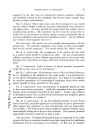
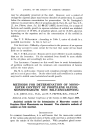
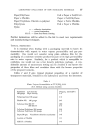
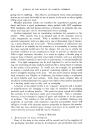
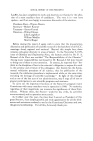
CARE OF THE SKIN, WITH REFERENCE TO CLIMATE AND SEASON the appended classification has a certain value and it provides a basis for consideration of dose, sensitivity and wave length range, and is thus a guide to the prophylaxis and therapy to be applied. In case A (phototraumatic) the dose is increased but sensivity is normal. In case B (photodynamic) both dose and sensitivity are at first normal, but through the effect of certain materials either an obligate photosensitizing can result (B1), comparable to the sensitizing of a photographic plate, or even a photoallergic (facultative) reaction (B2). For cosmetics it is of particular importance that the furo- cumarines are obligate effective materials and are constituents not only of bergamot oil but also of the citrus oils in general, and thus of the so-called Portugal Oils of cosmetics. That Epstein's 2 and Burckhardt's a photo- allergic processes are involved in Case B2 is shown by Kimmig's 4 proof that in some circumstances, for instance, even sulphonamide concentrations of 10 -5, together with light, can produce high grade skin reactions. In case C, with photoanaphylactic reactions, the sensitivity is also increased in the primary sense. Table 1 also shows us in the column of the ultra-violet ranges, that in the case of phototraumatic and photobiotropic reactions, the general (cosmetic) light protection which is directed against the erythemogenic UV-B, and not against the directly pigmenting UV-A, is sufficient. In all other cases, the light protection should be related at least to the long wave UV-A. In the case of idiopathic light dermatoses it must be expressly emphasised that the skin is sensitive to light of the whole wave range from UV-C to infra-red radiation. Here, the so-called "therapeutic light protection" comes into its own. Contrary to various claims, the usual light absorbing combinations in dissolved form, do not offer sufficient protection here. In their place preparations with solid "covering or shadow producing" constituents must be substituted as for instance pigments (Bolus rubra) or pastes containing zinc, or titanium oxide, mixed for preference with skin tone dyes. Ross 5 has recommended very simple preparations that can be made at home, based for instance on kaolin or a simple fluid paste made from whitening, talcum and xvater. We ourselves have had excellent experience with a zinc paste that can be washed off, and which was mentioned by Knox, et al ø Zinc oxide Talcum 25.0 Triton X-100 4.5 Vaselini flavi to 100.0 For the American xvhich is obtainable in In medical use, the skin toned colouring. emulsifier we substituted the emulsifier Rennex 699 Germany. paste is washed off after application and thus needs no. For individual use, dyes or pigments must be added.
Purchased for the exclusive use of nofirst nolast (unknown)
From: SCC Media Library & Resource Center (library.scconline.org)