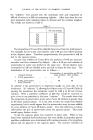
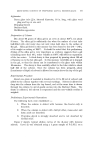
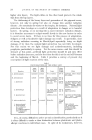
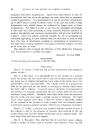
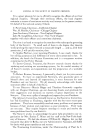
38 JOURNAL OF THE SOCIETY OF COSMETIC CHEMISTS Table • Gas Permeabilities cc./100 sq. in./24 h./ml./atm. O3 COs At 77øF except in the two cases speci- fied at 86øF. Polythene Low density 610 2700 High density 180 720 (86øF.) Polypropylene 190 640 Pliofilm 10 110 Mylar grade of polyester 5 19 Vinylidene chloride co- polymer 1 5 (86øF. ) Cellulose Acetate 190 1600 Polystyrene 370 2740 Nylon 5 50 USER PROBLEMS Faced with this range o[ materials, how does the development chemist make his choice ? Firstly, let us consider the packaging of a shampoo in a flexible sachet, a very popular method of marketing in this country. Two important features are the loss of weight and loss of perfume. The latter is probably the more important. These are controlled by constructing a lamination which combines the best properties of the various plies, e.g. in cellulose polythene, the cellulose film provides the perfume barrier and the polythene provides the moisture barrier. No single plastic film is usually considered for packaging shampoos with the exception of P.V.C. which will not be discussed in this paper. Two classes of laminations may be considered: those containing a foil barrier and those without foil. Both types are used for packaging shampoos and the choice between transparent and opaque packs pro¾ides the first decision to be made before testing commences. With foil-bearing lamina- tions, the moisture and perfume losses are usually negligible under normal conditions of storage unless the shampoo has a deleterious effect on the pack. If there is loss of bond between the plies causing delamination at the heat seals, the effect of the lamination is lost and moisture and perfume losses will be high. Some perfumes have been found to cause this type of delamination and in genera] if this occurs the only alternative is to modify the perfume. Almost all basic shampoo formulations have no harmful effect on lanfinations but the small quantity of perfmne may have serious effects. The most usual foil bearinõ-laminations for shampoos have been foil x paper x pliofilm and acetate x foil x pliofilm but more recently paper and acetate x foil/polythene have been found to give satisfactory results.

LABORATORY EVALUATION OF NEW PACKAGING MATERIALS 39 Similar hazards are experienced with nonfoil-bearing laminations, i.e. delamination due to some perfumes, etc. With these laminations there is always a positive weight loss but this varies in magnitude from material to material. There •nay also be slight losses in perfume. The lamination of this class, which has had the largest use for shampoo packaging up to the present time is acetate x pliofilm. The pliofilm supplies the gas and moisture barrier properties whereas the acetate provides strength and enhances the appearance besides being suitable for reverse printing, i.e. the print is sandwiched between the plies. Cellulose/polythene is a lamination which gives a satisfactory performance for the packaging of shampoos but the heat sealing must be carefully controlled in order to obtain the best results. Two other new laminations which may give better moisture and perfume barrier properties are MXXT cellulose/polythene and MXXT cellulose x pliofilm. Of the non-foil opaque laminations paper/vinylidene chloride co-polymer offers the best protection against moisture and perfume loss but paper x pliofilm has been used for shampoo packaging. The perfume would tend to be lost quite quickly from paper/polythene. When the package is a plastic bottle rather than sachet, the relatively impermeable foil barrier cannot be used. All that has been possible in the past was to increase the thickness of the bottle or use less permeable polymers such as a higher density polythene. A suitable combination of these will frequently provide the necessary resistance to moisture, gases and perfumes. The permeability of bottles to gases and perfumes may also be reduced by an internal or external coating of a more impermeable film such as a vinylidene chloride co-polymer but this technique is still in the development stage. There may be a need for a rigid unit pack such as a polystyrene tube, for deodorant sticks, etc. This material gives excellent protection against losses of perfume although, when in high concentrations, perfumes can lead to crazing of the plastic material. Polystyrene is soluble in many solvents, .e.g. acetone and amyl acetate, and it is essential that thorough compati- bility testing is carried out before any recommendations are made. This material also has the disadvantage that weight losses from aqueous products are quite high. A phenomenon experienced with blown polythene bottles, particularly with shampoos and products containing surface active agents and in some •cases with products containing alcohol, e.g. hair lacquers, is that of "environmental stress cracking". In this, some of the stresses set up in •he bottle during moulding are acted upon or released by the product
Purchased for the exclusive use of nofirst nolast (unknown)
From: SCC Media Library & Resource Center (library.scconline.org)