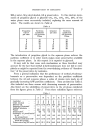
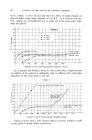
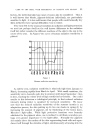
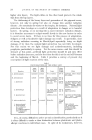
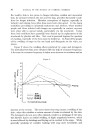
30 JOURNAL OF THE SOCIETY OF COSMETIC CHEMISTS the healthy skin is less prone to fungus infection, swollen and macerated skin, for instance between the toes and the legs, provides favourable condi- tions for fungus infection. Mistaken conceptions of hygiene, especially in industry and mining, have often done more harm than good. In the damp conditions prevailing in industrial washrooms and showers, where healthy people and those infected with fungus are repeatedly in contact, mycoses were often able to spread widely, particularly via the woodwork. Today these bad conditions have generally been cleared up by replacement of the woodwork by plastics and tiles. But even in personal hygiene the question of washing, especially of the feet, must be looked at. In Figure 2 the graphs of the swelling of soaps on the one hand and detergents on the other, are shown. Figure • shows the swelling effects produced by soaps and detergents. The individual test data were obtained with the help of resonance frequency. A decrease in resonance frequency is taken as an increase in moistness and an Figure increase as the reverse. The curve shows that soap causes a swelling of the skin when this subsides a certain amount of water is retained by the skin. The detergents do not, as is often claimed, result in a shrinkage of the skin, but likewise lead to an initial swelling, of slight magnitude however, which is soon followed by shrinkage and drying out in contrast to the soaps. While generally speaking we consider washing with soap more favourable, and

CARE OF THE SKIN, WITH REFERENCE TO CLIMATE AND SEASON particularly so in the case of dry ichthyotic skin--there are other reasons which need not be gone into here--the drying of swollen and macerated epithelia, Ior instance between the toes, is certainly of advantage in the case of mycoses. As far as mycotic infection is concerned, the condition of the skin is no less important than therapautic anti-mycotic treatment. The final shrinking effect of the detergents drains the "marsh", in the truest sense of the word, while washing with soap, particularly when it is done repeatedly, can be harmful. Thus, in medical practice, we are always finding thoroughly clean people who by daily and even more frequent washing with soap, worsen their condition, and are surprised that even after such care the feet give off offensive smells. On the other hand, detergents are not only able to act more favourably on the skin in the sense of drying and shrinking, but are fungicides, as sodium lauryl sulphate for instance. M•inzel and Amann •7, and Wiedmann •8 have drawn attention to this. In this connection it may be mentioned that detergents are positively specified for the prophylaxis and treatment of oil acne. The importance of suitable clothing need hardly be discussed in detail. It is well known that rubber and crepe increase the danger of mycotic infection by retention of liquids. During the South East Asian war, the American Air Force was able to reduce the high incidence of mycotic infec- tion quite considerably by a general issue of sandals. Shoes can be dis- infected in an airtight container by inserting cotton wool pads saturated with formalin. The peculiarities of present-day stocking materials (plastic fibres) must also be considered. Nylon and Perion are, according to Schmitz •9, water repellent, but they can be saturated by fat. Such behaviour is undoubtedly unfavourable for mycosis carriers, in regard both to the parallel action of sweat and sebum secretion, and to creams and ointments. On the other hand, fungus can be better removed from the smooth polyamide fibres by simple--possibly daily--washing, than from absorbent cotton and woolien stockings. This perhaps explains, apart from considerations of of varying skin care measures, the remarkable fact reported by Emmerson 2ø, that 30% of male students and only 2% of female students were found to be infected with fungus. Crude disinfectants have also been used to counter fungus infection, particularly in industrial premises. The process of disinfecting large areas has worked well medically. For general skin care, however, where there is no particular cause (mycoses, domestic infection through staphylococci among children, carbuncles) we consider it unnecessary to use disinfectants. Usual methods of cleaning the skin with soap and water or detergents is considered to be quite sufficient. This recommendation was also made by v. Bormann and Blatz 2•, as constant use of disinfectants causes an undesirable rarefication of the physiological germ content of the skin, the so-called
Purchased for the exclusive use of nofirst nolast (unknown)
From: SCC Media Library & Resource Center (library.scconline.org)