SKIN REACTIONS TO COSMETIC PREPARATIONS 29 (19) J. T. Ingram Brit. J. Dermatol. 44 422 (1932) (20) E. Skog and N. Thyresson Acta Dermato-Venereol. 33 65 (1952) (21) E. Skog Acta Dermato-Venereol. 42 280 (1962) (22) E. S. Bereston J. Am. Med. Assoc. 156 1246 (1954) (23) S. Borelli Hautarzt 8 159 (1957) (24) K. H. Schulz Berufsdermatosen 9 244 (1961) (25) D. S. Wilkinson Brit. J. Dermatol. 73 213 (1961) (26) G. Hodgson Practitioner 189 778 (1962) (27) V. D. Newcomer, M. C. Lindberg and T. H. Sternberg A. M. A. Arch. Dermatol. 83 284 (1961) (28) P. B. Mumford Brit. J. Derrnatol. 72 279 (1960) (29) R. R. M. Harman Trans. St. John's Hospital Dermatol. Soc. 47 157 (1961) (30) D. V. Stevanovic Brit. J. Dermatol. 72 271 (1960) (31) J. D. Spillane Brit. Meal. J. 1 997 (1963) (32) I. H. Blank J. Am. Med. Assoc. 164 412 (1957) (33) H. T. Behrman J. Am. Med. Assoc. 155 119 (1954) (34) I. H. Blank J. Am. Med. Assoc. 169 1626 (1959) (35) L. Rubin, R. H. Slepyan, L. F. Weber and I. Neuhauser J. Am. Med. Assoc. 162 953 (1956) (36) W. B. Shelley, H. J. Hurley and A. Nichols Arch. u. Syphilis. 68 430 (1953) (37) S. Rosenberg, K. A. Oster, A. Kallos and W. Burroughs A. 3/1. A. Arch. Dermatol. 76 330 (1957) (38) T. Butterworth and L. P. Strean A. M. A. Arch. Dermatol. 88 55 (1963) (39) N. Orentreich, L. C. Harber and T. A. Tromovitch A. M..4. Arch. Dermatol. 83 730 (1961) (40) J. F. Madison .4. M..4. Arch. Derrnatol. 88 58 (1963) (41) D. Furman, A. A. Fisher and M. Leider J. Invest. Derrnatol. 15 223 (1950) Introduction by the lecturer In my paper, I have hinted at the more important variations from normal skin behaviour and illustrated some of the intolerances that are found, but I must congratulate the cosmetic chemists on the minimal amount of trouble created for the dermatologist despite the fantastic usage of cosmetics. The action of a skin preparation is bedevilled by a multitude of factors affecting the physical or mental health of the subject, and by the protracted ritual cleansing to which some obsessional people subject their skin the prepara- tion may well suffer lhe blame for the results of rubbing, picking, squeezing and scratching. The quagmire of cross-sensitivity provides a puzzling array of reactions to food, drugs, clothing, and many other things that complicate the problem. I had a great deal of difficulty in finding photographs to illustrate the types of reactions that can result from an adverse response to cosmetics, just because such responses are quite exceptional. The first slide illustrates a positive patch test reaction to Balsam of Peru, which appears in a number of formulae. Then we have pictures to show cheilitis due to lipstick, which can result in rather severe scaling of the lips. Sensitivity to nail enamel seldom results in a reaction on the fingernails but it is seen on other places with which the nails frequently come into contact in particular, there is the

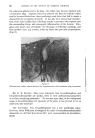
30 JOURNAL OF THE SOCIETY OF COSMETIC CHEMISTS typical phenomenon of wrinkled, thickened, irritable and reddened eyelids though it may also be seen on the legs, when nail lacquer is used for stopping runs in stockings. Eye shadow may be the cause of a similar, local reaction. In the dermatitis due to pphenylenediamine hair-dyes, the dyeing of the hair is usually obvious but the reaction is seldom noticeable on the scalp itself, which is relatively resistant. Inflammation chiefly affects the fore- head, cheeks and the chin, as well as the region behind the ears. It is important to note that the same type of sensitizer may be encountered through the dyeing of furs and hair-nets. (Fig. 1.) In the case of a photo-sensitizing agent, the reaction is confined to exposed areas this was the case with the whole crop of sensitizations observed a few years ago, due to the use of tetrachlorosalicylanilide as the bactericide in a toilet soap. There was reddening of the face, neck and arms. Dermatitis due to cetrimide is quite rare, but when it occurs, the response is acute. A bullous or erythematous eruption may result. Hyper-pigmentation reactions, rather like the chloasma of pregnancy, have been noted in a number of women recently. This occurs on exposed areas, such as the forehead, cheeks, nose and chin, along with the arms. It obviously seems to follow the pattern to which a cosmetic preparation may have been applied but the patients strongly deny using anything at all (which is, of course, unlikely). The origin of this trouble has yet to be elucidated. In photo-sensitivity to a cold perm, there was an acute response on the face and the back of the neck, as well as the hands and forearms. But I should also like to mention a case of discolouration of the fingernails, with which a girl tried to make a case out of an industrial accident four years prior to my examination. She sought to blame a flavine dressing used at the time of the accident, but on questioning, it became apparent that the discolouration was simply a matter of staining caused by the use of a hair- tint only about 4 weeks before my examination of the patient. DISCUSSION •ViR. A. •V. POND Could hair-loss possibly be due to excessive sham- pooing, with removal of sebum and attack on the keratin structure ? Experience seems to show that, on the contrary, vigorous alegreasing tends to lead to increased sebum flow. •Ve have little evidence that hair in normally good condition will break as a result of frequent shampooing in the absence of contributory mechanical or chemical factors. THE LECTURER: Sulzberger, Witten and many other dermatologists have remarked upon the growing number of women who are seen to be losing
Purchased for the exclusive use of nofirst nolast (unknown)
From: SCC Media Library & Resource Center (library.scconline.org)