THE PRESENT POSITION REGARDING TOXICOLOGY OF HAIR SPRAYS 49 investigations in this country and in the U.S.A. suggests that very few people are hypersensitive. Since there is no test by which such hypersensitivity can be detected, all persons using hair lacquer should take precautions to avoid breathing in the spray particles." The Medical Research Council investigations A full account of the investigations by the main group of lV[.R.C. workers was published in Food and Cosmetics Toxicology I 171 (1963). With the kind permission of Dr. McLaughlin, we quote his Summary in full: "The results of a pilot X-ray survey of the chests of 505 hairdressers ,(including 47 men's hairdressers used as controls) are reported. The women's hairdressers were drawn from estabhshments in which (i) only shellac-based sprays, (ii) only PVP-based sprays and (iii) in which both types were used. In (i) 24.4 per cent had been exposed to sprays for more than six years in (ii) 21 per cent and in (/ii) 37 per cent. No abnormal X-ray appearances suggesting the presence of thesaurosis were discovered in the X•ray survey. The majority of particles of spray both from hand sprays and pressure aerosol sprays were less than 1 micron in diameter, and were thus capable •)f being inhaled and retained in the lungs. Environmental studies of the atmosphere of four hairdressing establishments showed marked variation in the concentration of particles according to the amounts of spray being used and according to the conditions of ventilation. In two of the establishments where PVP-based sprays were being used, the concentra- tion of particles was very low. A we!l-documented case of interstitial pulmonary fibrosis witix many .giant cells and PAS-staining granules in a woman exposed for 11 years to shellac-based hair sprays is also reported. Lung biopsy studies show that the lesion is not sarcoidosis, nor idiopathic interstitial pulmonary fibrosis including the Hamman-Rich syndrome. A diagnosis of thesam rosis has been made in her case. It is suggested that PVP and gum shellac might produce different tissue reactions a sarcoid reaction appears to be associated with PVP, and a foreign-body one with gum shellac. It is probable that thesaurosis occurs only in susceptible or hyper- sensitive people, and at the present time there is no evidence to suggest a dose response-relationship between lacquer hair sprays and pulmonary disease. But our one case of thesaurosis had had a prolonged and substantial exposure. There is at present no way of detecting those people who may be susceptible to the sprays.

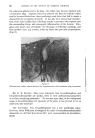
50 JOURNAL OF THE SOCIETY OF COSMETIC CHEMISTS The few reported cases, having regard to the widespread use of hair sprays, indicate that the risk of the onset of lung disease from this cause is small. But it is clear that more research and the examination of larger numbers of hairdressers and users of hair sprays are needed. In the meantime it is desirable that attention should be paid to the ventilation of hairdressing rooms in order to keep the concentrations of hair spray particles as low as possible, and that people who use lacquers on their own hair should avoid inhalation of the spray". At the proof stage, the following footnote was added to the paper: "Though we have used the term 'thesaurosis' in this article we regard it as unsatisfactory and suggest as an alternative 'hair spray lung disease'." A crucial issue One of the most important points emerging from this work is the respir- able size of the major proportion of hair spray particles. Dr. P. J. Lawther, Director of the Air Pollution Unit of the M.R.C., confirmed Dr. McLaughlin's observations from his own work on fresh and aged particles, employing a variety of techniques. Electron microscopy revealed a range of particle sizes from 0.25-2.5• 15 minutes after spraying half a day later they were mostly 0.25• in diameter. Using cascade impactor and thermal precipitator samples, it was shown that particles up to 100• at the start shrank to under 15• (q- aggregates) in 5 minutes, 4• in 10 minutes and 1• in later samples. All this and much other information, including particle size curves in the paper by McLaughlin e! al, completely cut the ground away from Brunner et al on this one issue. Indeed in this respect it seems imposfible to reconcile the difference between the findings of the American and the British workers. Discussions with Professor J. G. Scadding and Dr. J. Pepys of the Bromp- ton Hospital have centred on the question of sensitivity to shellac. In view of the complex and intractable nature of this material, establishment of the nature of the causative agent is likely to be difficult. ACKNOWLEDGEMENTS We wish to thank the British Industrial Biological Research Association for assembling the information contained in this Report, and to express our appreciation of the kind co-operation of Dr. P. J. Lawther, Dr. A. I. G. McLanghlin, Dr. J. Pepys, and Prof. J. G. Scadding.
Purchased for the exclusive use of nofirst nolast (unknown)
From: SCC Media Library & Resource Center (library.scconline.org)