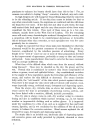
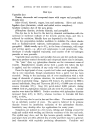
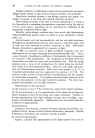
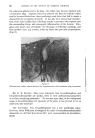
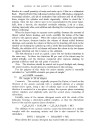
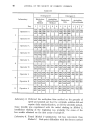
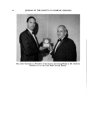
32 JOURNAL OF THE SOCIETY OF COSMETIC CHEMISTS the sebaceous glands tend to be large the orifice may become blocked with a keratinous plug. Lipman Cohen has pointed out that the follicles which tend to become blocked are those producing weak hairs that fail to create a channel for the exudation of sebum. It has also been shown that introduc- tion of the acne bacillus into a blockage results in pressure with rupture into the surrounding tissue, and consequent inflammation of the dermis. Fats, gums and waxes may precipitate the blockage of follicular openings, and thus produce acne, e.g. creams, make-up bases and pan-cake preparations. (Fig. oe.) Figure oe Pilosebaceous orifice almost blocked by hyperkeratosis and sebaceous plug formation. MR. R. ]•. ]•CKTON: Does your statement that hexachlorophene and tetrachlorosalicylanilide are similar, refer to their antibacterial properties or to their sensitizing potentials ? Do you not agree that, in the widespread usage of hexachlorophene for upwards of 15 years, it has proved to be an extremely safe material ? THE LECTURER: Yes, hexachlorophene has a low sensitizing index. However, when Wilkinson investigated his cases of tetrach]orosa]icy]anilide dermatitis, he did find that about 25% were cross-sensitive to hexach]oro- phene.

J. Soc. Cosmetic Chemists 15 33-43 (1964) ¸ 1964 Society of Cosmetic Chemists of Great Britain SOCIETY OF COSMETIC CHEMISTS OF GREAT BRITAIN Scientific Committee Methods of Analysis Group PRELIMINARY NOTES ON THE DETERMINATION OF ANIONIC SULPHATES May 1963 Some of the sources of error in the methylene blue method have been investigated and collaborative studies using this and the ptoluidine method have been undertaken, the results are discussed, and suggestions for further work are outlined. INTRODUCTION 1.1. General The work outlined in this report was undertaken in a number of colla~ borating laboratories by members of the Scientific Committee of the Society of Cosmetic Chemists of Great Britain, and the Committee wishes to express its gratitude to those companies who allowed their laboratories to be used, and to all other bodies and individuals who gave their time and iacilities to make this work possible. The original purpose of this work was to investigate the variability of the methylene blue titration of Epton (1) since this seems to be the most widely used method but it was subsequently extended to inc!ude one other technique for comparison. Cullum (2) has recently called attention to the need for a universal method for the determination of anionic sulphates and has suggested that a detailed study of the Epton (1) and Barr (3) methods is long overdue. With this view the Scientific Committee is in substantia! agreement, and offers this report as a preliminary study on which to base further investigation. 1.2. The Methylene Blue Titration Reagents required O.002M Cetrimide containing 0.672 g/1 of cetrimide B.P., (C17HasNBr). This solution should be standardized against a solution of pure sodium di~octyl sulphosuccinate, using the technique described below. Methylene Blue Indicator. Dissolve 50 g anhydrous sodium sulphate in about 400-500 ml distilled water, add 120 ml 2N sulphuric acid and 6 ml 0.5% solution of methylene blue in water and dilute to 1 litre. Method Weigh accurately about 2 g of a liquid detergent or 1 g of a solid detergent, 33
Purchased for the exclusive use of nofirst nolast (unknown)
From: SCC Media Library & Resource Center (library.scconline.org)