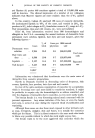
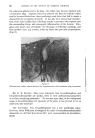
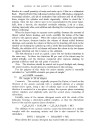
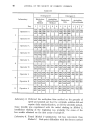
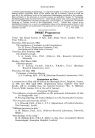
38 JOURNAL OF THE SOCIETY OF COSMETIC CHEMISTS The results are shown graphically in Figure 1. In both series, the smaller the initial aliquot the lower is the result, although the slope is steeper in the first series. 450- 440- 430- 420- 410- 400• i 1•) 1'5 :•0 •5 Aliquot of Artionic Solution (mls.) Figur• 1 X Aliquot diluted to 25 ml with water before titrating. O Aliquot diluted before titration to bring total volume of aqueous phase at end point to 74 ml. Experiment $ Three different liquid artionic detergents, based on amine lauryl sulphates, were each assayed by five different operators, working in the same laboratory. The results are shown in Table II. The maximum deviation is 3 to $ per cent, but, in general, the agreement is good. Table II Sample Operator A B C D E 1. 430 432 429 431 441 2. 426 430 430 432 450 3. 428 434 436 432 425 Variation between operators:ml 0.002M/g.

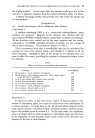
PRELIMINARY NOTES ON THE DETERMINATION OF ANIONIC SULPHATES 39 2.2. Intra-laboratory Experiments Several preliminary attempts were made to obtain collaborative results from several laboratories, but despite the goodwill of all involved it proved difficult to get results which could be treated statistically. Eventually one organization with laboratories 'in various parts of the world agreed to design a test which could be examined statistically, and to enlist the co-operation of its laboratories in carrying out the necessary determinations. Five laboratories were asked to co-operate in a comparison of the repro- ducibility of the two methods described in section 2.1. Each laboratory was asked to arrange for two operators to assay the samples in a prescribed order, which differed for each laboratory, and to enter the results, together with the weights taken and titres, on a chart. One laboratory was unable to provide two operators. In the laboratories selected, the methylene blue method had been used as a routine for several years and the operators were therefore familiar with it. In order to allow the operators to attain some degree of familiarity with the second method, three samples of detergent were provided for each operator. These samples were labelled A, B and C and sample A was used by each operator as many times as was necessary to satisfy him that the technique had been mastered and that he was able to obtain consistent results. This work was completed before proceeding to the comparative work, which was carried out on samples B and C only. The determination of samples B and C was spread over three days, using the same analytical reagents and standard solutions and analysts were asked to do the work quite independently, so that the results obtained would be a true measure of operator variation. Particular attention was drawn to the space provided for recording difficulties experienced with the ptoluidine method, and analysts were also asked to record the approximate average time taken with each method. Analysts were asked to undertake three titrations on each sample on each of the three days, each titration being carried out on an independently weighed sample. The results obtained in this series of experiments are set out in Table III. Comments from the operators are summarized below. Laboratory 1. Both operators agreed that Method 2 compares favourably favourably with the methylene blue method, as it elimi- nates the colour matching. Laboratory 2. Commented on the tendency of the end-point, in Method 2, to fade and emphasized that it was necessary to complete the titration quickly to avoid high titres. Method 2 was disliked because the titration took much longer to complete than that of Method 1.
Purchased for the exclusive use of nofirst nolast (unknown)
From: SCC Media Library & Resource Center (library.scconline.org)