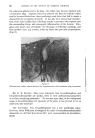
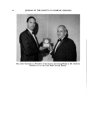
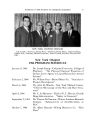
68 JOURNAL OF THE SOCIETY OF COSMETIC CHEMISTS Tony was born in 1908 and, as the child of a Public Health Service doctor who traveled widely throughout the world as part of his duties, Tony led an interesting life during his formative years. After attending schools in New York City, he enrolled at Cornell, where he received his B.S. and then his Ph.D. degree in Organic Chemistry in 1931. What a year for a new graduate in chemistry to look for a job! An achievement of which Tony is very proud, and properly so, was his ability to obtain a research position in the chemical industry with National Aniline in that depression year. There, Tony made important pioneering contributions to the infant synthe- tic detergent industry as part of the group working with Dr. Flett. He worked on organic synthesis, dyestuff chemistry and synthetic detergents and their characterization. In this early period Tony showed signs of the characteristic that is so prominent in his career--his ability to work in and master a wide variety of technical fields. He joined the Visking Corporation in 1940 as a research supervisor and continued to broaden his technical scope by working on a series of interest- ing and important projects involving films in food packaging. During this period he also had a leave-of-absence at the University of Chicago to work on the Manhattan Project on problems involving separation of isotopes. Tony then joined the Alrose Chemical Company as research director during a period which marked a turning point in his career. Here he was exposed to broad areas of applications of specialty chemicals, and this experience greatly whetted his interest in the detergent and cosmetic fields. Although Tony had previously been exposed to the large-volume detergents (alkyl aryl sulfonates), he now became aware not only of the diversity in the detergent field but also of the large number of industrial applications of these compounds. However, he was forced to learn about this field the hard way, by going to individual publications and by speaking to individuals involved, and he found the lack of a source book a serious handicap. At this time he fully realized the usefulness of having such a text, and the germ of the idea of writing one was born. In late 1944 he became a member of the small group which Milton Harris was just assembling as an independent laboratory. Here Tony had the opportunity to be part of a young group under enthusiastic leadership and also to work in a rapidly growing field--detergent science and technology as applied to the cosmetic industry. Some pioneering work on applications of detergents in liquid and creme shampoos, conditioning rinses, and anti- dandruff rinses was performed during this early period. Another SCC Medalist, Ray Reed, was also a colleague at this time. Tony's contribu- tions over the years have been legion. He has directed many projects involving surface chemistry and physics, colloid chemistry, and detergency, covering many aspects of cosmetics and problems in the textile and allied chemical industries. He has over 30 publications and patents to his credit,

14TH MEDAL AWARD 69 and he has authored several chapters and sections in encyclopedias and texts. In 1961 he was honored by the ASTM Committee D-13 for his work on detergents and in 1962 received the ASTM Award of Merit. His two monographs on "Surface Active Agents and Detergents" are now rated as classics in this field. They clearly show Tony's outstanding ability which all of us recognize to write clearly and knowledgeably on a wide variety of theoretical and applied technical subjects. Many friends always tell me, and I also know from personal experience, that Tony is also an excellent speaker. Therefore, he is a widely sought lecturer, and in fact he is scheduled to speak in Chicago tomorrow before the American Academy of Dermatology at their Cosmetic Symposium. In 1947 he and a former colleague, james Perry, started their collabora- tion on their first monograph. Tony reviewed some 8000 references and culled out the important ones so that excellent quality was obtained in the finished text. The monograph appeared as an Interscience publication in 1949, and because it filled such an important need, it was an immediate success. The book has also been translated into Russian and French. The second volume was necessitated by the explosive growth of the field. It appeared in 1958, with a colleague at Harris Research Laboratories, Julian Berch, as an additional co-author. At the present time more than 12,000 copies of the volumes have been sold. Many speak highly of the books, and I venture to say that they may be found in every cosmetic laboratory of the world. With these monographs, Tony has made an enormous contribution to all who work in the industry. What about Tony the man? Despite all of his achievements, modesty and humility are two of the many fine qualities which Tony has. At the lab he is a genuine favorite of all because of these qualities and because of his willingness to help everyone. He has an immense grasp of scientific knowledge, and, naturally, his advice is constantly sought and most eagerly given. As you can see, he is a valuable member of our team. He is also a man who devotes much time to professional activities, and he is now President of the Washington Chapter of the American Institute of Chem- ists, as well as an active member of the American Chemical Society. During his early years Tony was an ardent sportsman and an outstanding swimmer. Unfortunately, a bout with polio in his late teens resulted in a slight disability in his right leg, but this has not slowed him down any- where, even on the golf course. Tony is also a devoted family man. He has a charming and dynamic wife, also a Cornellian, and two daughters, one of whom graduated from Cornell this past June and is now teaching in Washington his younger daughter shows brilliant promise in a number of fields. I hope I have given you some insight into a man whom I have known for so many years and whom we are honoring tonight. All of us who know
Purchased for the exclusive use of nofirst nolast (unknown)
From: SCC Media Library & Resource Center (library.scconline.org)