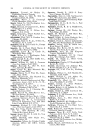
326 JOURNAL OF THE SOCIETY OF COSMETIC CHEMISTS Society of Cosmetic Chemists Honor James Baker Mr. James Baker was honorary guest at a dinner given by the advisory committee of the Society of Cosmetic Chemists. The dinner was held at the LaPotiniere restaurant on January 21, 1964. It has been traditional for many years that the outgoing member of the Advisory Committee be tendered a dinner in his honor by the other members of the committee. This person has completed a minimum of seven years of service to the Society of Cosmetic Chemists. During these seven years he has served as President, President-Elect, Chairman of the Advisory Committee, and for the last four years as a member of this important policy making committee. The committee consists of the President, President-Elect, and the five most recent active past presidents. The most recent active past president serves as chairman. The dinner was attended by the following: Savery F. Coneybear Warren B. Dennis Sophie L. Plechner Lester I. Conrad James Baker Robert Kramer H. J. Amsterdam

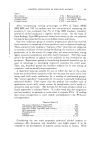
J. soc. cos. CHEM. 15, 327-335 (1964) COSMETIC APPLICATIONS OF POLYVINYL ALCOHOL By B. W^v.r, Pi.D., and GLEN J. SPERANDIO, Presented September 24-25, 1963, Seminar, Boston, Ma•. ABSTRACT The use of polyvinyl alcohol in the formulation of safe, improved cosmetic preparations is described. Polyvinyl alcohol has been ac- cepted by the Food and Drug Administration as a component of topi- cally applied products and is a raw material with unrealized potential for use in cosmetics. The formulation of suntan lotions, cream hair dressings and liquid make-ups containing polyvinyl alcohol is de- scribed. Polyvinyl alcohol acts as a protective colloid in emulsification and has unusual film-forming properties. A method for determining film-forming properties and film strength of cosmetic products con- taining polyvinyl alcohol is described. INTRODUCTION As the science of cosmetic formulation has become more so- phisticated and exacting, the need for adjuvants which are both functional and safe for human use has been increasing proportionately and the search for better cosmetic materials is well under way. Polyvinyl alcohol (PYA) is a compound that holds much promise for use in cosmetics, yet its potential has not been fully realized by the majority of those who are most intimately concerned. As early as 1937 it was used as a component of shaving creams (1), and in 1945 Lesser reported on its potential applications in other types of cosmetics (2). In addition, other authorities, such as deNavarre and Sagatin, have shown an interest in the product (3, 4). In checking the literature it is interesting to note that in very few instances are complete specifications for the types of polyvinyl alcohol used in a particular formulation given. This is unfortunate because the compound is commercially available in over a ' * Purdue University School of Pharmacy and Pharmacal Sciences Research Laboratories, Lafayette, Ind. 327
Purchased for the exclusive use of nofirst nolast (unknown)
From: SCC Media Library & Resource Center (library.scconline.org)