328 JOURNAL OF THE SOCIETY OF COSMETIC CHEMISTS dozen different types, each with different formulation characteristics and no two are exactly the same. CHEMICAL AND PHYSICAL BACKGROUND Polyvinyl alcohol is a polyhydric alcohol with secondary hydroxyl groups on alternate carbon atoms. It is prepared by polymerizing vinyl acetate with heat in the presence of a catalyst to form polyvinyl acetate. This is then hydrolyzed to produce polyvinyl alcohol. To effect control of product characteristics both the molecular weight and the degree of alcoholysis or hydrolysis are controlled. Molecular weight is a measure of the degree of polymerization and is reflected in viscosity of the com- pound's aqueous solutions. Three general ranges of molecular weights are commercially available. High viscosity PVA has an average molecular weight of about 200,000, medium viscosity material averages about 130,- 000 and low viscosity PVA has a molecular weight of about 30,000. As the molecular weight increases, higher values are obtained for the tensile strength, tear resistance, elongation and flexibility of simple PVA films (S). Products with different degrees of hydrolysis are also offered, ranging from material which is about 75% hydrolyzed on up to a material which is practically 100% hydrolyzed. The completely hydrolyzed material is pure polyvinyl alcohol, while the 75% hydrolyzed material contains an appreciable amount of polyvinyl acetate which has not been converted to the alcohol. Changes in the degree of hydrolysis radically alter the characteristics of the material. As the degree of hydrolysis increases, tensile strength, tear resistance and elongation of simple PVA films in- crease. Typically, water solubility increases with an increase in degree of hydrolysis up to a level of 88% hydrolysis. When the degree of hydrolysis is increased beyond 88% there is a reduction in water solubility, probably as a result of hydrogen bonding (5). The two main polyvinyl alcohols suitable for cosmetic study are the Elvanols, © made by the DuPont Company (6), and the Gelvatols, © sup- plied by the Shawinigan Resins Company (7). Eight different Elvanols and eleven different types of Gelvatols, with additional fine variations within a given type, are currently offered to the market. One can easily see the confusion that can arise when an author simply states that he has successfully used polyvinyl alcohol but does not specify the degree of hydrolysis, molecular weight, type or viscosity of the PVA employed. This discussion will be limited to those types of polyvinyl alcohol outlined * From the research laboratories of Purdue University School of Pharmacy and Pharmacal Sciences, I.afayette, Ind.

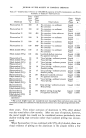
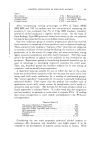
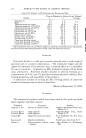
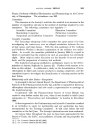
COSMETIC APPLICATIONS OF POLYVINYL ALCOHOL 329 in Table I. This selection provides four different types of material with respect to degree of hydrolysis, as well as two different viscosity ranges for the Type 88 H material. For practical purposes, the degree of hy- drolysis is a measure of the amount of polyvinyl acetate in the sample of polyvinyl alcohol. TABLE I--TYPES oF POLYVINYL ALCOHOL USED IN COSMETICS Commercial Type Range of Designation Designation % Hydrolysis Viscosit? Gelvatol 1-60 Type 100 H 99.0-100 28-32 Medium Elvanol 71-30 99.0-100 28-32 Gelvatol 3-60 Type 98 H 97.9-99.0 23-32 Medium Elvanol 71-24 97.7-98.4 23-32 Gelvatol 20-60 Type 88 H 87.0-89.0 21-25 Medium Elvanol 52-22 87.0-89.0 21-25 Gelvatol 20-30 Type 88 H 87.7-89.0 4-6 Low Elvanol 51-05 88.0-89.0 4-6 Gelvato140-20 Type 75H 72.9 77.0 2-3 Low Viscosity values are in centipoises for 4% aqueous solutions at 20øC. This change in the degree of hydrolysis has a profound effect on suit- ability for use in a particular formulation. On the other hand, changes in viscosity or molecular weight follow a predictable pattern and are of lesser importance. Generally speaking, polyvinyl alcohol can be used to advantage in cosmetic formulations to achieve specific effects: it stabilizes emulsions and suspensions, it fornqs protective and foundation films, it enhances dur- ability and wearing properties, and it resists erosion by perspiration yet facilitates the removal of the cosmetic formulation by washing. Of additional interest is the fact that polyvinyl alcohol functions as a nonionic emulsifying agent having protective colloid effects. In general the par- tially hydrolyzed grades are more effective emulsifying agents than the completely hydrolyzed grades, with the high viscosity types more effective than the low viscosity types (7). PHARMACOLOGICAL BACKGROUND Polyvinyl alcohol has been used for years in both drugs and cosmetics and has an excellent record with respect to safety. It is not a primary irritant, and there is no evidence of its causing sensitization. It can be regarded as innocuous (8). As far back as 1952 it was used in a nasal preparation at a 3.5% level (9), and The Extra Pharmacopoeia refers to the use of PVA in film-forming jellies intended for application to the area surrounding a surgical wound (10). The United States Food and Drug Administration has approved the use of up to 7% PVA in cosmetic pro-
Purchased for the exclusive use of nofirst nolast (unknown)
From: SCC Media Library & Resource Center (library.scconline.org)