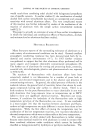
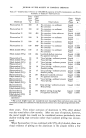
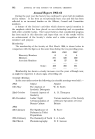
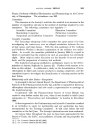
332 JOURNAL OF THE SOCIETY OF COSMETIC CHEMISTS this idea in mind, a series of suntan lotions was prepared, all based on the following control formula: Suntan Lotion Formulation Part A Glycerol ........................................... Methylparaben ..................................... 0.025% Distilled water ...................................... 53% Part B Mineral oil ......................................... 20% Isopropyl myristate ................................. Sunscreen #2 ....................................... 2.5% Amerchol L-101 ..................................... 2.5% Cetyl alcohol ....................................... 2.5% Tween 61 .......................................... 9.0% Part C Perfume comp ....................................... 0.25% Heat to 75øC with mixing Combine and heat to 75øC. Then add B to A with Homo-Mixing In addition to the control formulation two variations were prepared in which a portion of the distilled water was replaced by 2.5% and 5% of PVA Type 88H, low viscosity. In evaluating the stability of the products it was noted that a much more stable product was produced using PVA. Optimum stability was noeed with the product containing 5% PVA. This was particularly obvious in samples stored at elevated temperatures. In vivo testing of the products showed that the lotion containing 5% PVA was indeed superior in all respects to several popular commercial products tested at the same time. One final product should be included in this discussion to show the versatility and wide range of applications of polyvinyl alcohol. A men's hair dressing was developed and is being used by several subjects, who again prefer it to its commercial counterparts. An emulsified product containing 5% PVA Type 88H, low viscosity, is a semi-solid cream suitable for tube packaging. Further work along these lines could lead to the TABLE II--EuuLSXVXERS USEn WXTn PVA TVVES 75H Ash 88H Cosmetic Product Type of PVA Emulsifiers Barrier creams 75H and 88H Polyoxyl-40-stearate Cetyl alcohol Glyceryl monostearate Amerchol L-101 Theatrical make-ups 88H Polyethyleneglycol 1000 monostearate Liquid make-ups 88H Potassium stearate Acetulan Suntan lotions 88H Tween 61 Amerchol L-101 Cetyl alcohol Cream hair dressings 88H Triethanolamine stearate Glyceryl monostearate Amerchol L-101

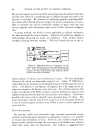
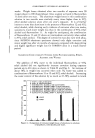
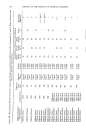
COSMETIC APPLICATIONS OF POLYVINYL ALCOHOL 333 development of a semi-solid greaseless hair dressing with sufficient film forming properties to have a wave setting effect. In most formulations polyvinyl alcohol has a wide range of compatibility. This is particularly true in the case of emulsifiers. Table II summarizes some cosmetic products in which PVA and various emulsifiers were com- bined. LABORATORY EVALUATION OF FILM-FORMING PROPERTIES OF COSMETICS Unquestionably, the best test for a cosmetic's effectiveness is to have it used by a human subject. However, before a product for the consumer is finally chosen, laboratory screening of preliminary formulas will continue to be essential. A simple method for evaluating the films formed by PVA- containing products is offered as an improved screening method. This technique makes it possible to show variations in filtration time as a function of increasing PVA content although other components of the system (surfactants, pigments and oleaginous components) undoubtedly exert an effect on filtration time. Nevertheless, film strength is indicated by the resistance offered to the passage of water through the film under controlled conditions of filtration. Procedure for Evaluation of Pt//1 Effect on Filtration Time: Whatman #1 filter papers (diameter 4.25 cm.) are weighed to the nearest milligram. A 125 mg. quantity of test product is deposited in the center of the filter disc and then spread uniformly over the entire filter surface with the aid of a smooth stainless steel wire. After two minutes, all excess product is removed from the filter using the smooth wire. The treated filter paper is then dried in an oven at 37øC for two hours. A second weighing is made to determine the amount of product deposited on the surface of the filter. The treated filter paper is then carefully mounted in a Millipore Hydrosol Stainless Filter Holder* of 650 ml. capacity, with the treated side of the filter facing upward. 500 ml. of distilled water is carefully introduced above the filter, and the time required to collect the first 50 ml. of tiltrate under gravity at room temperature is recorded. All runs are made in duplicate. Control runs of test product without PVA must always be run as a standard. Extreme care is required in preparing and mounting the treated filter papers. For optimum results a uniform deposit of constant weight and thickness is required. With a little practice in preparing treated filters it is possible to obtain comparative values of the type outlined in Table III. * Produced by the Millipore Filter Corp., Bedford, Mass.
Purchased for the exclusive use of nofirst nolast (unknown)
From: SCC Media Library & Resource Center (library.scconline.org)