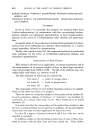
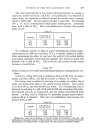
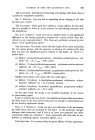
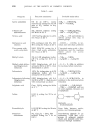
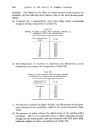
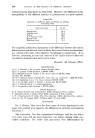
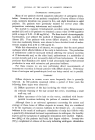
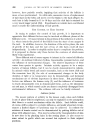
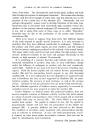
426 JOURNAL OF THE SOCIETY OF COSMETIC CHEMISTS Table I--cont. Reagents Acetic anhydride 1-Fluoro-2,4- dinitrobenzene Nitrous acid Methanol in acid solution Thiocyanate with acetic anhydride Methyl iodide Methyl iodide follow- ing thioglycolate reduction Iodoacetate Iodoacetate following thioglycolate reduction Sulphuric acid Iodine Formaldehyde Potassium dichromate Reaction conditions Probable main effect 0.5 hr at 100 ø C, excess removed by immersion for 10 min in 2% aniline in dry benzene 2% ethanol solution acting for 48hrat21øC 1.0M NaNO s adjusted to pH4 for 3 days at 22 ø C 95% methanol with 5% 10N HC1 acting for 3 days at 22 ø C 2-5M NH4CNS acting for 4 days then acetic arthydride for 7 days at 22 ø C 3% in 0-1M phosphate buffer, pH 7.4, acting for 18 hr at 50 ø C 0.2M thioglycolate, pH 5.4, acting for 24 hr at 22 ø C then methylated as above 1.3% Na iodoacetate in 0.1M phosphate buffer, pH 7.4, acting for 18 hr at 50 ø C 0.2M thioglycolate, pH 5.4, for 24 hr at 22 ø C then treated with iodoacetate as above Cone. H•SO4 acting for 24 hr at 0 ø C 0.1M 12 acting for 72 hr at 23 ø C 0.1M ttCHO acting for 30 min at 60 ø C 3% K•Cr•O? + 2-5% KH tartrate acting for 1 hr at lOO o C --NH• -+ --NHCOCH a --OH -+ --OCOCH a --NI-I• -• ---NHCoHa (NO s) = --OH -+ --OCoH a (NO•)• --NH• -+ --OH and introduces nitroso groups into ring of phenol groups --COOH-• COOMe in ter- minal and side-chain positions C terminal amino acids -• thio- hydantoins and the reactions listed above for acetic anhydride --NH• -• --NHMe --C6H•OH -+ --C6H•OMe --S--S-+ 2--SMe, in addition to reactions before reduction --NH• -+ --NHCH•COONa --C•H•OH -• --C•H•OCH• COONa --S--S-+ 2--SCHaCOONa in addition to the reactions before reduction --CaI-I4OH -• --CaHiOSOaH --NHa •--NHSOaH and loss of sonhe arginine, tyrosine and tryptophane I I imidazole -- -• 2-iodoimidazole Cross links between amide, amino, and tyrosine groups Cross-linking through Cr co- ordinating =NH and =CO groups of adjacent peptide chains and possibly some des- truction through oxidation

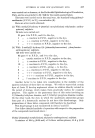
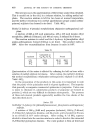
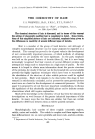
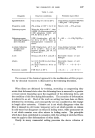
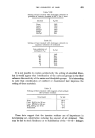
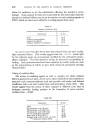
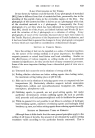
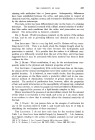
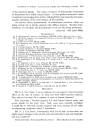
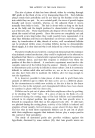
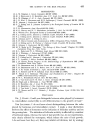
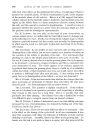
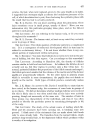
T•E CUEmSTR¾ OF HAm 427 Table I--cont. Reagents Epichlorhydrin Propylene oxide Dibromopropane Dibromopropane following thioglyco- late reduction Acrolein following thioglycolate reduction Acids Alkalis Potassium cyanide Reaction conditions Gas acting for 2 hr at 22 ø C acting at 100øC for 2 hr Water for 18 hr at 35 ø C then 0.002M 1,3-dibromopropane in 1.0M phosphate buffer, pH 8.0, for 20 hr at 35 ø C 0.2M thioglycolate, pH 4.5, for 18 hr at 35øC ß then di- bromopropane treatment as above 0.2M thioglycolate, pI-[ 7, for 24 hr at 22øC then in 3% aqueous acrolein, pH 10, for 18 hr at 50 ø C Strong acids at R.T. and pH 1 (a) 0.1N NaOH for short time at R.T. (b) 0.1N NaOH for 16 hr at R.T. 0.1M KCN at 65 ø C Probable main effect Cross-linking reactions between --NH• and --NH groups Reacts with --NH 2 groups 2 --SH -• --S--CH2CH•CH 2-- S-- Cross-linking between 2SH or between SH and NH• Reversible fission of salt linkages Reversible fission of salt linkages --S--S-- -- --C--S--C-- --S--S-- -• --C--S--C-- The success of the chemical approach to the modification of fibre proper- ties by che•nical treatment is illustrated by the following discussion. Setting When fibres are deformed by twisting, stretching or compressing they retain their deformed state when the deforming force is removed to a greater or lesser extent depending upon the magnitude of the deforming force, and the condition of the fibre during deformation. The retention of deformation is referred to as set. Most of the work on setting has been done on fibres deformed by stretching, and consequently set was considered as the change in length after extension. Cohesive set is set which disappears when the fibre is released in cold water, temporary set is set which persists on release in cold water but disappears on release in boiling water, while permanent set is set which remains even after release in boiling water. The principles which have been established in connexion with the setting of stretched fibres seem to apply to fibre deformations of other kinds. Clearly in many commercial setting processes the above criterion of
Purchased for the exclusive use of nofirst nolast (unknown)
From: SCC Media Library & Resource Center (library.scconline.org)