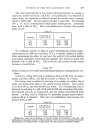
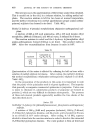
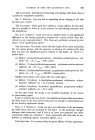
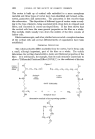
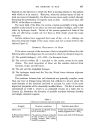
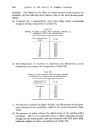
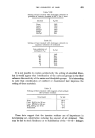
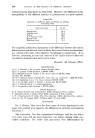
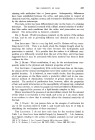
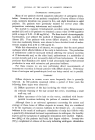
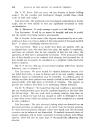
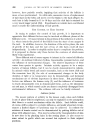
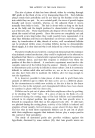
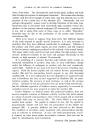
430 JOURNAL OF THE SOCIETY OF COSMETIC CHEMISTS materials. Few details on the effect of various factors on the reaction are available, and the following data indicate some of the more obvious possi- bilities. (a) Treatment for a comparatively short time brings about considerable change in setting characteristics (Table VI). Table VI Setting of fibres treated with hydrogen chloride in methanol at 50 ø C for various times Time of treatment (min) o 5 lO 15 30 60 12o 18o % Set 14.9 27 '6 25'0 24 '9 27'9 28 '8 28.5 28.2 (b) The temperature of treatment is important, the effectiveness of the esterification increasing with temperature (Table VII). Table VII Setting of fibres treated with hydrogen chloride in methanol for 1 hour at various temperatures Temperature of treatment (ø C) Untreated 5 10 15 30 40 50 % Set 14.9 18.5 22.2 18.9 22-5 24-9 28.8 (c) If methanol is replaced by higher alcohols, the effectiveness of the treat- ment decreases as the molecular weight of the alcohol increases (Table VH). (d) The presence of water reduces the effectiveness of the methanol/HCl treatment. This is to be expected, and it is rather surprising that the changes are not much greater, and that treatment with HCI and a 20% methanol solution in water can facilitate set (Table IX).

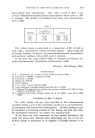
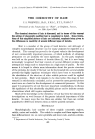
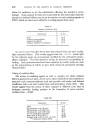
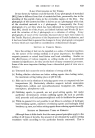
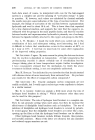
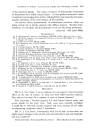
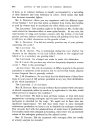
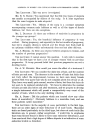
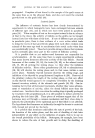
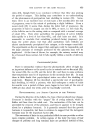
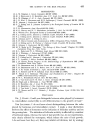
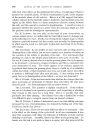
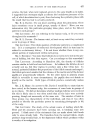
THE CHEMISTRY OF HAIR 431 Table VIII Setting of hair treated with hydrogen chloride in presence of various alcohols at 50 ø C for 1 hour Alcohol % Set None Amyl Butyl Propyl Ethyl Methyl 14'5 12'0 17'2 16'3 18'2 26-1 Table IX Setting of hair treated with hydrogen chloride in aqueous solutions of methanol Concentration of methanol (%) lOO 60 40 20 lO 5 % Set 14-5 26'1 24'5 23 '3 23'0 21-3 16'6 It is not possible to explain satisfactorily the setting of esterified fibres, but it would appear that esterification of the carboxyl groups in the fibre enhances the reactivity of the amino and disulphide groups. It is interesting to note that esterification of oxidized or deaminated hair improves the setting of these materials. Table X Setting of fibres treated with reagents which attack the tyrosine residues Treatment % Set None Conc. I-I2SO • for 30 sec Conc. HNOa for 60 sec 40% HNOa for 18 hr Iodination 14-5 10'1 11'1 7'2 --3.0 These data suggest that the tyrosine residues are of importance in determining set, substitution reducing the amount of set obtained. This may be due to steric hindrance or to stabilisation of the --S•S-- linkages
Purchased for the exclusive use of nofirst nolast (unknown)
From: SCC Media Library & Resource Center (library.scconline.org)