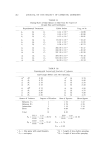
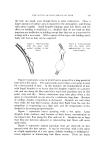
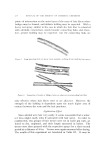
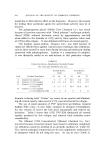
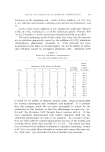
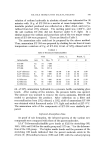
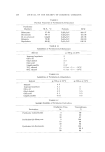
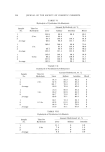
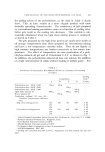
334 JOURNAL OF THE SOCIETY OF COSMETIC CHEMISTS free]. Sodium, potassium and ammonium 3,5,4'-tribromosalicylanilide showed no phenolic stretching band but a sharp band at 1225 (Na), 1210 (K), and 1220 cm.-1 (NHq) which correlated with the (OH) deformation vibration. Ammonium 3,5,4•-tribromosalicylanilide showed a (NH) stretching vibration at 3410 cm. -•. In all cases shifts of the amide I bands of the salts were slight, but the amide II band shifted to a slightly higher frequency due to the absence of H-bonding with (NH). ,In the case of the salts of 3,5-dibromosalicylanilide and the parent molecule, the infrared spectra indicated that the absence of the 4 hbromo TABLE II Solubility of Salts of SMicylanilides in Various Solvents a Gin./100 ml. at 25 ø Compounds Water 50% Ethanol ET-394 0 Na ET-394 0 K ET-394 0 NH• ET-394 0 3,5,4'-Tribro•nosalicylanilide 0 Na 3,5,4 Tribromosalicylanilide 0 K 3,5,4 •-Tribromosalicylanilide 0 NH• 3,5.4 Tribromosalicylanilide 0 3,5-Dibromosalicylanilide 0 Na 3,5- Dibromosalicylanilide 1 K 3,5-Dibromosalicylanilide 3 NH4 3,5-Dibromosalicylanilide 0 ß 00086 O. 050 27O 3. 055 645 10. 737 106 3. 866 o 0042 ....... 347 ....... 972 ....... 145 3. 448 036 ....... 298 ....... 645 ....... 555 4. 731 a The solubilities were determined gravimetrically. * Solubilities of the various salicylanilides could not be determined at this time because of lack of material for study. group had very little effect on the (OH) or amide bands. Thus, spectral changes due to salt formation closely approximated those described for the tribromo compound. Solubility Determinations Distilled water and 50% ethanol were chosen as solvents for the determination of the solubility of the various salts as well as of the base compounds. In all cases accurately weighed samples of the compounds were shaken for at least 24 hours in the given solvent at room temperature. The insoluble material from each sample was collected on a filter, the filter dried and weighed, and the solubilities calculated. Table II gives the solubilities of the brominated salicylanilides and their salts.

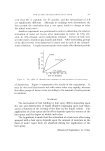
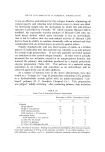
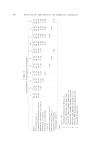
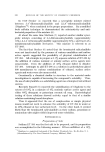
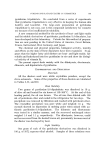
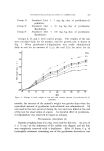
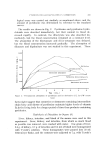
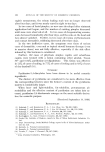
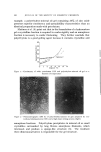
SOLUBLE BROMINATED SALICYLANILIDES 345 A ntibacterial Studies Antibacterial studies of the ET-394 salts (0.5% in 50% ethanol in amber bottles) were conducted over a period of six months to determine whether or not a loss of activity occurred. As shown in Table III, the salts retained their potency during this time. The tests were conducted with six different organisms. Nutrient agar plates were smeared with the organisms, and discs were placed on the smears. The plates were incubated for 72 hours at 37øC. Ethanol (50%) was used as a standard. Stability Studies Aqueous solutions of the salts of the brominated salicylanilides turned brown within two weeks after exposure to room light. Solutions of the salts in 50% ethanol decomposed much more slowly and to a lesser extent. Solutions in amber bottles did not show a color change after one year. It appeared that light was necessary for the degradation. Salt solutions containing a trace of iron as an oxidizing catalyst did not change color in amber bottles. Several antioxidants were used in an attempt to prevent the degrada- tion. To 0.1% solutions of sodium and potassium ET-394 were added 0.1% of sodium bisulfite, sodium nitrite, sodium sulfite, ascorbic acid, and sodium metabisulfite, respectively. In every solution an immediate precipitate appeared. Similarly glycerin and 2-methyl-2,4- pentanediol in concentrations of from 0.05-5.0% yielded yellow solutions with heavy precipitation. Sodium formaldehyde sulfoxylate and tetrasodium ethylenediamine- tetraacetic acid (38%) in concentrations of 0.001-0.1% in combinations with the sodium or potassium salts of ET-394 (0.1%) dissolved in water or 50% ethanol produced varying shades of brown with sedimen- tation. Chemical degradation also occurred even when various ultra- violet light absorbers were added to the solutions. At this point it was realized that the mechanism and kinetics of the degradation of the salts in solution was beyond the scope of this project. Thus, this information will be presented in a separate publication. Practical Use Because of its unusually high solubility, potassium ET-394 was selected for incorporation into an aftershave lotion, a preshave lotion and a shampoo.
Purchased for the exclusive use of nofirst nolast (unknown)
From: SCC Media Library & Resource Center (library.scconline.org)