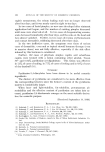
348 JOURNAL OF THE SOCIETY OF COSMETIC CHEMISTS Acknowledgment The authors are grateful to The Dow Chemical Company and Stecker Chemicals, Inc., for their financial assistance and for the chemicals they so generously contributed. REFERENCES (1) Taborsky, R. G., and Starkey, R. J., J. Pharm. Sci., 51, 1152 (1962). (2) Vinson, L. J., Ambye, E. L., Schneider, W. C., Bennett, A. G., and Travers, J. J., Ibid., 50,827 (1961). (3) Lemaire, H., Schramm, C. H., and Cahn, A., Ibid., 50,831 (1961). (4) Schuler, L., U.S. Pat. 2,802,029 (1957). (5) Stecker, H., U.S. Pat. 2,906,711 (1959). (6) Stecker, H. C., and Faust, R. E., J. Soc. Cosmetic Chemists, I 1,347 (1960). (7) Mattson, G. C., Belgium Pat. 582,183 (1959). (8) Russell, K:. L., and Hoch, S., J. Soc. Cosmetic Chemists, 16,169 (1965). (9) Geiger, W., Med. Chem., Abhandl. Med.-Chem. Forschungstaetten Farbenfabriken Bayer A. G., 7,568 (1963).

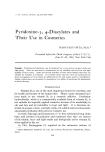
J. Soc. Cosmetic Chemists, 16, 349-358 (1965) Pyridoxine- 3 , Their Use in 4-Diacylates Cosmetics and HARUYASU OHTA, M.Sc.* Presented before the Third Congress of the I.F.S.C.C., June 21-2•, 19•, New York City Synopsis--Pyridoxine-3,4-diacylates can be prepared by a new process in good yield and high purity. Data are presented to demonstrate the oil solubility and the heat and light stability of these esters. Acute and chronic toxicities of these esters indicate that they are suitable for inclusion in cosmetics. It is further shown that the esters are hydrolyzed by tissue homogenates at rates which are influenced by the acid moiety used for esterification. Finally, clinical data are presented to demonstrate the utility of pyridoxine-3,4-dipalmitate in dermal therapy. INTRODUCTION Vitamin B0 is one of the most important factors for nutrition and for health and beauty of the human skin. Hence, many attempts have been made to use vitamin B0 as a cosmetic additive. Pyridoxine hydrochloride, which is a commercially available form of vitamin B6, is not suitable for topically applied cosmetics because of its insolubility in oils and fats and its instability to heat and light. It is therefore de- sirable to prepare a heat- and light-stable, fat-soluble and percutaneously absorbable pyridoxine derivative for cosmetic use. In 1956, Sakuragi and Kummerow (1-4) first synthesized long chain fatty acid triesters of pyridoxine and confirmed that they are sources of fat-soluble, heat- and light-stable and biologically active vitamin B0 when applied to the rat. In 1961, Rocheggiani (5) reported on the cutaneous actions of * Nihon Surfactants Industries Co. Ltd., 29, 3-chome, Hasune-cho, Itabashi-ku, Tokyo, Japan. 349
Purchased for the exclusive use of nofirst nolast (unknown)
From: SCC Media Library & Resource Center (library.scconline.org)