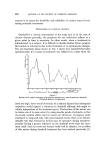
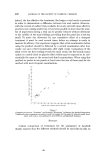
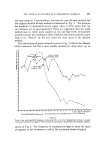
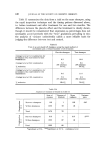
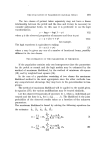
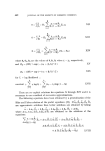
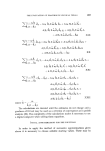
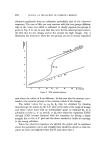
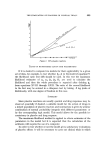
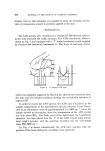
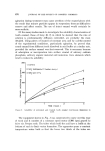
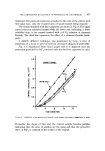
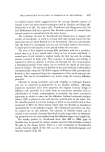
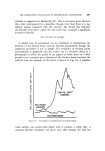
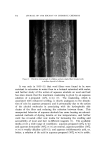
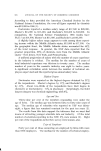
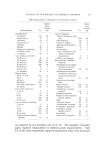
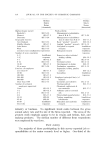
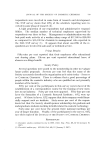
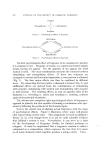
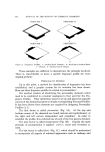
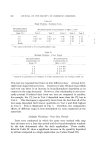
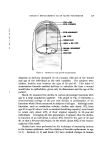
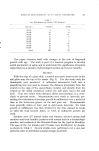
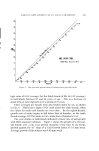
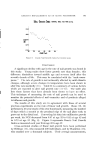
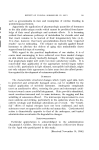
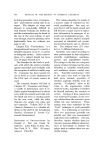
446 JOURNAL OF THE SOCIETY OF COSMETIC CHEMISTS indeed, the less effective the treatment, the longer a trial needs to proceed in order to demonstrate a difference between test and control. However, with the records of earlier trials available for study and with more effective products now coming under test, it has been possible to show that the num- ber of inspections during a trial can be greatly reduced without detriment to the validity of the main findings, providing that the panel size is not too small. To make due allowance for any cumulative effect of a shampoo treatment it must be used several times before an attempt is made to measure its efficacy. Our experience suggests that a first examination before using the product should be followed by a second examination after four weeks' use and a third examination after eight weeks. Comparison of the third versus the first reading reveals the main trend, but the second exami- nation is a useful check on placebo effect which may be expected to be sub- stantially the same at the second and third examinations. When using this method we prefer to use panels at least twice the size of those used for the method with more frequent examinations. 22-- 20-- 18-- 14 [3 I[ o I 02 0 3 o4 2 4 6 8 I0 12 14 16 18 20 22 24 26 Dondruff index: de,oiled (30min) ,echnique Figure 3 Comparison between "5-minute" and detailed "30-minute" technique for dandruff inspection. Numbered points represent successive weekly averages for the same 10 subjects under treat- ment with (1-4) a non-medicated, and (5-15) an antidandruff shampoo. RESULTS Critical comparison of techniques for the assessment of dandruff ideally requires that the different methods should be used side-by-side on

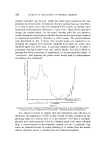
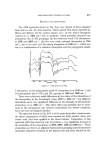
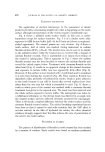
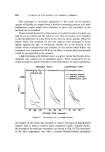
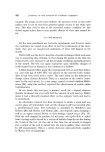
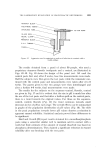
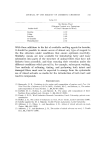
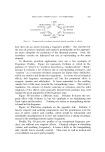
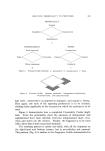
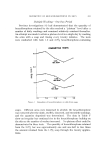
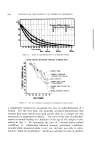
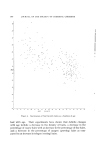
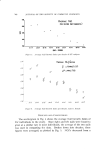
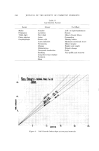
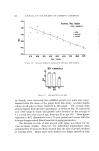
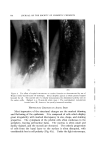
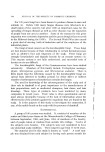
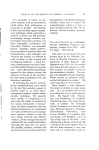
THE CLINICAL EVALUATION OF ANTIDANDRUFF SHAMPOOS 447 the same subjects. Correspondence between the rapid (5 min) method and the original detailed 30 min method is illustrated in Fig. $. For levels in the moderate to moderately-severe region, there is little doubt that the two methods are in good agreement. There is a suggestion that the rapid method may be rather more sensitive at low and high levels of dandruff, possibly because the condition is often of patchy distribution and the scores tend to be "diluted" by the zero scores for clear areas in the detailed method. The distribution of points along the curve in Fig. $ reflects the efficacy of the treatment, but this is more readily examined in other ways, e.g. as -- 15o 1,1' 13, 12, 9' 8. 7' 3, 2. 1, 0 .--'• .... ,• ! USE Of PLACEBO /•t•tandard non-medicated , JSHAMPOO STARTS . I ,RE-TREATMENT P.ASE I TIME IN WEEKS TREATMENT PHASE Figure 4 Trial of an anti-dandruff shampoo containing 2% w/w zinc bis(pyridine-2-thiol 1-oxide). The points represent average levels for panels of 13 subjects, assessed by the detailed method. shown in Fig. •. The frequency of examinations helps to show the speed of response to the treatment as well as the maximum benefit obtained.
Purchased for the exclusive use of nofirst nolast (unknown)
From: SCC Media Library & Resource Center (library.scconline.org)