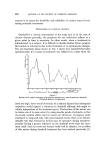
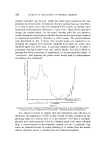
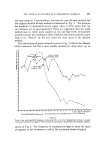
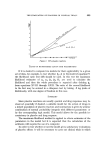
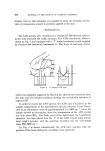
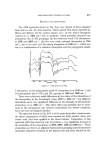
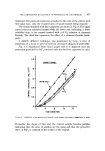
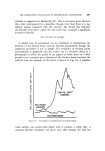
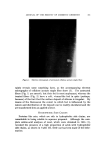
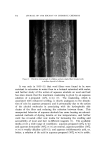
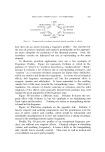
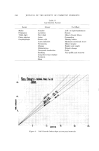
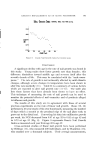
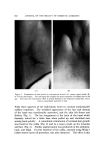
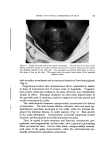
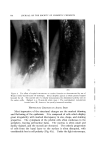
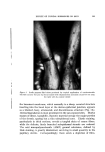
472 JOURNAL OF THE SOCIETY OF COSMETIC CHEMISTS skin. There was also the appearance of a weak absorption at 1720 cm-1 in Fig. 2(b) which was due to the retention of the stearic acid. At the same time there was a marked decrease in the intensity of the moisture absorption at ca 3400 cm-1. This indicated a fall in the moisture content of the surface of the skin, probably due to the cream exerting a barrier effect. From Fig. 2(c) it can be seen that after the hand was washed with soap and water and dried, traces of the cream were still retained by the skin. This is shown by the persistence of the absorptions at 1720, 1460, 1380 and 1010 cm- 1. These results show that the retention of relatively major components of a product by the skin can be demonstrated by this technique. The degree to which a component can be detected depends, of course, on the actual intensities of the component's infrared absorptions. It should be pointed out that when the retention of a component has been shown it is not known whether the component is actually on the surface of the skin or absorbed into the surface layers. From previous studies it is known, however, that the depth of sample from which ATR spectra are obtained is of the order of a few microns. (Received: 22nd May 1967) •EFERENCES (1) Blout, E. R. and Mellors, R. C. Science 110 137 (1949). (2) May, L. and Grenell, R. G. Ann. N.Y. Acad. Sci., 69 171 (1957). (3) Schwarz, H. P., Appl. Spectry., 6 15 (1952). (4) Scheuplein, R. J., J. Soc. Cosmetic Chemists, 15 111 (1964). {5) Fahrenfort, J., Spectrochim. Acta, 17 698 (1961). {6) Hermann, T. S., Anal. Biochem., 12 406 (1965). (7) Ilarrick, N.J., Anal. Chem., 86 188 (1964).

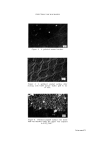
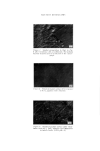
J. Soc. Cosmetic Chemists 18 473-491 (1967) ¸ 1967 Soctety of Cosmetic Chemists of Great Britain The laboratory evaluation prophylactic dentifrices of W. H. BULL* Presented at the Symposium on "Product Testing", organised by the Society of Cosmetic Chemists of Great Britain in Eastbourne, Sussex, on 14th November, 1966 $]/nop$1$--The need for laboratory methods of assessing dental prophylactic products is discussed and a review of some of the methods used to evaluate fluorine containing tooth- pastes given. The techniques mentioned include in vitro and in vivo solubility studies using chemical, physical and electron microscopical techniques to evaluate the action of the pro- ducts. The advantages of establishing in vitro methods which do not depend directly on acid solubility, e.g. some form of artificial mouth, are explained. INTRODUCTION From writings which have survived from the Ancient World it is apparent that dental products designed to care for teeth have been made by man from earliest times. In Chinese and Indian records of ca. 3000 B.C. and in Egyptian manuscripts of ca. 1500 B.C. there are references to dental topics including anatomy, treatments with drugs and by acupuncture, dentifrices, etc. The Romans were also versed in such matters and Pliny records the formula for a dentifrice which includes the ashes of oxen hooves, myrrh, burned eggshells, pumice, etc. The formulator of today may not recognise all of these as ingredients which he might want to use in tooth- paste but such a mixture is likely to have an abrasive, and therefore clean- ing, action on teeth. That cleaning the teeth is desirable for other than social reasons has been shown by Fosdick (1) and Mansbridge (2) who found that children about 12-14 years of age, practising good oral hygiene, i.e. *UnileVer Research Laboratory, Isleworth, Middlesex. 473
Purchased for the exclusive use of nofirst nolast (unknown)
From: SCC Media Library & Resource Center (library.scconline.org)