474 JOURNAL OF THE SOCIETY OF COSMETIC CHEMISTS regular tooth brushing, experienced a lower caries incidence than those with poor habits in this respect. The greatest contribution so far made by manufacturers of dental products has been to provide the public with toothbrushes and dentifrices which are reasonably efficient and pleasant to use. However, with increase in knowledge and in sophistication additional attributes, such as sweet breath, healthy gums and freedom from caries, have been claimed. These have been based, usually, upon some scientific fact or hypothesis but their efficiency has not necessarily, in the past, been proved rigorously. A genuine desire on the part of the manufacturer to make his product as effective as possible and the explicit demand of bodies such as the Indepen- dent Television Authority that his claims be related to user experience has resulted in industrial organisations undertaking in vitro and in vivo studies on problems of oral health and hygiene. The only satisfactory method for testing products designed to improve dental health is a clinical trial. Because the changes achieved by prophy- lactic agents may be difficult to assess and indeed may be small, large numbers of subjects are required if a statistically significant result is to be obtained. Thus a full scale clinical trial to demonstrate, say, the effectiveness of a caries inhibitory agent will be expensive, not only in terms of time and money, but also in the numbers of highly trained research workers required to conduct it. The thorough screening of potential agents by whatever laboratory means are available or can be devised, is therefore essential if we are to be sure that these expensive, cumbersome and sometimes scarce facilities are used to the best advantage. The crucial factor, of course, is the selection of appropriate tests, the results of which will correlate with user experience. In this field the results which will permit correlation are acquired only slowly and so at the start of a project the experimenter is left with the problem of selecting tests which, on his knowledge at that time, are likely to be most relevant to the mode of action of the active ingredient. As this knowledge is often scanty, a battery of tests to cover all possible modes of action, whether likely or not, may be the safest way of dealing with this problem. A further requirement for laboratory methods is the need to test hypotheses which might involve the use of materials which could never be employed in the mouth for reasons of toxicity but which might establish principles and therefore, lead to the development of safe derivatives. Prophylactic toothpaste means any product which has a specific action

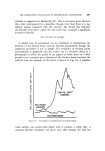
THE LABORATORY EVALUATION OF PROPHYLACTIC DENTIFRICES 475 against caries, gingivitis, calvulus, etc., but only products intended to inhibit caries are considered here. To test the caries inhibiting properties of a product efficiently two requirements are necessary: (a) Knowledge of the aetiology of the carious process. (b) Knowledge of the mechanism by which the product is intended to interfere with this process. If these were known, specific tests could be designed to check that the product does, in fact, perform its allotted function. Although Miller's acidogenic theory of caries is largely accepted as being true, the detail is by no means established. However, the wide acceptance of the acidogenic theory and the un- doubted effect of fluoride in reducing dental decay has led to the popularity of the study of enamel solubility in acid in the investigation of potential cariostatic agents. ENAMEL SOLUBILITY In essence the method is simple in that the solubility of enamel in a suitable acid buffer - usually lactate or acetate - before and after treatment with the test material is determined. Practical difficulties arise, however, in that no two teeth seem to behave in the same way even when efforts are made to standardise conditions. The use of ground enamel, prepared by the method of Manly and Hodge (3) was introduced to overcome this problem. By this technique a large batch of ground enamel, free from fines and graded by sieving to give a standard material, can be prepared and its solubility characteristics in acid buffers determined accurately. A large number of tests can then be run on the rest of the batch of enamel. Further, if a suitable mesh size is selected (e.g. 25-72 mesh) the enamel can easily be separated from toothpaste solids by sedimentation and this avoids tedious filtration procedures. In determining solubility changes, some of the early work was performed on a weight-loss basis, e.g. Manly and Bibby (4), but most studies now depend on a determination of calcium, usually by a microtitration with ethylenediamine tetraacetic acid (EDTA), or of phos- phorus, by a colorimetric procedure. Radiotracer techniques have also been used (5). Numerous criticisms and drawbacks to powdered enamel are apparent, e.g. a large surface area is exposed compared with intact enamel and
Purchased for the exclusive use of nofirst nolast (unknown)
From: SCC Media Library & Resource Center (library.scconline.org)