J. ,%c. Cosmetic Chemists, 19, 85 93 (Feb. 5, 1968) Biologic Problems Sunscreens Concerning P. B. ROTTIER, D.Sc.* Presented September 23, 1966, Netherlands Society of Cosmetic Chemistry Synopsis--Ultraviolet erythema follows sun damage done to the skin. The extent of damage depends not only on the radiation dose but also on the properties of the skin. People with insensitive skins and good pigmentation do not require sunscreens with a high screening factor unless they have no time to habituate. Those with sensitive skins and poor pigmentation require high screening factor sunscreens. They nevertheless have to avoid long exposures to the sun because of insufficient habituation and because most available sunscreens do not protect against long-wave ultraviolet for which they are sensitive. Those with pathological reactions to sunlight cannot find adequate sunscreens, even when they tan well, because of the cumulative action of sunlight. The existing opaque sunscreens they need are moreover disagreeable to use. Screening factors have to be determined on the skin. HEAT ERYTHEMA AND ULTRAVIOLET ERYTHEMA Sunburn is primarily caused by the ultraviolet radiation (wave- length about 300 nm) present in sunlight. Sunburn has nothing to do with excessive heating of the skin by sunlight, since this heating of the skin is caused primarily by the visible part of the sun's spectrum with its highest intensity in the yellow-green, near 550 nm. In the sun the normal skin temperature of 32øC can increase to 40-42øC, which gives the sensation of agreeable warmth. At 43 øC this changes into pain so that higher temperatures will be avoided, since at 46 øC heat damage of the skin may occur. Thus, our ability to sense elevated temperatures protects us from burning the skin but we are unable to * Dermatological Clinic, State University, Utrecht, The Netherlands. 85

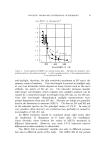
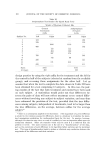
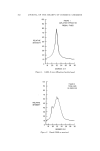
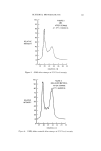
86 JOURNAL OF THE SOCIETY OF COSMETIC CHEMISTS sense ultraviolet sunburn which is, as heat burn, a damage to living tissue. Both heat and ultraviolet radiation cause reddening of the skin by vasodilation, called heat erythema and ultraviolet erythema, respec- tively. There is a great difference between these erythemas. Heat erythema is an almost immediate reaction to heating skin to 38-42 øC. It is a normal physiologic reaction to counteract overheating of the skin. When the heating is stopped, the heat erythema does not immediately disappear but lasts for about 1-2 hours. Ultraviolet erythema appears several hours after damage is done to the skin the period of latency depends on the ultraviolet dose. This delay is the time necessary for substances formed in the epidermis by the ultraviolet light to diffuse to the dermis where the blood vessels are located (1). After a minimum erythema dose (MED), the latency is 8-10 hours. With 8 times the MED the latency can decrease to 1-2 hours. After very strong irradia- tion accompanied by strong heating of the skin, a heat erythema may change into an ultraviolet erythema (UV-E) without perceptible latency of the latter. UV-E's last longer, again depending on the dose. After a dose of more than 3 MED's a UV-E persists for several days, while 24 hours after such a dose even an edema may be present for some hours. Still higher ultraviolet doses may cause severe edema for days while the UV-E may last for months, although it may become imperceptible when increased pigmentation tans the skin. In contrast, only in infrequent pathological cases can a heat erythema last for 24 hours or more. Such a heat erythema can be distinguished from an average UV-E because the former is patchy while the latter is homogeneously red. The MED is the smallest dose which still damages the skin. It is the quantity which expresses the sensitivity of a skin to irradiation. An MED exists for each wavelength of the spectrum. Figure 1 shows the action spectra of the skin, viz, the MED's for all wavelengths from 250 nm to about 550 nm (2). The skin is most sensitive to the wavelengths 250 and 297 nm in the short wave ultraviolet range but much less sensi- tive to longer wavelengths. However, "long-wave" UV-E's accom- panied several days later by increased pigmentation can be elicited. Wavelengths longer than 300 nm penetrate deeper into the skin than shortwave UV. They provoke an early vascular re. action, presumably by direct action on the blood vessels in the dermis (3). Sunlight on the earth's surface contains no radiation at 250 nm be- cause of absorption in the ozone layer in the higher atmosphere. In sun-
Purchased for the exclusive use of nofirst nolast (unknown)
From: SCC Media Library & Resource Center (library.scconline.org)