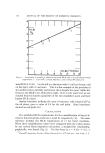
BIOLOGIC PROBLEMS CONCERNING SUNSCREENS 93 as they cannot produce enough melanin in their skin to show pigment darkening. Moreover, this pigment darkening even in well tanned people does not last longer than several hours and is not brown but has a greyish color. SKIN DEGENERATION BY EXCESSIVE SUN-BATHING It should be more widely publicized that excessive sunburning ulti- mately leads to skin degeneration, such as is found in farmers and sailors skin. Women especially should know that excessive sunbathing causes youthful skin to grow old earlier. It is better to restrict sun- bathing, even while using sunscreens, because these offer only limited protection, mostly against short-wave ultraviolet only. Their pro- longed use may, moreover, risk skin hypersensitivities. Only a minority of persons, the sensitives, require good protection by sunscreens. For this group, restriction in exposure to sun- and daylight is even more important, since the preparation they need (a base that sticks firmly to the skin without disturbing its functions) have not yet been found. (Received Feb. 17, 1.(167) REFERENCES (1) van der Leun, J. C., Ultraviolet erythema• Diss. Utrecht (1966). (2) Rottier, P. B., The ratio of the 260/300 nm MED's in the judgement of skin sensitivity to short-wave ultraviolet, ?roc. Intern. Biometeriological Congr., 4th, Philadelphia, Pa., and New Brunswick, N.J., 1966 (in press). (3) Rottier, P. B., and van der Leun, J. C., Hyperaemia of the deeper vessels after irradiation of human skin with large doses of ultraviolet and visible light, Brit. J. Dermatol., 72, 256 (1960). (4) Wiskemann, A., and Zimmermann, P., Wertbestimmung handelsfiblicher Lichtsehutz- mittel mit der Osram-Ultravitaluxlampe, Strahlentherapie, 99, 479 (1956). (5) Bener, P., Tages- und Jahresgang der Specktralen Intensitiit der Ultravioletten Global- und Himmelstrahlung bei Wolkenfreien Himmel in Dayos, Ibid., 133,306 (1964). (6) Rottier, P. B., Light Dermatoses without abnormal reactions to single test irradiations, Dermatologica, 129, 286 (1964). (7) Lasser, B. T., Chemie und Wirkungsweise yon UV-absorbern, J. Soc. Cosmetic Chemists, 14, 577 (1963). (8) Knox, J. M., Guin, J., and Cockerell, G., Benzophenones, ultraviolet light absorbing agents, J. Invest. Dermatol., 29,435 (1957). (9) Vossman, R. E., Knox, J. M., and Freeman, R. G., Aerylonitriles, a new group of ultra- violet absorbing compounds, Ibid., 39,449 (1962).

J. Soc. Cosmetic Chemists, 19, 95-107 (Feb. 5, 1968) Easy Statistical and Plant Data Tests for Laboratory W. M. WOODING, B.Ch.E* Presented May 2, 7967, New York City Synopsis--Rank tests and other nonparametric procedures can be used to take advantage of the objectivity available to an experimenter by application of statistical methods to his data. Three welLknown rank tests are described and examples of their use are given. Hopefully, this presentation will stimulate cosmetic chemists and others to a wider use of statistics when studying the results of experimental or observational procedures. INTRODUCTION This paper is presented to encourage wider use of simple sta- tistical procedures by chemists and others who deal with numerical data. All of the tests discussed are found in the literature, and it is hoped that the examples given here will be sufficiently interesting to persuade the reader to investigate similar tests and use them. The tests described are known as "non-parametric," which implies that the nature of the underlying statistical distribution has no influence upon the validity of the procedures. This property is possessed by many similar tests given in the references to this paper. A second property of nonparametric tests is simplicity. They usually require nothing but pencil, paper, and a few minutes of time. Some of them may occasionally be applied mentally to the data with no computational work at all. All three specimen tests described here were designed to determine whether pairs of variables which are numerically different are, in fact, * Carter Products Research, Carter-Wallace, Inc., Half Acre Road, Cranbury, N.J. 08512. 95
Purchased for the exclusive use of nofirst nolast (unknown)
From: SCC Media Library & Resource Center (library.scconline.org)