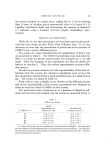
BIOLOGIC PROBLEMS CONCERNING SUNSCREENS 8• In Holland those belonging to the first group will acquire 1-3 MED 30(J, in 1-3 hours, at first exposure of the trunk in the summer sun. This does not harm their skin. Such doses repeated on the following days will gradually provoke a red-brown tan, and after a week subjects easily tolerate 8-10 hours sunlight a day, even at the Mediterranean. They may reach this result by habituation. An initial exposure of eight hours, for example, may even do harm to their skins. Persons of the second group acquire 4-10 MED 306, at the first ex- posure of one hour. This may cause a disagreeable sunburn in the evening. When peeling does not interfere, repeated exposures to such doses may, by habituation, gradually decrease the sunburn. But these persons can never expose themselves as long to the sun as those in the first group. Moreover, they remain as red as lobsters without much tanning. A range of sensitivities exists between these two groups. These people may all use sunscreens but with quite different aims. Insensitive subjects do not require a high screening factor. To tan they need a medium-strong UV-E. The sunscreen they use will be some oil that does not screen out the short-wave ultraviolet (unless they have to endure very long exposures before habituation has started). Their oil protects the skin against drying and keeps it smooth. Sensitive sub- jects, however, seek real protection against ultraviolet in order to endure longer exposures without disagreeable sunburn. THE SCREENING FACTOR OF A SUNSCREEN The screening factor (SF) of a sunscreen is the number indicating how much longer exposure to sunlight is needed to acquire a MED. It is 1 when no protection exists to 306 nm, 2-4 for moderate protection, and more than 4 for good protection. The basis for measurement of an SF in the laboratory is the MED which requires the shortest exposure time. The SF is a physical quantity it is related to the percentage of the light passing into the skin through the layer of the sunscreen. Initially, SF's were calculated from the transmission (at 300 nm, for example) of a suitable dilution of a sunscreen, as measured in a spectrophotometer. In that case the thick- ness of the sunscreen layer on the skin was assumed to be, for example, 0.01 mm. In this way SF's of many sunscreens were determined. Their value is limited since SF's measured on the skin are usually much lower (4). The principal reason for this difference between transmission mea- surements and skin tests is the thinner layer of sunscreen on the skin as

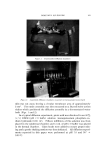
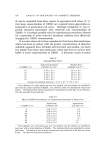
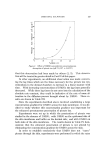
90 JOURNAL OF THE SOCIETY OF COSMETIC CHEMISTS compared to that used in calculations--for example, a transmission of 10% at a thickness of 0.01 mm (SF = 10) will be 32% at 0.005 mm (SF = 3) transmission at 0.01 mm of 20% (SF = 5) becomes 45% at 0.005 mm (SF about 2). The SF of a sunscreen will, therefore, depend on the economy of the user and on its fluidity at skin temperature (27-40 ø). But even with the best possible control of thickness, the SF of a sunscreen may be differ- ent on different skins. It depends presumably on the quantity of the sunscreen penetrating in the upper layers of the skin or on the quantity of superficial cells of the horny layer lost by rubbing in the preparation. Also, the screening power resulting from the scattering of light in a dry horny layer may be diminished by the use of oily sunscreens. It is known that oily preparations generally have lower SF's than analogous water-based screens. Oils may even have SF's lower than 1, which means that they make the skin more sensitive to ultraviolet. The principle of determining SF's on the skin is quite simple though time consuming. First, an MED 300 must be determined by means of a mercury arc lamp. This takes 24 hours when the correct doses are given. Then, this MED must be produced by irradiation of the same skin treated with the sunscreen preparation (preferably also irradiating untreated skin as a control to possible differences in skin sensitivities or incorrect doses). This takes another 24 hours. The accuracy is not great an MED may be correct within :• 25% for experienced examiners. When testing a great number of sunscreens at the same time, sensitivities of the skin of the back may easily differ by 50% at distances of 10 cm. If an MED-E appears through the sunscreen after 2-4 times the dose required for the MED 300 on the untreated skin, the SF is 2--4. But is the SF for mercury arc light also that for sunlight? Some dermatologists prefer to test with light sources having emissions which more resemble the sun. They would Be right if a given sun existed. But the spectrum of sun- and daylight (especially in the short ultraviolet) changes from day to day and from hour to hour and is different for different places on earth. Now, because of recent measurements, for example, at Davos, it is possible to imitate the spectrum of one special "Davos sun" (5) with a high pressure xenon arc lamp, corrected with filters. For testing sunscreens on normal persons such an imitation sun would, however, be very impractical, as the irradiation time necessary to provoke an MED-E is about half an hour. For an SF of 3, an irradiation time of 1.5 hours would therefore be necessary.
Purchased for the exclusive use of nofirst nolast (unknown)
From: SCC Media Library & Resource Center (library.scconline.org)