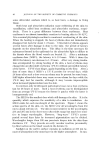
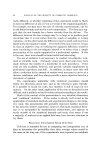
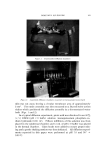
122 JOURNAL OF THE SOCIETY OF COSMETIC CHEMISTS The passage of pierate ion from the epidermal chamber to the dermal chamber was followed spectrophotometrically using a Beckman DU Spectrophotometer equipped with a Gilford Model 220 absorbance In- dicator. Samples were withdrawn at various times from the dermal chamber. Prior to withdrawing the first sample, a small piece of glass wool was submerged in the dermal chamber. Thus, by placing the tip of the sampling piper onto the wad of glass wool, any small particles re- sulting from the use of intact skin could be filtered. The optical density reading at 362 m/• was immediately obtained and the sample was placed back in the dermal chamber. In practice, this operation can be carried out in several minutes. Concentrations of pierate were calculated by using a value of 14700 M -• cm -• for the molar extinction coefficient at 362 mu. Initial studies indicated that, after a lag period, the pierate ion con- centration in the dermal chamber increased in a linear manner with re- spect to time. The data have been treated in accordance with Fiek's First Diffusion Law in the following manner: dc d• = kM (Ce - C•) (•) where: C• = initial concentration of pierate in epidermal chamber C, = concentration of pierate at time t in epidermal chamber C,• = concentration of pierate at time t in derreal chamber A = area of membrane k•, = absolute rate constant If C• C•, equation 1 reduces to dc - k•A Ce (2) dt At early times during the diffusion process, Ce is approximately equal to Ci and equation 2 becomes dc dt- k•.4 C• (3) de/dr can be obtained from the linear portion of the progression curve of concentration versus time. A and Ci are experimentally measurable. Thus, the absolute rate constant for a given experiment can be calcu- lated. In experiments in which dimethyl-C TM sulfoxide was utilized, the diffusion rate of DMSO was determined by sampling 0.1 ml aliquots of

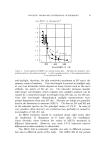
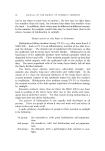
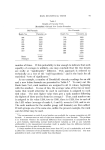
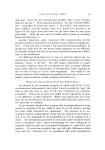
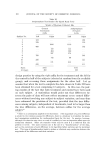
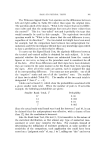
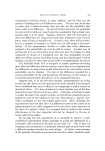
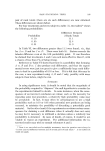
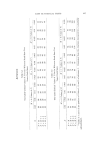
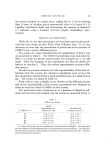
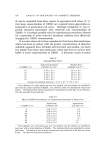
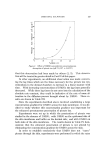
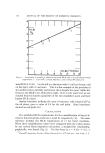
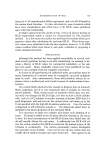
DIMETHYL SULFOXIDE 123 the derreal chamber at various times, adding this to 15 ml of counting fluid (6 parts of ethylene glycol monomethyl ether to 10 parts of 1:25 Liquiflor scintillation fluid) and determining the amount of dimethyl- C TM sulfoxide using a Packard Tri-Carb Liquid Scintillation Spec- trometer. RESULTS AND DISCUSSION While the in vitro skin penetration of several ions and covalent mole- cules has been shown to obey Fick's First Diffusion Law (11), it was necessary to show that the penetration of pierate ion in the presence of DMSO is also a passive diffusion process. The results of a study demonstrating the applicability of Fick's Law are presented in Table I. The DMSO concentration was maintained at 80% (v/v) while the pierate concentration was changed over a 13 fold range. With the exception of one experiment, the data do exhibit ad- herence to equation 2. Thus, the system approximates a passive diffu- sion process. In order to get some estimate as to the reproducibility of the data ob- tainable with this system, five identical experiments were set up with skin membranes obtained from a small abdominal area of a single guinea pig. The results are shown in Table II. With evidence thus available on the kinetics of the diffusion process and on the reproducibility of the system, experiments were designed to study in detail the effect of DMSO on this system. The penetration rates of pierate ion as a function of dimethyl sulf- oxide concentration were studied, and the results are presented in Fig. 3. Table I Fick's Law Study a % DMSO (v/v) Initial Concentration of Absolute Rate Pierate Ion (M) Constant (em hr -•) 80 1.56 X 10 -2 13.7 X 10⁻⁴ 80 4.14 X 10 -• 14.2 X 10 -• 80 6.68 X 10 -• 30.7 X 10 -• 80 9.75 X 10 -2 17.5 X 10-• 80 19.8 X 10 -• 13.8 X 10 -• a (A young male guinea pig was sacrificed by a lethal injection of MgSO4. The abdominal hair was clipped and the abdominal skin was immediately excised and frozen. The length of time between procurement and utilization of the skin was approximately 24 hours. The skin had been kept frozen until use.)
Purchased for the exclusive use of nofirst nolast (unknown)
From: SCC Media Library & Resource Center (library.scconline.org)