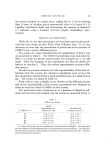
BIOLOGIC PROBLEMS CONCERNING SUNSCREENS Because the Kromayer mercury are provokes an MED-E in about 1 second on the skin of the back, this lamp remains the preferred light source for testing sunscreens on normal skins. The situation is, how- ever, quite different for skins with pathological reactions. PATHOLOGICAL SKIN REACTIONS There are people with skin which reacts pathologically to sun- and daylight. Sometimes, such a skin is so sensitve that an exposure to sunlight of several minutes even through window glass (which screens off the short-wave ultraviolet) may provoke itching weals. In other, less sensitive skins an exposure of several hours causes, after several hours of latency, an itching eczema that will persist if the skin is not kept out of sun- or daylight, even when it passes through window glass. It is becoming more widely understood that many such light diseases are not caused by short-wave ultraviolet alone but also by long-wave ultra- violet and even by visible light. Normal persons very seldom get a sun- burn through window glass, but diseased skins may so react. Moreover, irradiation seems to act in a cumulative way in diseased skin exposures which by themselves are apparently innocuous may provoke a patho- logical reaction when they are repeated daily even if the skin is well tanned. The action spectrum of such skin may be quite normal, i.e., its MED-sensitivity for most wavelengths may be normal. But an over- exposure of several times the MED in the longer wavelength region, given in one single exposure or in several exposures on consecutive days, provokes the pathological reaction (6). In this connection the fact must be stressed that the intensity of long-wave ultraviolet is not much less on cloudy days or in the shade of buildings or umbrellas than in direct sunlight thus, even in such conditions, the disease may exacerbate. When such skin has to be protected by sunscreen preparations, the SF of these should be tested with long-wave ultraviolet and visible light. For this purpose an imitation sun lamp (xenon arc with filters) may be used alternately, a powerful mercury arc source can be used if enough glass-filters are interposed to prevent sunburning by short- wave ultraviolet. In our clinic a water cooled mercury arc SP500 (Philips, Eindhoven) with 5 glass filters (11 mm glass thickness) gives satisfactory results. Such high intensity sources heat the skin strongly, and the skin temperature should be controlled regularly during irradia- tion to prevent heat-burning or heat-erythemas which may interfere with the judgment of the light effects.

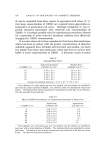
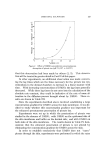
92 JOURNAL OF THE SOCIETY OF COSMETIC CHEMISTS Transparent sunscreen preparations for this type of skin do not exist (to protect against violet light, they would have to be dark yellow). Therefore, opaque sunscreens with, for example, 5 or 10% TiO• must be used. The preparation is made flesh color with cinnabar (red HgS) and colcothar (Fe-oxide). Though an SF of about 5 can be obtained in this way, it is only sufficient for protection against a single sun exposure and not for continuous protection, because of the cumulative effect of light. Such sunscreens are, moreover, not pleasant to use. The most difficult problem in sunscreening skin that really needs pro- tection is a base for the absorbing or scattering substances that makes these substances adhere to hot skin without interfering with sweating. Petrolatum with silicones, for example, comes off too easily, stains clothes, becomes patchy through sweating, and hampers transpiration. ULTRAVIOLET-ABSORBING SUBSTANCES IN SUNSCREENS Recently Lasser (7) listed a number of substances for screening out ultraviolet in sunscreens. In the dermatological literature some of these are described as irritating to the eyes or as known contact sensi- tizers. A curious example has been p-aminobenzoic acid which protects well against 300 nm but does not stay homogeneously in salve bases. It has, therefore, been replaced in sunscreens by its esters these, con- trary to the acid, are notorious for their photosensitizing capacities, presumably because they penetrate into the skin better. Moreover, the esters of p-aminobenzoic acid induce cross-sensitivity. New substances have recently been recommended for sunscreens. Examples are several benzophenones (8) and acrylonitriles (9) (especially water-insoluble ones), but it will not be known for many years if they are innocuous for routine application on the skin, especially in people with skin diseases. PIGMENT DARKENING BY LONG-WAVE ULTRAVIOLET AND VISIBLE LIGHT Sometimes sunscreens are recommended because, while they pro- tect against short-wave ultraviolet (ie, against sunburn), they allow long- wave ultraviolet to penetrate and, therefore, do not interfere with "immediate pigmentation." This is another name for pigment darken- ing, a distinct blackening through a photo-oxidative process on already existing melanin by high doses of long-wave ultraviolet and visible light. Such a recommendation is misleading for people in the second group with poor ability for pigmentation who, by using these sunscreens, expect to become brown without sunburning. They will be disappointed
Purchased for the exclusive use of nofirst nolast (unknown)
From: SCC Media Library & Resource Center (library.scconline.org)