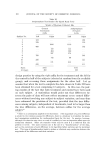
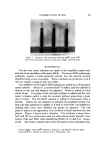
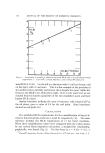
110 JOURNAL OF THE SOCIETY OF COSMETIC CHEMISTS This work, therefore, was initiated to investigate the applicability of some of the more modern instrumental techniques for determining dif- ferences among samples of GMS. As the work progressed over a period of several months it was interesting to note the interdependence and significance of a number of these analytical techniques. The work described herein includes the application of the techniques of X-ray diffraction, differential thermal analysis, and microscopy. These three techniques have demonstrated certain behavior patterns which appear to be related. The author's observations also suggest the mechanism by which GMS introduces an instability problem into every formulation in which the compound is used. Finally, it is believed that this work indicates areas of study which might broaden one's under- standing of the properties of these types of material and thus allow the use of GMS in cosmetic products with a great deal more confidence than it now enjoys. Although other analytical techniques such as in- frared spectrophotometry and chromatography (both TLC and GC) have been investigated, the three approaches described below have pro- vided the most useful information. X-RAY DIFFRACTION An initial basis for comparison is the crystal structure. The litera- ture contains several references on polymorphism in GMS, and in fact, the work done by Kuhrt, Broxholm, and Bloom (1) was in part sugges- tive to this approach. The initial diffraction patterns which were ob- tained approximated those reported by Kuhrt et al. although a strict comparison was not in order because they used a high purity, specially prepared, monoester. The studies reported here were concerned with a commercial grade and the practical application of polymorphism as ap- plied to a product. Kuhrt and co-workers reported certain types of diffraction patterns according to the way and manner in which a sample was heated and chilled. These are attributed to two basic polymorphs--an unstable alpha plus a stable beta form. Several sub forms are also described. As our data began to accumulate, it was noted that considerably dif- ferent patterns could be obtained for GMS, which were not necessarily the result of melting and chilling. TP.e diffraction data obtained suggest that GMS undergoes a slow, but continuous, change in its crystalline state. When freshly solidified from the melted or amorphous condition, the initial crystallization is characterized by a single strong diffraction line between 4.06 and 4.17

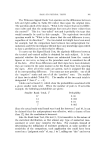
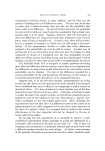
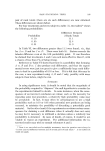
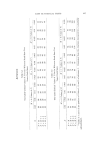
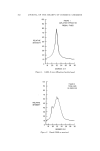
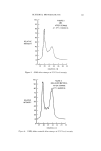
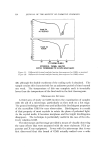
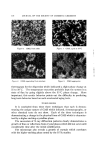
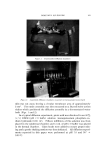
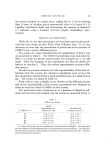
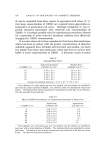
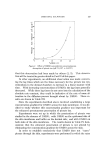
GLYCERYL MONOSTEARATE 111 A (Fig. 1). This corresponds to the reported unstable alpha form. The sample, as received in this laboratory, has a distinctly different pat- tern (Fig. 2) which changes according to the time and temperature of storage (Fig. 3 and 4). Repeated diffraction data on the same sample after the lapse of several months show a change in the intensity of the diffraction lines and the growth of additional lines. When samples of the same origin, i.e., same batch, but stored at slightly above room temperature, 37 øC, are compared with those stored at 21 øC, it is found that the separation and enhancement of these diffrac- tion lines has increased at the higher temperature. When the sample is melted and resolidified the diffraction pattern reverts to the single, sharp line. DIFFERENTIAL THERMAL ANALYSIS Concurrent with the X-ray diffraction work, the same samples were evaluated by differential thermal analysis (DTA). This technique com- pares the thermal characteristics of a substance with that of an inert ma- terial. For example, as the temperature is slowly raised, subtle phase changes in addition to the actual melting can be detected as slight varia- tions in the rate of heating due to endothermic or exothermic properties. These changes are detected as a differential temperature between the substance and the inert reference and are subsequently amplified and recorded as a thermogram. Certain observations, which could be correlated to those of the X- ray diffraction studies, are noted for the thermal studies of GMS. For example, distinctly different thermograms were found depending upon whether the sample was run on an as-received basis or if it was melted into the sample tube. It was also learned that a DTA thermogram of the same batch did not reproduce itself as to temperatures of phase change or melting when rechecked after a few months. When a thermogram trace is obtained for GMS on an as-received basis there are two endotherms or changes in slope which are indications of phase changes. The first endotherm is a few degrees in temperature below the second which represents the complete melt (Fig. 5A). As this sample is allowed to cool at a programmed rate, the inverse or exothermic phase changes are recorded. There are two of these exo- therms for this grade of GMS which may represent the solidification of the mono and di stearates present. A reheat of this same sample, however, will not reproduce the first thermogram. In this case, only a single endotherm is detected (Fig.
Purchased for the exclusive use of nofirst nolast (unknown)
From: SCC Media Library & Resource Center (library.scconline.org)