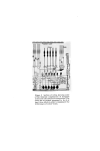
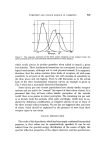
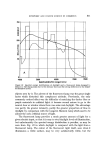
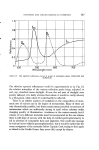
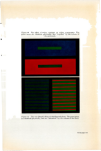
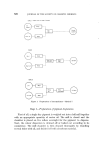
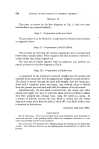
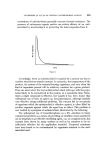
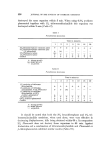
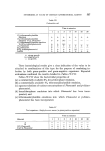
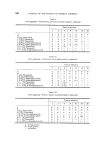
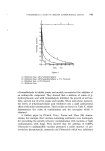
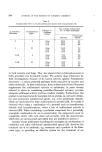
EYESWEET AND COLOUR SCIENCE IN COSMETICS 511 150 I00 5O Figure 10 Spectral energy distributions of daylight and a fluorescent lamp designed to imitate it. The sharp peaks due to the mercury lines and the strong deficiency in the deeper red should be noted. objects seen by it. The advent of the fluorescent lamp was the great single factor which disturbed this complacent attitude. Previously, the only commonly noticed effect was the difficulty of matching the darker blue or purple materials in artificial light: it became second nature to go to the nearest door or window where there was some real daylight. The advantage was partly the greater intensity, partly the greater proportion of blue in daylight by comparison with the tungsten filament lamp which used to be almost the only artificial source of light. The fluorescent lamp provides a much greater amount of light for a given electric input, so that it is easy to rival daylight levels of illumination, but unfortunately the spectral energy distribution is peculiar, as may be seen from Fig. 10 in which daylight is compared with the light from a fluorescent lamp. The colour of the fluorescent light itself, seen when it illuminates a white surface, may be very satisfactorily white, but the

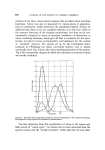
512 JOURNAL OF THE SOCIETY OF COSMETIC CHEMISTS presence of the mercury line radiation and the low efficiency of the red- producing phosphors inevitably spoil to some extent, even seriously, the imitation of daylight. This is apparent as soon as coloured objects are looked at, not only whites and greys under the highly efficient "daylight" fluorescent lamps, which look white but have a serious deficiency in the red part of the spectrum, tea and coffee look yellowish and unpleasant, red carpets look brown, butter acquires an unnatural jaundiced appearance, complexions look dirty, etc. These phenomena are grouped under the term "colour rendering of light sources". To a certain degree, one can be trained or brain-washed to disregard abnormalities in colour rendering, but not entirely. No one with normal colour vision would ever accept mercury or sodium street lamps as giving satisfactory colour rendering. On the other hand, many of the better fluorescent lamps are acceptable, at least for many purposes, as imitations of daylight, or just as pleasant sources of light. There is obviously, somewhere, a kind of threshold of acceptability, an engineering tolerance within which the spectral composition of light sources must lie in order to render colours satisfactorily. At first sight it might seem that the determination of a threshold of acceptability is in- superably complex, involving as it does variations in spectral composition all through the spectrum, each part of the spectrum contributing its quota to the general appearance of all colours in a realistic situation. No doubt this apparent complexity inhibited experiment for many years, so that the only methods of controlling colour rendering were common sense, guess- work and the misguided application of existing data from other fields of colour vision. In fact, the problem is not so recalcitrant as it seemed. For example, a series of carefully designed psycho-physical experiments carried out under my direction at the National Physical Laboratory showed that a comparatively simple system of colour rendering assessment could be used with great practical success. The first step in the colour rendering assessment of a source of light is to have an analysis of its spectral quality. The question is, how detailed need the analysis be? As a basis for colorimetric calculations, an analysis of 40, or 80, or even 400 bits of information is used, each "bit" being a relative energy measurement in a spectral band. Since the calculation ends up with only three bits of information, viz. the two chromaticity co-ordinates and the luminance factor, it would seem that a lot of information has been thrown away. It is interesting to follow up this analysis of visual per- ceptions into bits of information. One bit can be regarded as the total in- tensity of the source, a measurement including the whole spectrum. Two bits
Purchased for the exclusive use of nofirst nolast (unknown)
From: SCC Media Library & Resource Center (library.scconline.org)