732 JOURNAL OF THE SOCIETY OF COSMETIC CHEMISTS THE RHEOLOGICAL CONTRIBUTION OF INTERFACIAL FILMS All liquid/liquid disperse preparations must be stabilised by a film of some sort at the liquid/liquid interface and the physical properties of this film should be studied if a complete picture of the bulk properties of the preparation is to be established. This is particularly important when the volume fraction of the dispersed phase is 50% or more, because at high volume fractions there is more particle-particle interference during flow, and the mechanical properties of the interfacial film are seen more clearly in the bulk properties. For the present purpose, interfacial films may be classified under three headings:-- (i) Water insoluble films that are normally spread to be examined. (ii) Adsorped films, where the rate of adsorption is very fast compared with the method of investigation. (iii) Adsorbed films, where the rate of adsorption is slow compared with the method of investigation. Surface films in categories (i) and (ii) are fairly straightforward to examine rh½ologically since their structure at any particular surface pressure is largely independent of time for long time durations, and for small deformations the films may be considered as linear viscoelastic entities. Many hydrocolloids, such as gum acacia, sodium carboxymcthyl- cellulose, salts of alginic acid and some proteins, form surface films both at the water/air interface and the water/oil interface. However, the interfacial films produced by these colloids differ appreciably in physical properties from the spread films and quickly adsorbed films. First, unless the bulk concentration of the dissolved colloid is very low, the interfacial film will consist of a multilayer and not a monolayer. Secondly, the thickness of these films, starting from a clear interface, may take up to 100 h to reach equilibrium (2zt). These two aspects give rise to corresponding difficulties when the rheology of interfacial films is considered. If a true monolayer or a fraction of a monolayer is present, as with the spread films, true two-dimensional analysis of both the thermodynamic aspects of the film behaviour and its rheology may be applied. The thermodynamics of monolayers have been dealt with extensively by Gibbs (25) and Rideal (2!3), whilst Tschoegl (27) has produced a two- dimensional tensor treatment for monolayer rheology.

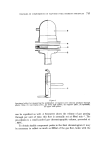
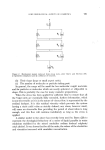
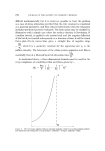
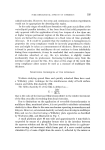
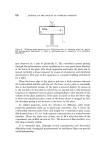
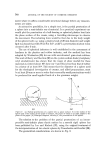
SOME RHEOLOGICAL ASPECTS OF COSMETICS 733 Even the individual layers of multilayer interfacial films are not reversibly adsorbed as has been shown by emulsion washing experiments of Shotton and Wibberley (28). Thus expressions, such as the Gibbs adsorption isotherm, are not strictly applicable to any layer of such multi- layers. This is a severe limitation as estimation of surface excess by measure- ment of equilibrium interfacial tension at various bulk concentrations is then unreliable. Furthermore, two-dimensional rheological analysis of the film is no longer appropriate and there is great difficulty in assessing the thickness of the film in order to evaluate three-dimensional moduli. However, interfacial rheological techniques can provide considerable information about the formation and properties of multilayer films. To be fully useful these techniques should measure both viscosity and elasticity and the simultaneous measurement of surface pressure would also be an advantage. Thus, canal type surface viscometers are of limited use as they only measure surface viscosity. CREEP AND CONTINUOUS ROTATION TECHNIQUES IN THE INTERFACE Surface creep equipments have been described by several experimental- ists, e.g. Biswas and Haydon (29) have used a plane horizontal platinum ring in the surface where the containing vessel was a cylindrical dish concentric with the ring's vertical axis. A constant torque was applied to the ring by means of a galvanometer movement supplied with constant current and the angular displacement was observed using an optical lever. Wibberley (30) has used a biconical bob for interfacial creep studies. A torque was applied by rotating a torsion head which supported the bob on the end of a thin torsion wire. Provided that the total angular movement of the bob was very small during the creep experiment, the torque was substantially constant during the experiment and the data obtained may be subjected to analysis to, give a spectrum of retardation surface com- pliances in an analogous manner to the treatment of creep data in three dimensional problems (22, 31, 32). If the torsion constant of the wire is K dyne cm rad- • and the twist on the torsion head is 0• rad, the stress will be due to a torque of K 0• dyne cm. As long as the total angular deflection of the bob 8 is such that 0-7 x 100 1 formal creep analysis is a practical possibility. If • is quite large the problem of extracting a creep compliance spectrum is very
Purchased for the exclusive use of nofirst nolast (unknown)
From: SCC Media Library & Resource Center (library.scconline.org)