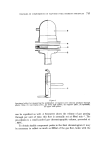
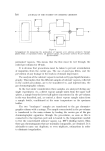
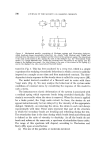
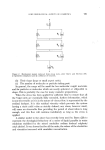
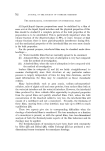
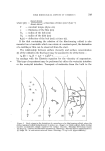
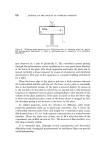
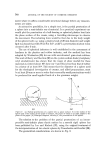
716 JOURNAL OF THE SOCIETY OF COSMETIC CHEMISTS Figure 2 Arrangement for measuring the permeation of yapours over odorous products through plastic films (1) specimen holder, (2) pressure gauge, (3) pressure control, (4) pre-column, (5) flow-meter. permeated vapours. This means that the flow must be led through the cooled pre-column for 10 min. It is obvious that precautions must be taken to prevent accumulation of impurities from the carrier gas. The use of good gas filters, and the prevention of any leakage in the leads is of utmost importance. The analysis of the odorant vapour is carried out by gas liquid chromato- graphy. This implies that the different samples of odorant yapours, collected in the cooled pre-column, are to be transferred to, and injected into, the gas chromatographic column. In the test under consideration three samples are analysed during any single experiment, viz. a direct vapour sample taken from the upper half sphere, a sample from the lower half sphere concentrated in the pre-column in the way described, and, as control, a direct vapour sample taken from a sample bottle, conditioned at the same temperature as the specimen holder. The two "headspace" samples are transferred to the gas chromato- graphic column with a syringe. The sample concentrated in the pre-column is transferred to the main column by leading the carrier gas of the gas chromatographic apparatus through the pre-column, as soon as this is connected to the injection port and is heated to the temperature needed to free the concentrated odorant vapour, e.g. 100øC (boiling water). Thus three gas chromatograms that are mutually comparable, are obtained. It is advisable to carry out duplicate, or even triplicate, estimations in order to eliminate irregularities.

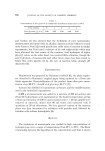
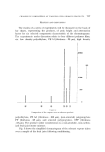
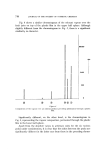
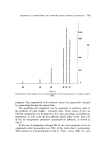
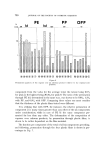
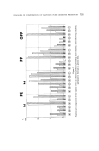
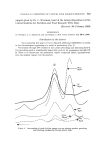
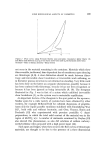
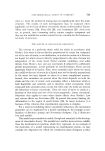
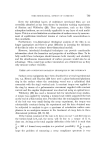
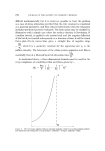
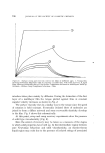
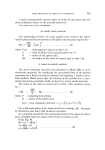
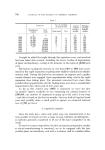
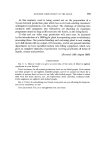
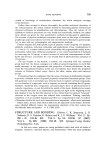
CHANGES IN COMPOSITION OF VAPOURS OVER ODOROUS PRODUCTS 717 RESULTS AND DISCUSSION The results of a series of experiments will be discussed on the basis of bar charts, representing the products, of peak height and attenuation factor for six selected components characteristic of the chromatograms. The experiments under discussion relate to four different polymer films, viz. low density polyethylene, PE ld (thickness -25 pm), high density 48600 4000 3OO 100 Compositon of the vapour over an odorous product. polyethylene, PE hd (thickness -100 [tm), (non-oriented) polypropylene PP (thickness -25 gm), and oriented polypropylene, OPP (thickness -15 I•m). The product under consideration is a non-alcoholic, non-carbon- ized fruit juice/water mixture. Fig. $ shows the simplified chromatogram of the odorant vapour taken over a sample of the fruit juice following conditioning.
Purchased for the exclusive use of nofirst nolast (unknown)
From: SCC Media Library & Resource Center (library.scconline.org)