748 JOURNAL OF THE SOCIETY OF COSMETIC CHEMISTS Fuller employment As already mentioned, it was desired to employ blind persons hitherto passed over as unsuitable. Further than this, hoxvever, it was desired to find fuller employment for workers who, at that time, were not enjoying this facility. Then, of course, the obvious aim was to reduce the ever-increasing trading losses incurred in running the factory and the consequential high cost to the local authorities and the Ministry of Labour. This, in turn, it was felt would have a beneficial effect on the workers themselves and remove the ever-present stigma of being reliant on charity in some form or another. From research carried out, it was known that the traditional trades, by virtue of their slow production methods, would never pay their way and, indeed, would continue to make larger losses each year as production costs continued to rise. The only alternative in this connection would have been to increase prices, which, of course, would be tantamount to pricing the products out of the market. The introduction of new trades was, therefore, the best answer, and a vital factor here is to have a board of management which is cooperative and willing to see a revolutionary approach adopted. In this respect Northampton was indeed very fortunate. No less important, however, was the attitude of the workers themselves, many of whom had been employed on traditional trades for a great number of years. Here again, it must be said that right from the inception of the new trades, the workers and staff throughout the factory gave 100% support. Initial marketing problem To a toilet soap manufacturer there exist two main methods of disposal of the product: (1) To the public through general retailers (in direct competition with the giants of the advertising media) or (2) by contract sale in bulk to large organizations or companies for their own use or retail sale. Method (1) was out of the question because of the lack of financial resources necessary to enter the advertising race and method (2) although far more desirable in this particular instance, was unattainable until such time as it had been proved beyond any doubt that a product could be produced which would pass the strict scrutiny of quality controllers of contract customers and would also be acceptable to the ultimate buyers - the general public.

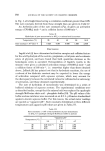
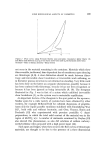
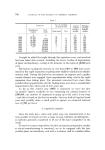
ECONOMIC EMPLOYMENT OF THE BLIND 749 Therefore, a means within the financial resources available had to be found to prove the public acceptability of the product standards, and thus was born the first national direct sales organization to be used by a sheltered workshop for the blind. Since door-to-door selling commenced the scheme has come under fire from various quarters mainly, it was felt, because of the practices of some unscrupulous operators engaged in similar activities. The aim has always been that the products should be bought not primarily because they are made by blind people, but because the customers are obtaining, at a reasonable price, a good quality product which they need for daily use and would otherwise buy elsewhere. The lack of consumer resistance encountered indicates that this aim has been largely achieved and, as a direct result, the essential break-through was made into the contract world, leaving the Northampton factory in the more secure position of having about 80% of the production devoted to contract work and only 20% to direct-sale products. It can be seen that direct selling is primarily a means to an end, and it is believed that the end has so far justified, and will continue to justify, the means. It must be added that the continuance of the direct sales, at least at its present level, is essential for purely economic reasons. Obviously profit margins on retail products, even after allowing for expensive selling costs, are considerably higher than those obtained in the fiercely competitive contract market, and an attempt has been made to keep the two in balance. Developing a new trade At the outset 10 blind persons were selected, the majority of whom had been employed in the traditional trades for a number of years. These persons were considered to be the most adaptable and most likely to give the soap making venture a good start. As expansion took place the remainder of the labour force was gradually absorbed, at the same time integrating new employees, both blind and sighted disabled, and concluding the integration in the main with the less capable workers in the traditional trades. This ultimate integration proved the most difficult in terms of pro- ductivity and, subsequently in terms of profitability, as Table I demon- strates:
Purchased for the exclusive use of nofirst nolast (unknown)
From: SCC Media Library & Resource Center (library.scconline.org)