J. Soc. Cos,Tctic Che,•isls, 19, 841-847 (Dec. 9, 1968) The Effect of Dimethyl Sulfoxide on Percutaneous Absorption: A Mechanistic Study, Part III STANLEY G. ELFBAUM, Ph.D., and KARL LADEN, Ph.D.* Presented April 21-23, 1968, Washington, D. C. Synopsis--Additional studies have been carried out to support the suggested swelling role of dimethyl sulfoxide (DMSO) toward hair fibers. Results again indicate that large con- centrations of solvent are required before appreciable swelling and greater uptake of DMSO can be realized. The swelling process is easily reversible. Other data indicate that DMSO at low pH values may be responsible for an increase in eoulombie repulsions within the fiber which results in greater swelling. With the more complex substrate, skin, the modifying role of DMSO on the skin barrier is more difficult to assign. The DMSO effect has not been shown to be reversible and results indicate that lipid extraction may play a supporting role to protein swelling in this modification process. INTRODUCTION In two previous papers, the effects of dimethyl sulfoxide (DMSO) upon the in vitro percutaneous absorption of picrate ion through excised guinea pig skin and upon some physical properties of several proteins have been reported (1, 2). As a result of studies on bovine serum albu- min, •-lactoglobulin, and hair keratin, DMSO was considered to be a pro- tein swelling agent. With a complex substrate such as skin, the role of DMSO is more difficult to assign and further experiments were proposed. The results of these studies are presented in this paper. * Gillette Research Institute, 1413 Research Boulevard, Rockville, Md. 20850. 841

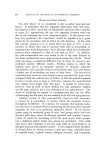
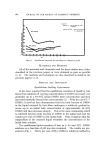
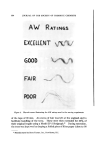
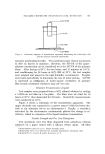
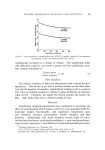
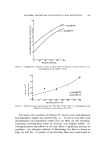
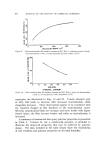
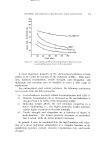
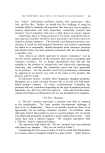
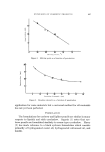
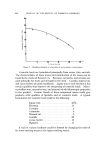
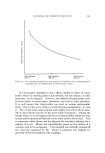
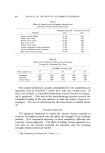
84'2 JOURNAL OF THE SOCIETY OF COSMETIC CHEMISTS 62 0% DMSO 1 2 3 4 5 pH Figure 1. Legend pH 1,2,3--corrected for salt residues pH 4.63,6,7,8,9 --salt correctio • is negligible 12 Equilibrium retention by hair fibers as a function of pH MATE}•IALS AND METI•ODS All of the materials and chemicals used for these studies were either described in the previous papers or were obtained as pure as possible (1, 2). The methods and techniques are also described in detail in the previous papers (1, 2). RESULTS AND DISCUSSION Equilibrium Swelling Experiments It has been reported that the equilibrium retention of liquid by hair fibers from solutions of varying concentrations of DMS0 increased very gradually up to a 40-50% initial DMS0 bath concentration and then increased markedly beyond this concentration (2). With the use of C •4- DMS0, it now has been demonstrated that the mole fraction of DMSO in the liquid retained by hair fibers undergoes a relatively gradual in- crease up to an initial bath concentration of approximately 40-50% DMS0 and then increases sharply. This is the same relationship which is exhibited between mole fraction of DMS0 in the initial bath and the volume per cent of DMS0 in the initial bath. Thus, it appears that the composition of the retained liquid resembles the concentration of the initial bath solution. The equilibrium liquid retention of hair in 0, 30 and 70% DMS0 solutions as a function of pH was also examined. The results are pre- sented in Fig. 1. Thirty per cent (30%) DMS0 is relatively ineffective
Purchased for the exclusive use of nofirst nolast (unknown)
From: SCC Media Library & Resource Center (library.scconline.org)