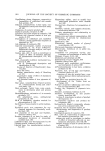
CHANGES IN HUMAN SKIN WITH AGING 835 the different fractions of collagen and elastin are separated by acid digestion and centrifugation. The collagen fractions are quantitated by measuring the amount of hydroxyproline in each fraction this amino acid is present in fairly constant amounts in the peptide linkages of each of the various types of collagen and, as such, is used as a marker for collagen. When the skin from the back or abdomen of a stillborn infant is compared with the skin from. the "Y" incision at autopsy of adult individuals, a decrease is found in the soluble fraction, and an increase in the insoluble fraction, of collagen from the adult skin in addition, there is an increase in total collagen per gram of wet weight tissue over the value for infant skin (11). That this is a true increase in collagen, and not just an apparent change due to water loss from the skin, is borne out by the findings of both Rothman (12) and Flesch (13) who reported an increase in the water content of senile skin as compared to infant skin. It should be noted that both of the above sites of tissue biopsy are not usually exposed to any great extent to the sun, so that the effects observed here are due to age alone. These changes could be explained by a phenomenon which was described earlier--namely, the cross linkage of collagen molecules. When the forearm skin of an aged donor is examined, it is found that there is no change in the soluble collagen fraction, but a remarkable decrease in the insoluble fraction, representing a decrease in total collagen over the value for the normal adult (11). These effects are commonly seen in the skin of the neck, forearm, face, etc., which has had chronic exposure to the ultraviolet rays of the sun this is usually referred to as sun-damaged skin. Smith and Finlayson (14) have advanced a theory which may explain these changes. They propose that collagenase is released from subcellular organelles located in the dermal fibroblasts called lysosomes when these lysosomes are labilized by ultraviolet rays below 3100 A. Therefore, upon repeated and chronic exposure to sunlight, the liberated collagenase digests and thereby reduces the dermal content of collagen. In addition to quantitative changes in dermal collagen with age, qualitative changes have also been recorded. Nimni et al. (15) have reported that there is an increase in the tensile strength of collagen with age, and that this increase in strength is in direct correlation with the known increase in insoluble collagen. A possible explanation for these results might again be the theory of cross linking between collagen molecules. In addition, Rasmussen et al. (16) found an age-

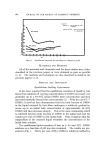
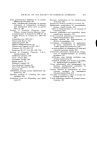
836 JOURNAL OF THE SOCIETY OF COSMETIC CHEMISTS related increase in the shrinkage temperature of collagen--that is, the temperature at which rapid shrinkage of an isolated collagen strip began. Other findings of a decreased capacity for swelling (17), an increased resistance to collagenase (18), a lowered hexosamine: collagen ratio (19), and a higher calcium-binding capacity (20) have also been reported for aged collagen. Another derreal component often studied in investigations into aging is the acid mucopolysaccharides (AMPS). These are long-chain, protein-bound polymers of high viscosity containing repeating units of hexosamine and uronic acid or galactose (21). Although their exact function is unknown, they may serve as a template for laying down fibrous connective tissue such as collagen. Upon examination of aging skin, it has been found that the total AMPS decrease, while in sun-damaged skin they increase. Likewise, the hexosamine component of AMPS isolated from aged skin decreases, and in actinic skin it increases. Nimni et al. (15) have shown a striking relation between derreal hexosamine and neutral salt-soluble collagen in aging skin. In rabbit skin a few weeks after birth there was an initial sharp increase in hexosamine with a lag in collagen formation. After four weeks, when the amount of hexosamine reached a peak and began to decline, collagen exhibited a sharp increase. After about eight weeks, the soluble collagen followed the hexosamine in a gradual, age- related decline as the insoluble fraction began to replace both the ground substance and the soluble collagen. With age, then, there is an increase in insoluble collagen and a decrease in AMPS with sun damage, there is a decrease in insoluble collagen and an increase in AMPS. Derreal Changes: Elastin It was mentioned previously that the protein elastin represented about 2% by weight of the dermis of normal skin. Elastin fibers are not present in premature infants of less than four months' gestation, but in older subjects are seen as delicate, wavy, freely branching fibers, as compared to the dense, coarse bundles of collagen. It is agreed that there is a tremendous increase in the elastin content of skin which has been chronically exposed to the sun -described previously as solar elastotic skin--so that the elastin then represents 13% by weight. It was initially noted that concomitant with this large increase in elastin was the striking decrease in collagen. Several investigators therefore offered the theory that the collagen was being converted into an elastin-
Purchased for the exclusive use of nofirst nolast (unknown)
From: SCC Media Library & Resource Center (library.scconline.org)