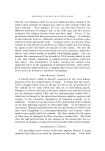
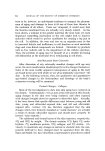
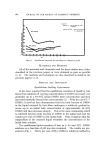
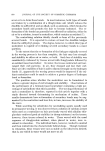
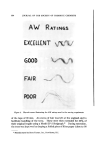
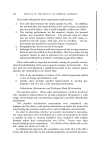
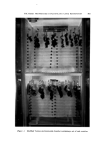
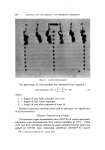
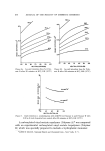
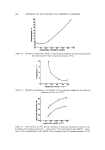
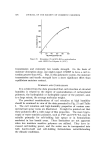
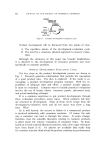
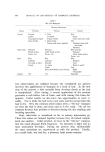
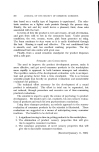
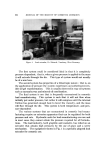
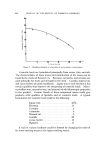
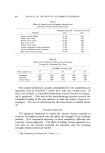
800 JOURNAL OF THE SOCIETY OF COSMETIC CHEMISTS Figure •. Lucite retention panel The percentage of curl retention was calculated from equation 1. Curl retention (%) - L -- Lt X 100 (1) L -- L0 where: L = length of hair fully extended (25.4 cm) L0 = length of hair before exposure L• --- length of curl after exposure at time (t) Standard statistical methods were used to interpret the significance of all observations. Moisture Transmission (Vapor) The moisture vapor transmission rates (MVTR) of various polymeric substances were determined at 90% relative humidity at 22øC. Films were cast from anhydrous ethanol on super calendered Kraft paper and sealed on MVTR cups containing anhydrous Drierite* to absorb * W. A. Hammond Drierire Co., Xenia, Ohio

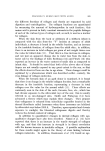
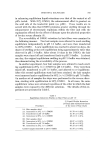
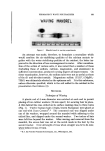
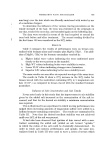
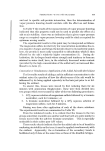
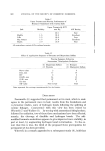
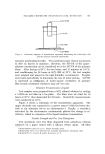
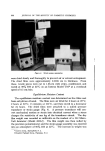
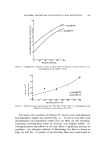
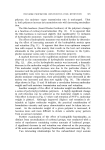
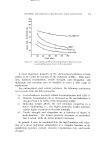
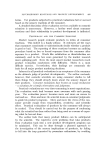
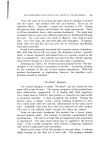
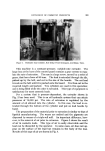
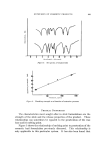
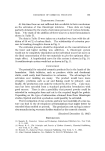
POLYMER PROPERTIES INFLUENCING CURL RETENTION 867 • ELECTRODE Figure ,3. Schematic diagram o[ transmission apparatus illustrating the electrolytic cell and the polymer/electrode relationship moisture penetrating the film. The particular paper chosen was known to offer no barrier to moisture therefore, the MVTR of the paper/ polymer construction can be considered to be the MVTR of the polymer alone. After drying at 60 øC for two hours, and 15 minutes at 105 øC, and conditioning for 24 hours at 60% RH at 22øC, the test samples were weighed and placed in the high-humidity environment. Weights were taken periodically to determine the rate of water pickup. MVTR is expressed as milligrams of water/square centimeter of polymer film/second/centimeter thickness (mg/em2/see/em). Moisture Transmission (Liquid) Test samples were prepared from a 40% ethanol solution by casting a 0.0038-em wet film on a tin plate. The films were air dried for 16 hours at 22øC, then desiccated for 24 hours. Resistivity measurements were conducted at 22øC. Figure 3 shows a schematic of the transmission apparatus. The upper electrode was connected to a power source* while the lower elec- tode or tin substrate led to an electrometer. t Finally, a recorder, l: activated by the electrometer continuously plotted the change in re- sistivity, which is a measure of the liquid moisture transmission. Tensile Strength and Per Cent Elongation Test specimens were free films deposited from anhydrous ethanol solutions on a paper coated with a silicone release agent. All films * Model #9020~5, Sorer:sen & Co., South Norwalk, Conn. t Model #602, SoF,1 St:t•e Electrometer, Keithley Instruments, Cleveland, Ohio. 2• Model #VO?.l-7). Igau•ch & Lomb, Rochester, N. Y,
Purchased for the exclusive use of nofirst nolast (unknown)
From: SCC Media Library & Resource Center (library.scconline.org)