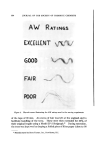
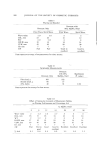
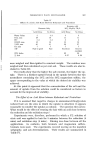
850 JOURNAL OF THE SOCIETY OF COSMETIC CHEMISTS sever or to re-form these bonds. In most instances, both types of bonds are broken by a combination of a thioglycolate salt (which reduces the disulfide to sulfhydryl) and an alkali, such as ammonia, which breaks the secondary bonds and permits the hair to become hydrated. The re- formation of the bonds has generally been effected by oxidation, either by air or by a solution, termed a neutralizer, which contains an oxidant (1). The neutralizing solution ideally should re-form all the p•eviously severed bonds. It is expected to restore at least the disulfide bridges from the sulfhydryl groups. The degree, however, to which this type of neutralizer is capable of re-linking severed secondary bonds is a moot question. To the extent that the re-formation of the linkages originally severed in the waving process is less than complete, the hair may lose strength and stability in either air or water, or both. Such loss of stability was considerably evidenced by tresses waved with thioglycolate followed by an oxidant-based neutralizer. In water, the tresses contracted and rear- ranged their curl patterns in air, they drooped and lost their curl. Since air (dry) stability of hair is said to depend strongly on the hydrogen bonds (2), apparently the waving process would be improved if the oxi- dant neutralizer could be made to achieve a greater degree of hydrogen bond re-formation. The question arises whether the neutralizer can be formulated to achieve a greater degree of curl strength and stability. Observations of the performance of a bromate-based neutralizer containing a high per- centage of salt indicate that this is possible. The waving performance of such a neutralizer is, therefore, reported in this article together with a study directed toward determining its mechanism of action. These results demonstrate how re-formation of secondary bonds may be aug- mented by the neutralizer and how this, in turn, increases the stability of the wave. While searching for substitutes for neutralizing agents usually used in permanent waving, it was observed that a solution of calcium acetate when used as a neutralizer on hair previously waved with alkaline thio- glycolate conferred good air stability (or droop resistance) on the tresses however, these tresses relaxed in water. Those waved with the usual sequence of thioglycolate:oxidant, when placed in water, were re- sistant to relaxation. The individual hairs, however, tended to unwind and then rewind into the characteristic helical shape. Though resistant to relaxation, these tresses were not as stable as the ideal tress desired, that is, one which in water would not move at all.

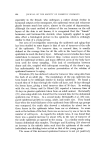
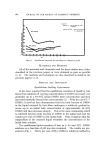
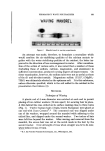
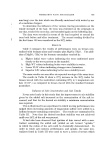
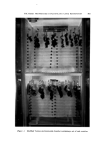
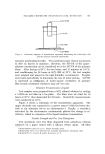
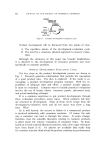
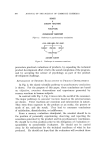
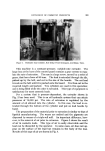
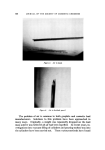
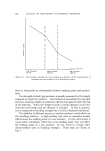
PERMANENT WAVE NEUTRALIZER 851 WAVING MAN'DR[L Figure 1. Mandrel used in waving experiments An attempt was made, therefore, to formulate a neutralizer which would combine the air-stabilizing qualities of the calcium acetate to- gether with the water-stabilizing qualifies of the oxidant, the latter im- proved in the direction of less rearrangement in water. After considera- tion of the action of various salts, it was noted that a number of these (including those of sodium, calcium, magnesium, and aluminum) in sufficient concentration, produced varying degrees of improvement. On closer examination, however, the sodium salts were not as useful as those of the di- and trivalent metals. Magnesium sulfate (U.S.P.) (MgSO4- 7H20) was ultimately selected as the optimum salt. It is this substance, unless otherwise specified, which is the salt added to the oxidant in the presentation that follows (3). METHODS Technique of Waving A plastic rod of 6-ram diameter was notched at each end to permit placing of two rubber washers (19 mm apart) for securing hair in place. A thin helical line was etched on its surface making close to three turns (Fig. 1). Twelve human hairs (virgin, brown European) were glued at one end with Duco Cement ©.* The cemented end was slipped under one of the washers, wrapped around the mandrel while adhering to the etched line, and slipped under the second washer. Two inches of hair were left free beyond the washer. After waving and removal from the mandrel, the excess hair was cut at the notch made in the hair by the second washer. Over-all length of tress when straight was t32 to t34 mm when helical it was 19 mm. * E. I. du Pont de Nemours & Company, Inc., Wilmington, Del.
Purchased for the exclusive use of nofirst nolast (unknown)
From: SCC Media Library & Resource Center (library.scconline.org)