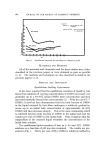
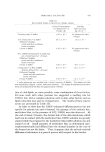
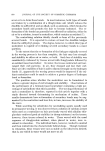
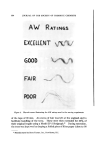
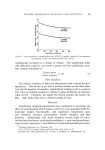
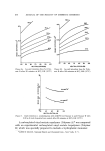
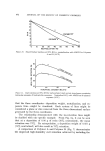
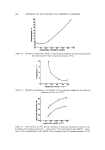
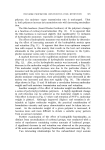
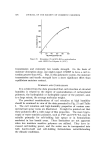
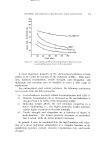
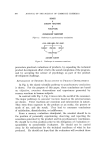
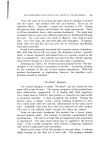
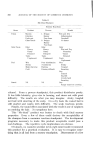
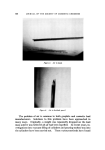
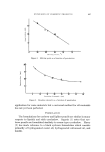
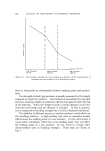
900 JOURNAL OF THE SOCIETY OF COSMETIC CHEMISTS I I 20• Carnauba 10• Carnauba O• Carnauba Oil 10• Oil 20• Oil Figure 10. The extrusion pressure of a wax system as a function of the concentration of carnauba wax and mineral oil in a thixotropic system there is frequently no relationship between melting point and penetra- tion. The strength of stick-type products is usually measured by the weight required to break the product. One method of measuring the strength involves a moving weight on a fulcrum with the lead placed under the end of the fulcrum. When the weight travels a certain distance of the ful- crum the lead breaks and the distance is recorded. In Fig. 6, penetra- tion is compared to breaking strength for a 0.162-in. diameter black lead. The addition of different waxes to a system can have varied effects on the resulting mixture. A high-melting wax such as carnauba usually will increase the melting point of a wax mixture. On the other hand, a cocoa butter substitute, which has a low melting point, may not affect the melting point of a wax mixture. It can, however, change other characteristics such as breaking strength. These data are shown in Fig. 7.

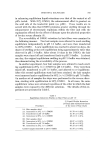
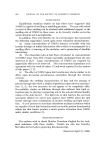
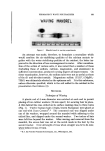
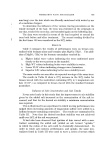
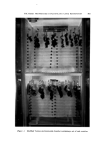
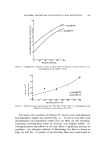
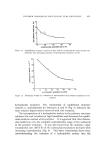
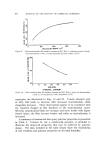
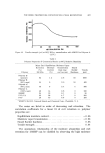
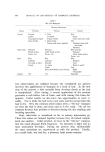
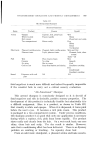
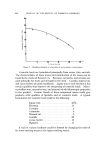
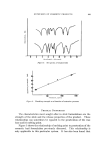
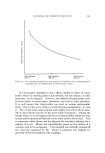
EXTRUSION OF COSMETIC PRODUCTS 901 Figure 11. I I The extrusion pressure of a wax system as a function of the concentration of carnauba wax and mineral oil in a nonthixotropic system It is frequently desirable to have effects similar to those of cocoa butter where the melting point is not affected, but the release, or other properties, can be changed. However, the addition of triglycerides, such as cocoa butter or cocoa butter substitute, can lead to other problems. It is well known that triglycerides can exist in various polymorphic forms that is, they have various crystal structures designated a, •', and •. The a form is the most unstable and rapidly converts to the •' form. The •' form slowly converts to the most stable • structure. During the change from a to •, the triglyceride has a certain mobility within the wax system and frequently will deposit on the outer surface of the lead. This is commonly called bloom and has plagued the chocolate industry for a number of years. Bloom was intentionally grown on the surface of a cosmetic lead for investigation. This matehal was carefully scraped off the lead and examined by IR. Figure 8 compares the original tri- glyceride of the formulation to the scrapings.
Purchased for the exclusive use of nofirst nolast (unknown)
From: SCC Media Library & Resource Center (library.scconline.org)