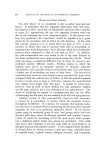
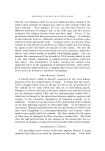
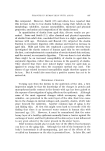
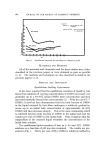
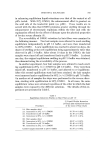
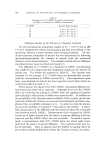
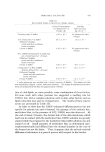
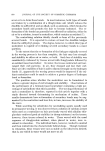
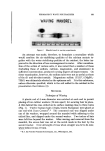
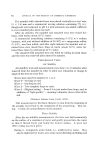
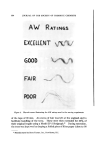
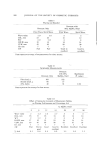
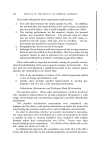
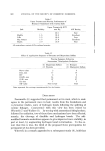
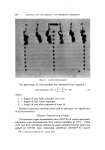
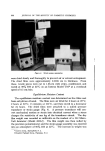
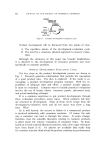
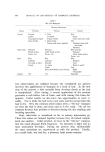
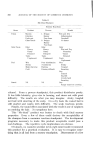
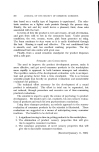
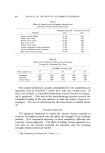
856 JOURNAL OF THE SOCIETY OF COSMETIC CHEMISTS Table I Waving on Mandrel Bromate with Bromate Only 36% MgSO4.7H20 First Wave Sixth Wave First Wave Sixth Wave Wave value 1.9 1.6 3 3 D2L, mm 23 23 12 12 WT 2.9 2.8 3 3 D2LW, mm 15 15 14 14 VLW, mm 43 43 39 39 ID, mm 7 7 7 7 AW Fair Fair Good to Good to excellent excellent Data represent average of measurements for three tresses. Table II Serigraphic Measurements Bromate Only Bromate with 30% MgSO4.7H20 Significance (P. value) First load, g 163 152 Second Load, g 66 77 20% Index 40 51 0.02 Data represent the average for four tresses. Table III Effect of Increasing Amounts of Magnesium Sulfate on Waving Performance and Percentage Ash % MgSO4- 7H20 0 6 12 24 36 47 58 Wave value D2L, mm WT D2LW, mm VLW, mm ID, mm AW % Ash 2 2.3 2.3 2.7 3 3 3 18 17 16 14 13 13 13 2 2.7 3 3 3 3 3 17 15 13 13 14 14 14 40 40 38 38 37 37 37 7 7 7 7 7 7 7 Fair Fair to Good Good to Excellent Excellent Excellent good excellent 0.1 0.4 0.4 0.5 1.1 1.0 1.1

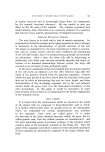
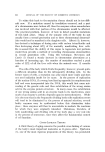
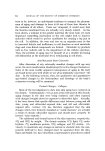
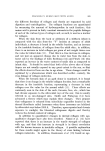
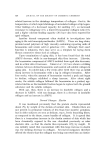
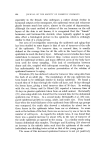
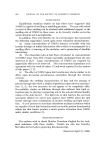
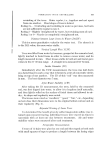
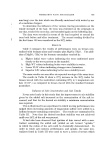
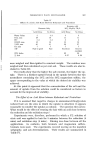
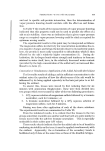
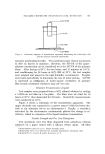
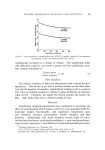
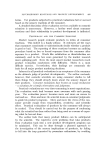
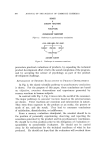
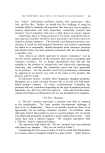
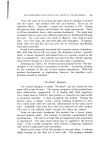
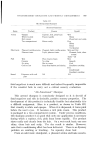
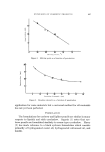
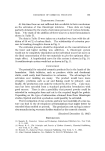
PERMANENT WAVE NEUTRALIZER Table IV Effects of a Citric Acid Rinse Between Reductant and Neutralizer 857 Bromate Only Bromate with 36% MgSO4.7H•.O Acid Rinse No Rinse Acid Rinse No Rinse Water Value 2 2.3 3 3 D2L, mm 18 16 12 12 WT 2.3 2.3 3 3 D2LW, mm 15 16 13 13 VLW, mm 40 41 38 37 ID, mm 7 7 7 7 AW Fair to good Fair Excellent Good to excellent 20% Index ...... 60 55 % Ash ...... 0.37 0.56 were weighed and then ignited to constant weight. The residues were weighed and then calculated as per cent ash. These results are also in- cluded in Table III. The results show that the higher the salt content, the higher the up- take. There is a distinct upward break in the uptake between the two neutralizers containing the 24% and the 36% magnesium sulfate, the upper corresponding to the value at which the desired air stability was achieved. At this point it appeared that the concentration of the salt and the amount of uptake from the solution could be considered as factors to account for the improved air stability. The Effect of an A cid Rinse between Reductant and Neutralizer If it is assumed that negative charges in ammoniacal-thioglycolate reduced hair are the sites to which the uptake is attached, it appears reasonable to consider the uptake as cationic. The question then arises: What would be the effect of treating the hair with an acid rinse between the reduction and the oxidation steps ? Experiments were, therefore, performed in which a 3% solution of citric acid was applied to hair for 8 minutes between the reduction (6 mins) and oxidation step (8 mins). Rinsing was done between all the applications. As oxidants, both bromate and magnesium sulfate- bromate were used. The experiments covered waving on the mandrel, serigraphy, and ash determinations. Their results are summarized in Table IV.
Purchased for the exclusive use of nofirst nolast (unknown)
From: SCC Media Library & Resource Center (library.scconline.org)