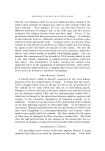
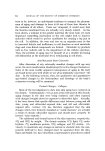
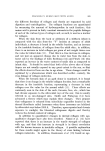
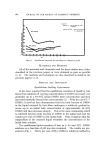
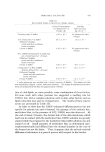
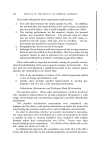
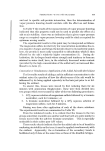
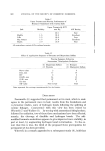
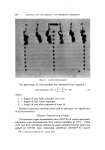
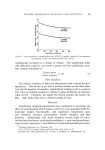
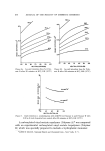
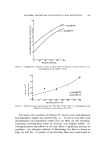
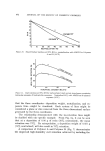
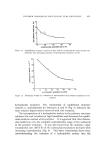
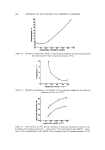
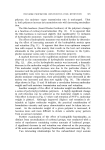
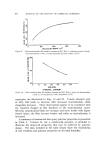
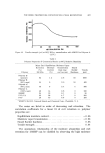
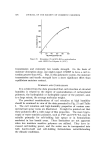
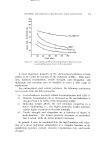
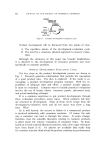
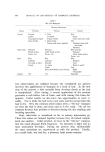
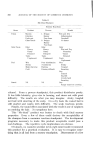
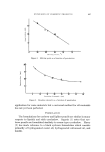
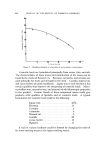
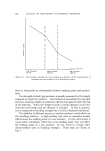
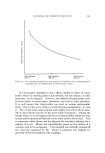
874 JOURNAL OF THE SOCIETY OF COSMETIC CHEMISTS Figure 14. 20 18 16 I0 •. 6, 0•) I0 20 •0 40 50 60 70 HYDROPHOBIC MONOMER, MOLE(%) Moisture transmission relative to increased hydrophobic monomer incorporated into carboxylated vinyl acetate terpolymers (22øC) Figure 15. 20. 00 10 20 30 40 5• MOLECULAR WEIGHT X J0 -3 Moisture transmission as a function of the molecular weights of the polymers illustrated in Fig. 14 (22øC) • 70 I- 60 o o I0 20 30 40 50 MOLECULAR WEIGNT XlO-3 Figure 16. Curl retention at 90% RH as a function of molecular weight for a series of car- boxylated vinyl acetate terpolymers. Upper curve, 40% neutralization with AMPD Lower curve, 100% neutralization with AMPD, 0.06 g deposited and 30 minutes exposure (22øC)

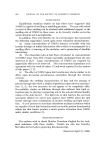
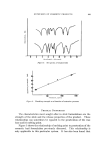
POLYMER PROPERTIES INFLUENCING CURL RETENTION 875 polymer, the moisture vapor transmission rate is unchanged. That is, both polymers increase in transmission rate with increasing neutraliza- tion. The film hardness (Sward Rocker hardness) of the polymers changes as a function of carboxyl neutralization (Fig. 10). It is apparent that the film hardness is increased slightly (but significantly) by inclusion of hydrophobic monomer, especially at higher neutralization ranges. The effect of hydrophobic monomer was studied further by determin- ing the effect of increasing amounts of the hydrophobic moiety upon curl retention (Fig. 11). It appears that there is an optimum composi- tion with respect to this moiety that results in the best curl retention obtainable in this particular system. Further increase in the hydro- phobic monomer seems only to detract from this property. A marked decrease in the equilibrium moisture content of films was observed as the concentration of hydrophobic monomer was increased (Fig. 12). Also, as the hydrophobic moiety was increased, a dramatic decrease in the molecular weight of the polymer was observed (Fig. 13). This molecular weight decrease was due to the particular choice of monomer and the polymerization conditions employed. When moisture permeability tests were run on these polymers with increasing hydro- phobic monomer composition, their permeability rates decreased as the moiety was increased and then rose rapidly (Fig. 14). The relation- ships shown in Figs. 15 and 16 indicate a correlation between molecular weight and both moisture transmission and mean curl retention. Another example of the effect of molecular weight was illustrated in a series of polyvinylpyrrolidone polymers. A highly significant change in curl retention can be achieved as the molecular weight is varied. This effect is shown in Fig. 17 where curl retention of PVP rs. molecular weight is plotted. Although improved (higher) curl retention is ob- tainable at higher molecular weights, the practical consideration of formulation viscosity and spray characteristics must be taken into ac- count. As the molecular weight of a given polymer is increased, it becomes more and more difficult to obtain a suitable spray pattern from an aerosol container. Further examination of the effect of hydrophilic functionality, as distinct from neutralization of carboxyl groups, was conducted with a series of copolymers containing various amounts of hydroxyl groups. A significant decrease in curl retention was observed as the percentage of the water and sensitive hydroxyl functionality was increased (Fig. 18). Two interesting relationships for the carboxvlated vinyl acetate
Purchased for the exclusive use of nofirst nolast (unknown)
From: SCC Media Library & Resource Center (library.scconline.org)